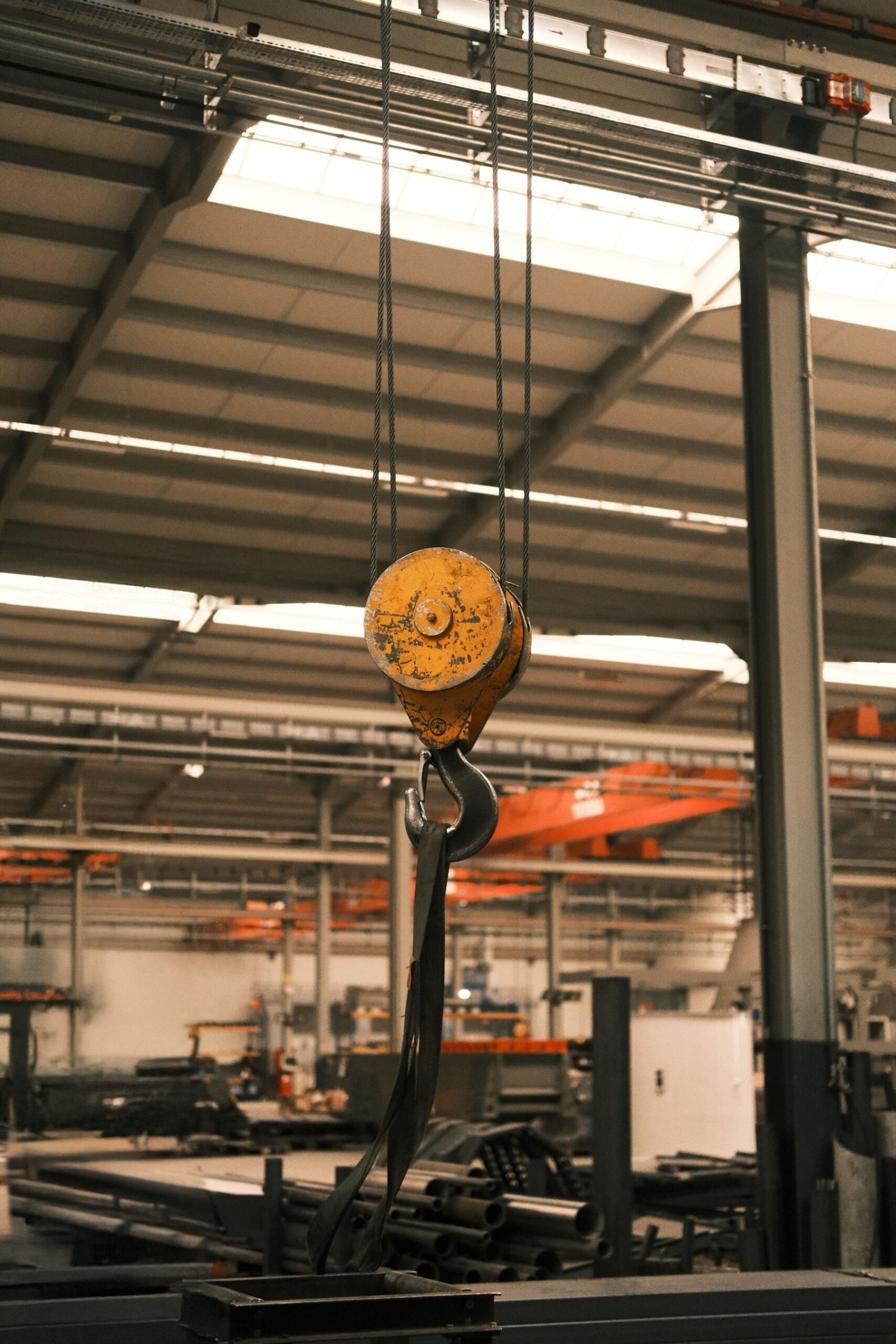
If you want the short answer before the detail: on a scrap handling crane, the rope that consistently lasts longest is a compacted 6×K36WS+IWRC in grade 1960 MPa for multi-fall grapple duty, and a 35WXK7 rotation-resistant rope wherever the load hangs from a single fall — electro-magnet hoists and single-rope yard loaders. Specify galvanized wire for outdoor yards, insist on an independent wire rope core, order closing and holding ropes in matched left-hand/right-hand pairs, and inspect against ISO 4309 at shortened intervals — scrap duty ages a rope by cycles and shock loads, not by calendar. Get those five decisions right and rope life in a scrap yard can double. Get them wrong and no rope on the market will survive the year.
I have spent the last two decades quoting, supplying and troubleshooting ropes for yards that move scrap all day, and this guide is the checklist I wish every buyer received with the first reel.
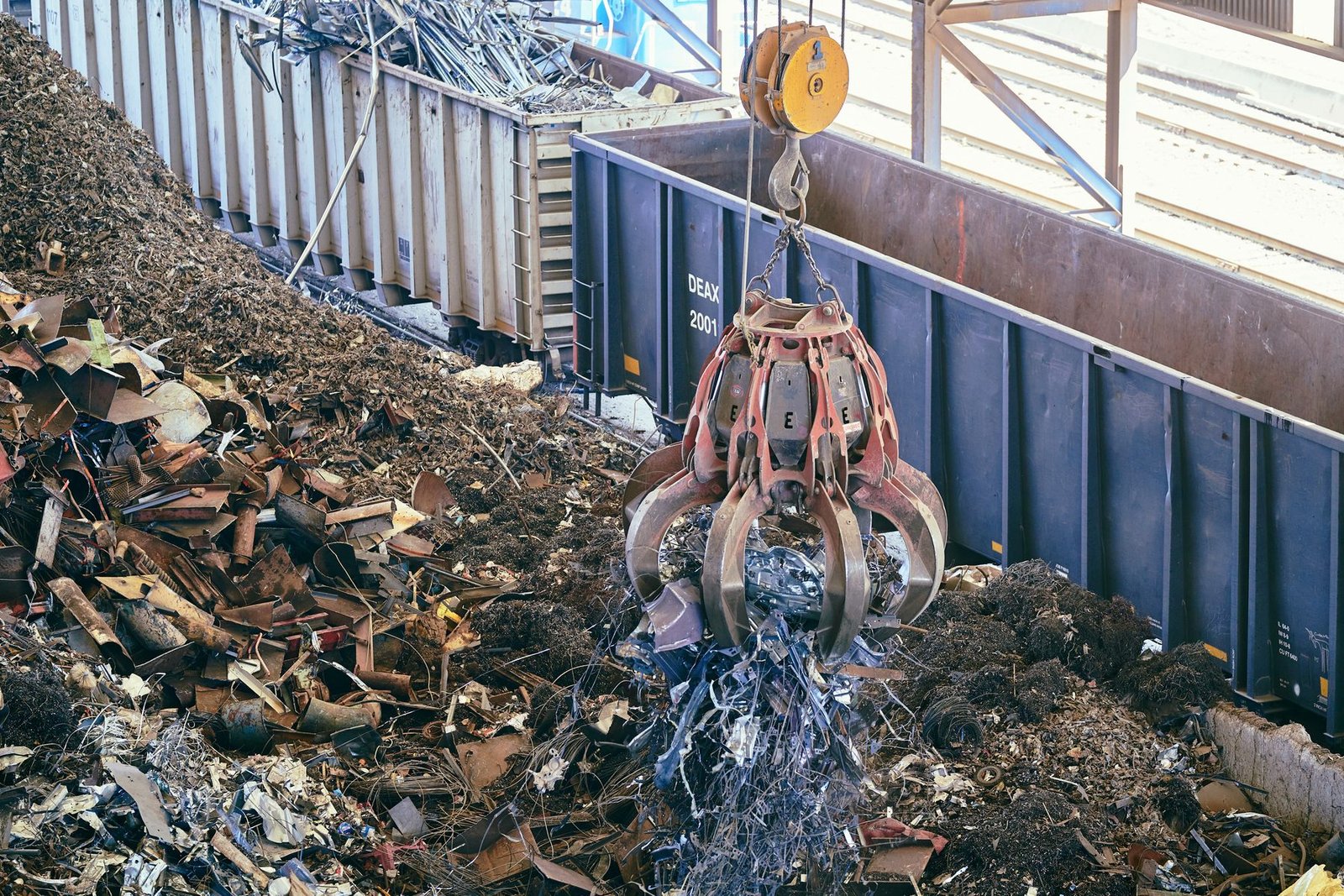
Why Scrap Duty Destroys Rope Faster Than Almost Any Other Job
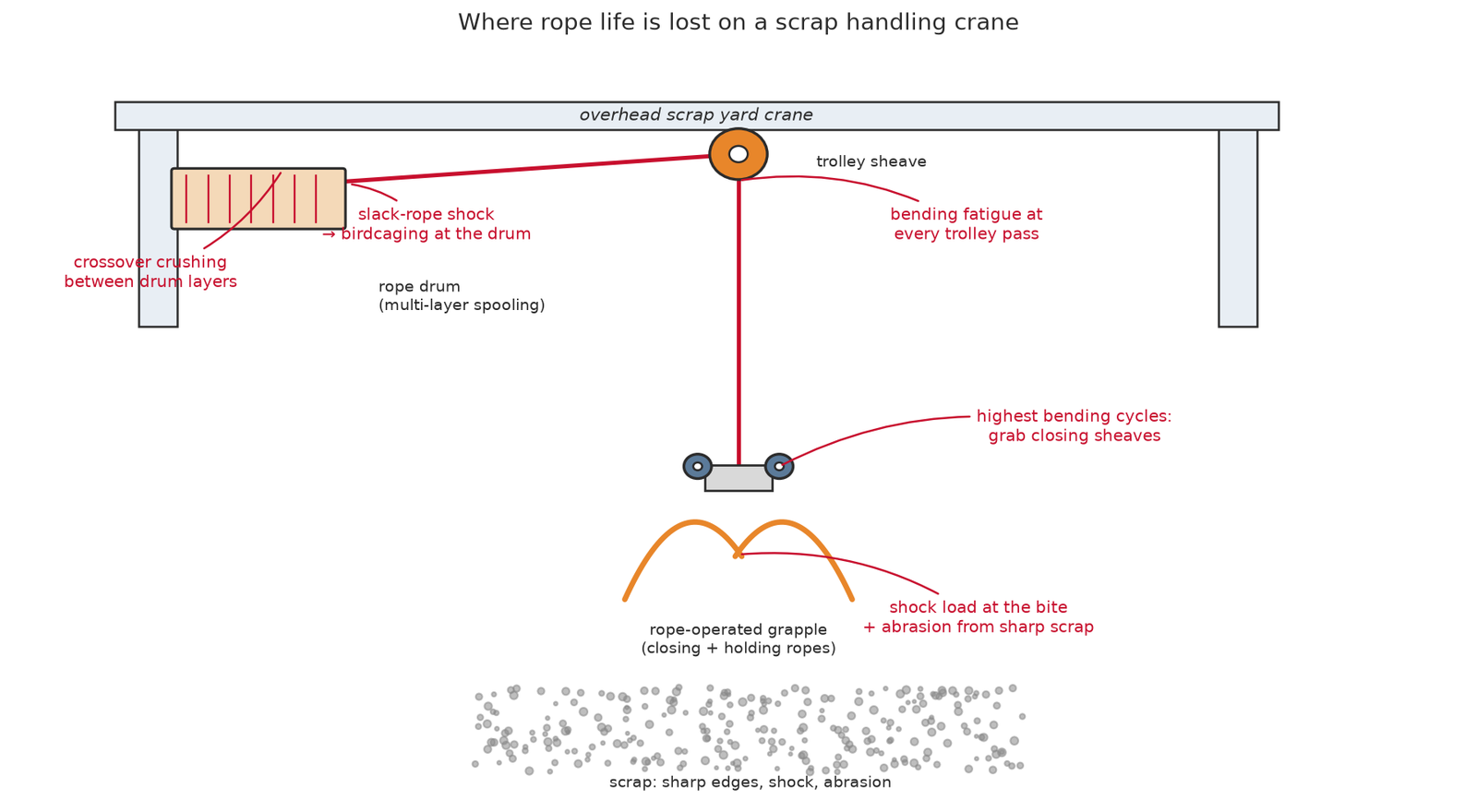
Scrap handling is, bluntly, a wire rope destruction machine with an operator in the cab. Three forces stack up against the rope on every cycle. First, shock loading: the closing ropes snatch the full load in a fraction of a second as the grapple bites into compacted scrap, and the holding ropes go slack at every dump — then catch the dropping grab as a snatch load. Slack rope shock is the classic cause of birdcaged, crushed sections near the drum.
Second, abrasion and contamination. Scrap edges are sharp, rusted and often hardened, and grit works into the strands and becomes grinding paste between wires. Third, cycling. A busy handler runs a lift-and-dump cycle every one to two minutes, shift after shift, bending the rope over the boom and stick sheaves, the drum and the grab’s own purchase sheaves each time. A grapple rope can log more bending cycles in a month than a crawler crane rope does in a year.
Add rain, condensation and furnace-adjacent heat near shears and shredders, and it is obvious why the rope that lasts five years on a clean indoor hoist can be discarded in ten weeks here. The selection goal is not the strongest rope on paper. It is the best combination of bending fatigue life, crush resistance, abrasion tolerance and shock tolerance for this specific duty.
The Machines in a Scrap Yard — and the Rope Circuits That Run Them
Not everything that touches scrap wears rope the same way. I split scrap-handling machines into four families when a yard asks me for a quotation, because the rope circuits differ.
Grapple material handlers and yard cranes
These are the wheel loaders with lattice booms, tracked handlers and gantry cranes running two- or four-rope clamshell or orange-peel grapples. The closing ropes do the violent work — they tension through the grab’s internal sheave purchase when the shells bite — while the holding ropes support the grab and see slack-rope shock at every dump. Multi-fall duty: standard or compacted 6-strand ropes, ordered as matched lay pairs.
Overhead magnet cranes
Bridge and gantry cranes with circular lifting magnets hang the load from a single fall. A single-part line with a free-hanging load will spin under torque, so these hoists need rotation-resistant constructions — 35WXK7 on bigger machines, 18×K7 on smaller ones. The duty is high-cycle, moderate-load, often outdoors.
Shear, baler and shredder feed cranes
Feed cranes push scrap into stationary plants — the same grab cycles as yard handlers, but closer to heat sources and with less room to swing. Compacted ropes with plastic-impregnated cores earn their premium here.
Mobile and crawler cranes doing occasional scrap work
Rental machines that occasionally load scrap should keep the OEM-specified construction — usually 35WXK7 or 35×K7 — but expect accelerated wear and inspect accordingly.

| Machine family | Rope circuit | Duty character | Recommended construction |
|---|---|---|---|
| Grapple material handler / yard crane | Closing ropes (grab purchase) + holding ropes | Highest bending cycles; snatch loads at bite; slack-rope shock at dump | Compacted 6×K36WS+IWRC, 1960 MPa, galvanized outdoors; matched lay pairs |
| Overhead magnet crane | Single-fall hoist rope | Free-hanging load; high cycles; spin risk | 35WXK7 rotation-resistant (18×K7 on smaller hoists) |
| Shear / baler / shredder feed crane | Grab ropes, sometimes magnet fall | As above plus heat and confined swing | Compacted 6×K36WS-EPIWRC (plastic-impregnated core) |
| Mobile / crawler crane, occasional scrap | Main hoist, multi-fall | Mixed duty, OEM spec governs | 35WXK7 or 35×K7 per crane manual; shorten inspection intervals |
Table 1 — Scrap-handling machines, their rope circuits and the constructions I specify.
Which Rope Constructions Actually Survive Scrap Duty
The default: compacted 6×K36WS+IWRC
For multi-fall grapple and grab work I specify a compacted 6-strand rope in the 6×36 class — 6×K36WS+IWRC — almost every time. The 6×36 class gives you many thin outer wires, which is what bending fatigue life is made of, and compacting (die-drawing) the strands raises the fill factor: roughly 10–15% higher breaking force than a standard rope of the same size, a denser surface that resists abrasive scrap, and better interlocking on multi-layer drums.

Rotation-resistant ropes for single-fall work
Where the load hangs free from one fall — magnet hoists, single-rope loaders — a standard 6-strand rope will unlay its torque and spin the load. The proven answers are 35WXK7 (35 strands in three layers over a core) for larger hoists and 18×K7 or 18×7 class for smaller ones. Two cautions from experience: rotation-resistant ropes have somewhat lower bending fatigue life than equivalent 6-strand ropes, and their inner layers are hidden, so they break up from the inside — inspect them more often, per the rotation-resistance tables in ISO 4309.

Constructions I would not put in a scrap yard
Fiber-core ropes crush and lose their shape under multi-layer spooling and shock loads — the flattening shows up quickly in grab work. The so-called 8×19 spin-resistant type is a trap: it loses much of its breaking strength if one end is free to rotate and fails from the inside with little warning. And while plain 6×19 class ropes are cheap and abrasion-tough, their bending fatigue life on the small sheaves of a grab purchase is far below the 6×36 class.
| Property | Compacted 6×K36WS+IWRC | Standard 6×36WS+IWRC | 35WXK7 (rotation-resistant) |
|---|---|---|---|
| Breaking force, same size & grade | Baseline +10–15% | Baseline | Slightly below 6×36 standard |
| Bending fatigue life | Very good | Very good | Good — inspect inner layers |
| Crush resistance on multi-layer drums | Excellent | Good | Moderate |
| Abrasion resistance in scrap | Excellent (dense surface) | Good | Good |
| Rotation under single-fall load | Spins — multi-fall only | Spins — multi-fall only | Very low torque |
| Best scrap application | Grapple closing & holding ropes | Grapple ropes on tight budgets; larger sheaves | Magnet hoists, single-fall loaders |
Table 2 — Construction trade-offs for scrap handling duty, size for size.
Core, Grade and Finish: The Three Decisions After Construction
Core: IWRC is the minimum for any scrap application; it is what resists drum crushing and holds lubricant where the rope needs it most. My preference for feed cranes and wet, dirty yards is EPIWRC — an IWRC with a plastic-impregnated liner between core and strands. The plastic cushions internal wire contact, blocks moisture and dirt from reaching the core, and typically buys a visible increase in fatigue life in the field.

Grade: 1960 MPa is the sweet spot for scrap duty. Higher grades (2160) exist, but in shock-loaded, abrasive work the extra tensile strength rarely converts into extra life. If a machine is genuinely under-rope, the better move is one size up in diameter, not one grade up in steel — provided the drum and sheaves were designed for it.
Finish: outdoor yards, coastal terminals and anything standing in rain get hot-dip galvanized wire; a drawn-galvanized 1960 MPa rope keeps essentially the full grade on its batch certificate. Indoors, in dry shredder halls, bright (ungalvanized) rope is fine and slightly cheaper — just keep the lubrication schedule honest.
Sizing the Rope: Diameters and D/d Ratios I Actually Quote
There is no OEM-independent ‘scrap crane rope standard’, so sizes follow the machine class and its sheave geometry. The sizes below are what I most commonly supply for scrap handling; always confirm against the machine’s rope diagram and measure the worn rope’s actual diameter before ordering.
| Machine class | Commonly quoted diameter | Typical specification | Minimum D/d I aim for |
|---|---|---|---|
| Small yard handler / loader crane | 16–20 mm | 6×K36WS+IWRC, 1960, galvanized | 20:1 on boom & stick sheaves |
| Heavy material handler (30–50 t class) | 22–28 mm | 6×K36WS+IWRC or EPIWRC, 1960 | 20–25:1, grab purchase sheaves included |
| Overhead magnet crane, 5–16 t magnet | 14–22 mm | 35WXK7, 1960, galvanized outdoors | 25:1 (rotation-resistant ropes want larger sheaves) |
| Portal / gantry grab crane | 24–32 mm | 6×K36WS+IWRC, matched lay pairs | 22:1 with grooved drum |
Table 3 — Sizes I most often quote for scrap handling machines. Verify against the machine’s rope diagram.
Two ratios matter more than the catalogue table suggests. The grab’s own purchase sheaves are almost always the smallest in the system — the rope dies there first, so check their D/d before blaming the rope. And the fleet angle at the drum should stay at or below about 1.5°; the wear pattern at the drum flange will tell you quickly if it has drifted past.
Installation Details That Decide Whether the Rope Lives Its Full Life
Most short rope life I investigate is not a rope defect; it is an installation detail. The list is short but unforgiving:
Order and install closing and holding ropes as matched pairs — same construction, same length, opposite lay direction on double-drum grabs so the torque of one rope cancels the other and the grab hangs square. Pre-tension when spooling: reel the new rope on under at least 1–2% of its breaking force so the first layers bed down tight; a loosely spooled bottom layer lets the rope cut down through itself under the first shock load. Check the sheaves while the rope is off — a grooved-out liner will imprint its damage into the new rope within weeks. Socket properly and re-tension wedge sockets after the first loaded cycles. Run a gentle break-in of a few dozen light cycles before full-duty grabs. My colleagues and I cover the drum-side geometry in more detail in our drum capacity and fleet angle guide.
One more yard habit worth breaking: letting the grab slam onto the stockpile to shake the scrap off. Every slam is a compression event for the rope, the drum and the structure — soft landings add rope life for free.
Inspection and Discard Criteria for Scrap Cranes (ISO 4309)
Because scrap duty is effectively a heavy-duty classification, ISO 4309’s shortened intervals apply: a daily visual check by the operator (broken wires, kinks, diameter necking, corrosion, birdcaging near the drum), a weekly to monthly periodic examination of the whole rope by a competent person, and a detailed examination after any incident or rope change. In practice I tell yards to make the daily check two questions: what does the rope look like where it exits the drum, and at the grab sheaves? Those two zones account for most discard findings in scrap service.
Discard criteria come from ISO 4309 and I will not paraphrase the tables loosely — our full ISO 4309 walkthrough lists the wire-break counts per lay length by construction and rope class. The headline numbers for scrap work: visible broken wires in one lay length against the construction-specific limit (rotation-resistant ropes get much lower limits because their failures are internal), diameter reduction beyond roughly 7–10% of nominal, any birdcaging or core protrusion, kinks, and heat or arc damage.
Track rope life in cycles, not weeks. A simple counter on the grapple cycles tells you more about remaining life than a calendar does, and it lets you compare constructions honestly when you trial a compacted rope against your old standard.
Frequently Asked Questions
How long should wire rope last on a scrap handling crane?
There is no calendar answer — a high-cycle grab rope can reach ISO 4309 discard limits in ten to sixteen weeks of double-shift work, while a lighter-duty magnet hoist rope can run most of a year. Cycles and cycle severity decide, not weeks. If holding ropes die before closing ropes, suspect slack-rope shock or drum problems.
Can I use the same rope on my magnet crane and my grapple handlers?
Not usually. The magnet crane hangs its load from a single fall and needs a rotation-resistant construction (35WXK7 or 18×K7); the grapple handlers run multi-fall and get the best fatigue life from compacted 6×K36WS+IWRC. A 6-strand rope on a single-fall magnet will spin the load and can unlay itself at the socket.
Does galvanizing weaken the rope?
The standards’ strength tables carry a small deduction for hot-dip galvanized class A wire, but a modern drawn-galvanized rope in 1960 MPa tests essentially to the full grade — judge from the EN 12385-4 batch certificate. In an outdoor yard, the corrosion protection buys far more usable life than the strength difference costs.
Why do my ropes keep birdcaging near the drum?
Almost always slack-rope shock: the rope goes slack (grab dumped, magnet released, boom dropped fast) and then snaps taut. Fixes, in order of effectiveness: soften the operating cycle, verify drum spooling and fleet angle, pre-tension the new rope during installation, and check the winch’s slack-rope protection. A birdcaged rope is permanently distorted — discard it.
What safety factor applies to scrap grapple ropes?
A minimum breaking force of roughly five times the worst working rope tension (5:1) is the common benchmark for crane and hoist ropes under ISO 4301-type rules; your local regulations govern. Grapple closing ropes see tension spikes at the bite, so size on peak tension, not static grab weight.
Choosing a Supplier Who Understands Scrap Duty
A rope specification only becomes value when the rope arrives on time, to certificate, in the lengths and terminations your machines need. Aulone is a professional manufacturer and supplier of steel wire ropes, wire rope slings, synthetic ropes and rigging hardware for lifting, marine, mining, construction and industrial applications. With more than twenty years in the business, an annual capacity of 200,000 tons and stock availability in common crane and handler constructions, we produce to EN 12385-4 and ISO 9001, with third-party testing and certification from BV, ABS, DNV, RMRS and CE available on request. We supply custom assemblies — cut lengths, socketed and swaged terminations, matched lay pairs.
If you are losing ropes faster than you think you should, send us your machine type, rope data and a few photos of the discarded rope — the wear pattern usually tells us exactly where the life is going. Reach me and the team at info@wireropes.net and we will help you pick the construction, core and finish that turns scrap duty from a rope-eater into just another job the rope handles.