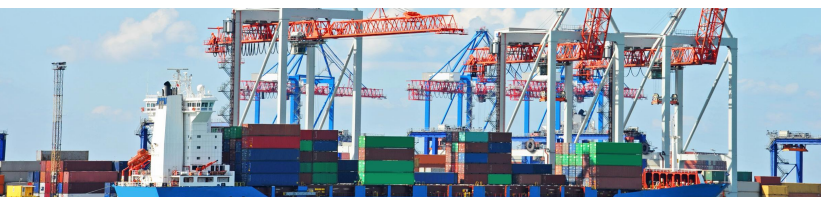
Wind turbine projects run on wire ropes long before the first blade spins. The rope that lifts a 90-tonne nacelle onto a 120-metre tower has to survive multi-layer spooling, shock loads, alpine cold or coastal salt fog, and hundreds of high lifts — and it almost always has to refuse to rotate under a free-hanging load. In practice, the workhorse for turbine erection crane hoists is a compacted rotation-resistant rope in the 35×K7 class (typically 35WXK7 or similar), with galvanized and plastic-impregnated options for offshore and coastal sites, and smaller 6×36-class or elevator-type ropes serving the nacelle winches, tower lifts and site logistics around them.
By Andri — Technical Writer & Crane Rope Specialist, Aulone (www.wireropes.net)
I have spent most of my career on crane ropes, and wind farm projects are some of the most demanding rope work I get asked about. The loads are enormous, the lifts are high, the sites are remote, and the ropes are often expected to finish an entire wind farm on one reeving. Yet rope selection on wind projects is frequently an afterthought — whatever was on the crane last job gets reused. That is how you end up with a birdcaged rope halfway through blade season. In this guide I will walk you through where wire ropes actually appear on a wind farm project, what each application demands, how to size a main hoist rope, and the questions I get asked most often by crane operators and EPC buyers.
Where Wire Ropes Actually Appear on a Wind Farm Project
When people say “wind turbine wire rope” they usually picture the big hoist rope on the erection crane. That is the critical one, but it is not the only one. Over the life of a project you will find ropes in at least six different roles:
| Application | Typical construction | What the rope must survive |
|---|---|---|
| Erection crane main hoist (nacelle, tower sections, rotor) | Compacted rotation-resistant 35×K7 class (e.g. 35WXK7); 19×7 class on smaller cranes | Very high lifts, multi-layer drum spooling, shock loading, cold or coastal sites |
| Erection crane auxiliary hoist and pendant lines | 19×7 or 35×K7 class, often smaller diameters | Fast cycling, tighter drums and sheaves, tag-line duty |
| Nacelle service winch | Small-diameter 6×36-class IWRC, usually galvanized | Restricted sheaves, weather exposure, frequent light lifts of tools and parts |
| Tower internal service elevator | Elevator-type constructions, typically 8×19 or similar (personnel-rated) | Personnel safety factors, thousands of short trips, corrosion inside the tower |
| Met mast guy ropes | Galvanized 6×19 / 6×36 class or spiral strand | Years of continuous wind loading, tension maintenance, no inspection access at height |
| Blade and component handling (tag lines, spreader reeving) | 6×36-class IWRC, rotation-resistant types where loads hang free | Abrasion, bending over small rigging hardware, twist from long slender loads |
Constructions are indicative and vary by crane manufacturer, region and site conditions. Always confirm against the crane load chart and the rope certificate.
The Main Event: Erection Crane Hoist Ropes
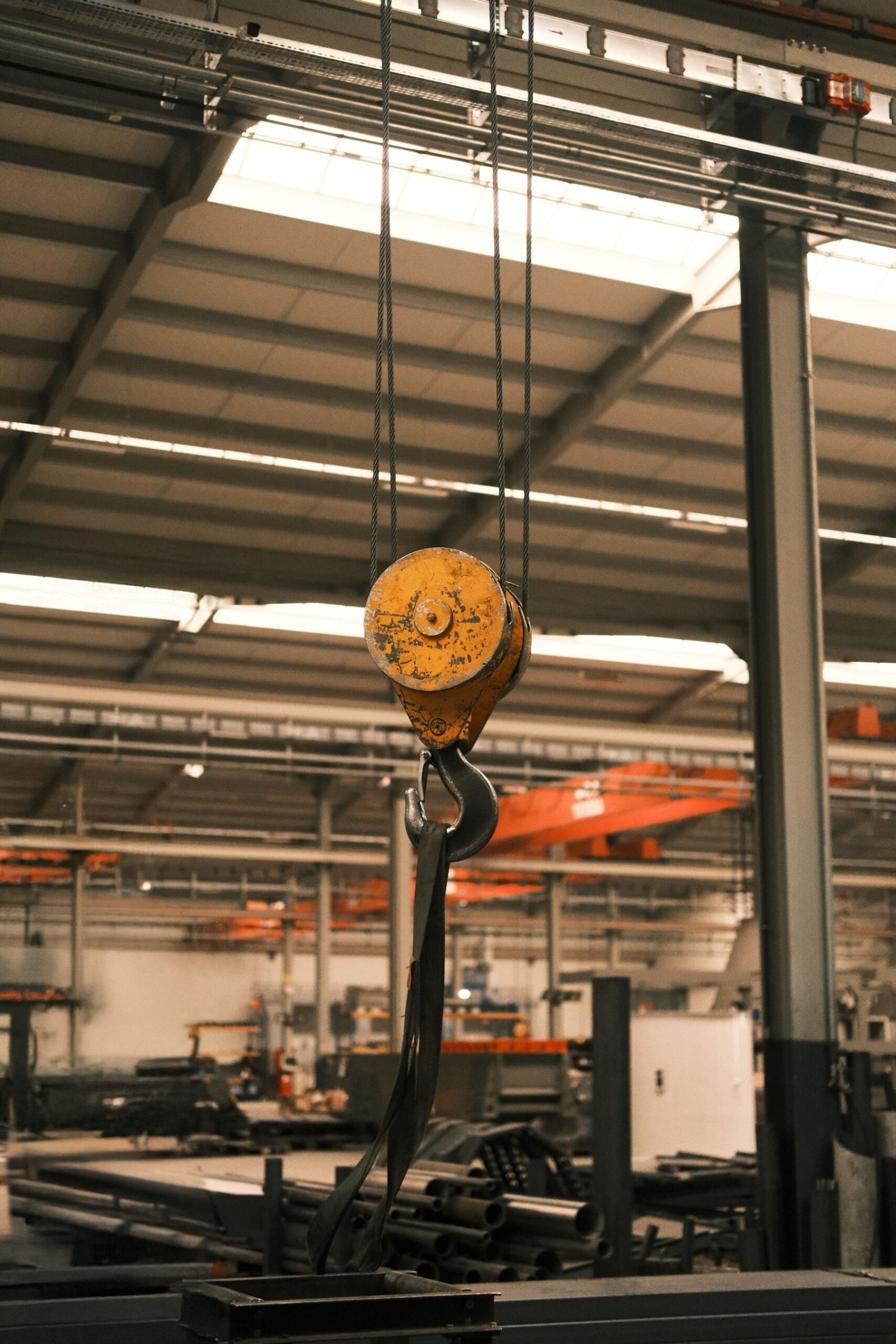
Turbine erection is done almost everywhere by large crawler cranes — typically 400 to 800 tonnes and above for the bigger onshore machines — and the hoist rope on those cranes works harder than on almost any other job site. Three factors stack up:
1. Lift height. Hub heights have climbed from around 80 metres a decade ago to 120–160 metres on many current onshore platforms. Every metre of hook travel means more rope on the drum, more bends through the reeving system, and more accumulated fatigue per lift.
2. Free-hanging, long, slender loads. A 70–100 metre blade hanging from a spreader is the classic “rope want to spin” scenario. Tower sections and nacelles hang free as well, often in gusting wind. If the rope rotates, the load spins, tag lines snatch, and the rope itself can kink or birdcage. This is why rotation resistance is non-negotiable on these cranes — it is the same physics I describe in our guide to rotating vs. non-rotating wire ropes.
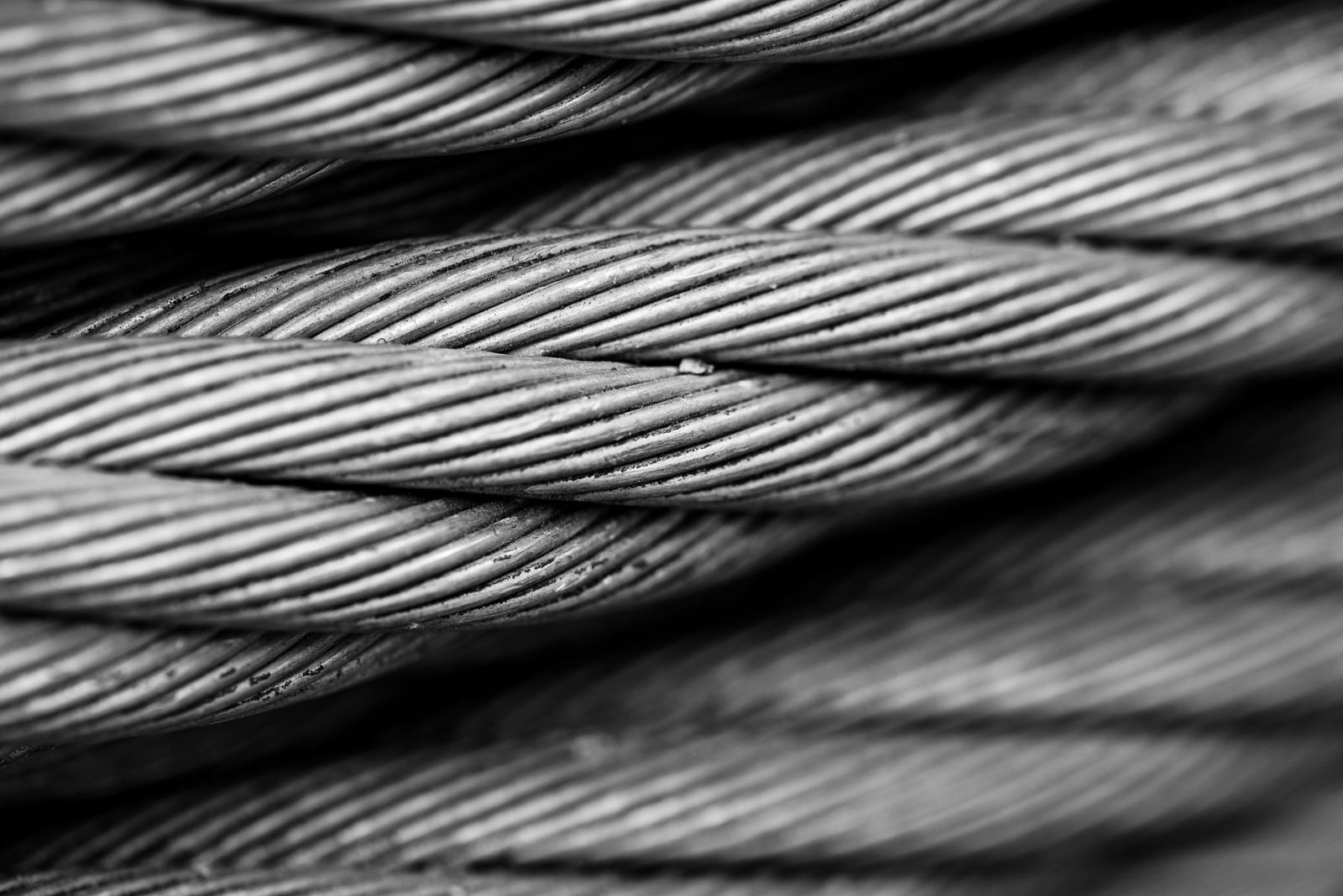
3. Multi-layer spooling. To fit 400–700 metres of rope on a winch drum, the rope winds in several layers. The bottom layers get crushed under the weight and pressure of the layers above them — the single most common killer of high-lift crane ropes.
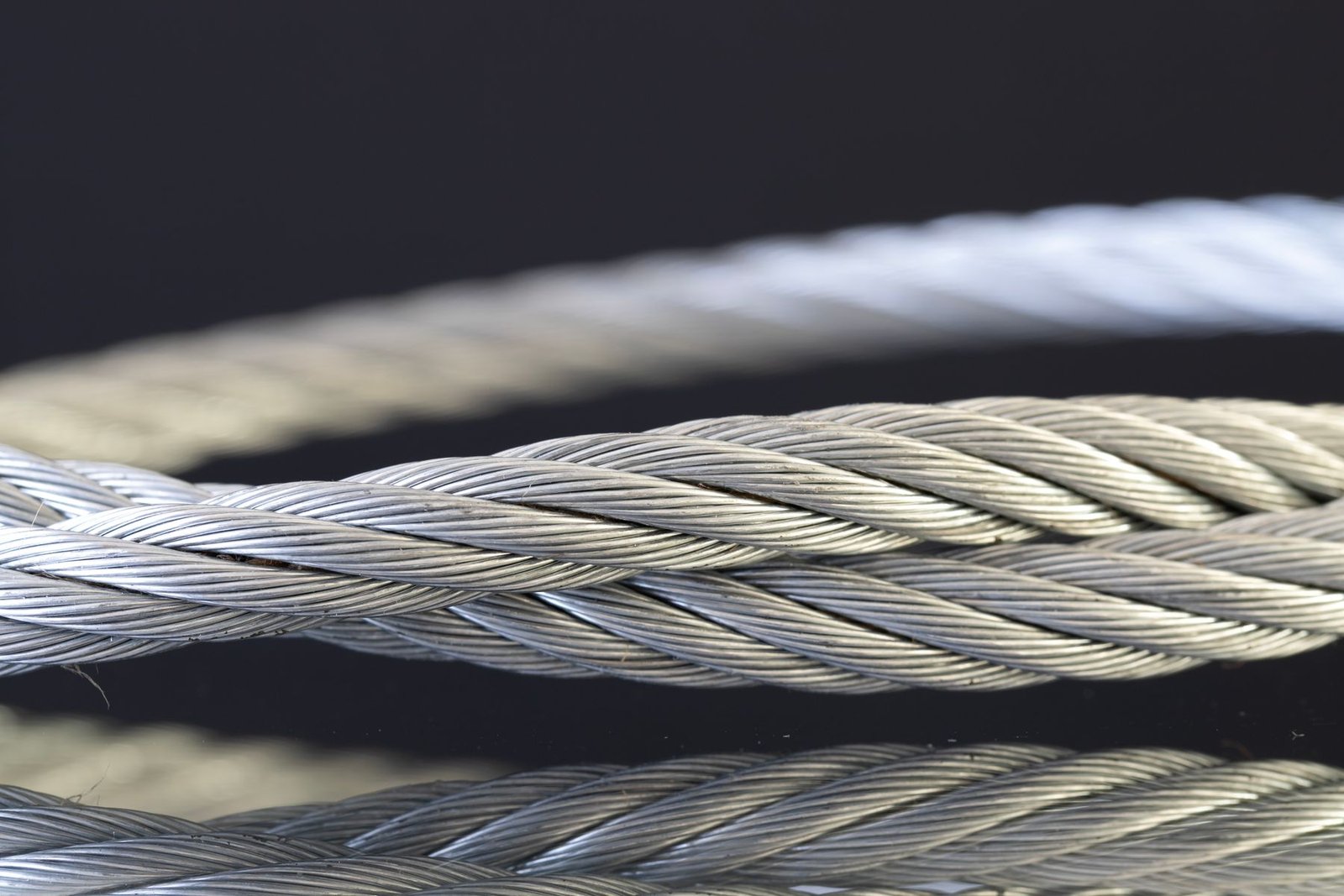
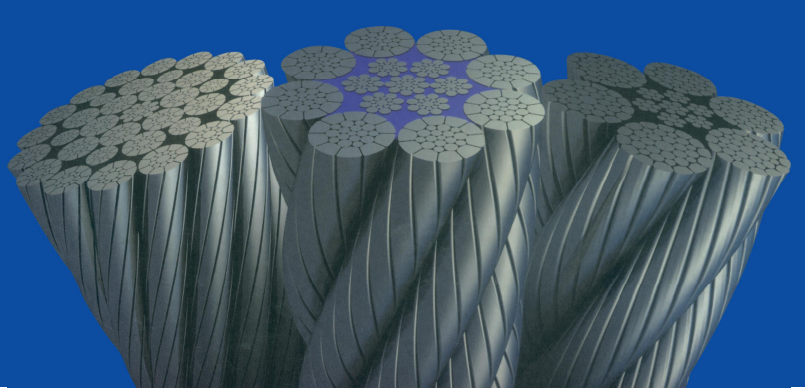
My default recommendation for this duty, and what most crane makers specify, is a compacted rotation-resistant rope in the 35×K7 class. Compaction increases the metallic area density, which buys breaking strength in the same diameter and gives the outer wires a smooth, flat bearing surface that resists drum crushing far better than a round-strand rope. On machines where the drum pressure is severe, plastic-impregnated (EPIWRC) versions fill the gaps between the core and the strands to dampen internal wire movement — you can read how that works in our compacted rope guide.
Sizing a Nacelle Hoist Rope: A Worked Example
Buyers often ask me “what diameter do I need for a 90-tonne nacelle?” There is no single answer — it depends on the reeving — but here is the arithmetic I walk through with customers. Suppose the crane lifts the nacelle on a four-fall hook block, and the crane manufacturer works to a design factor of 5:1 on the rope (design factors for mobile and crawler cranes typically run between about 3.5:1 and 5:1 depending on the standard and duty; I use 5:1 here to stay conservative).
| Step | Calculation | Indicative result |
|---|---|---|
| 1. Load per fall | 90 t ÷ 4 falls, plus sheave efficiency losses of roughly 2–4% per sheave | ≈ 23–24 t line pull (≈ 230 kN) |
| 2. Required minimum breaking load | Line pull × 5 (design factor) | ≈ 1,150–1,180 kN |
| 3. Rope diameter | Compacted 35×K7 class, 1960 N/mm² — MBL of a 40 mm rope is typically around 1,100–1,200 kN, so round up to the next size if needed | ≈ 40–44 mm rope |
| 4. Rope length on drum | 4 falls × ~120 m hook travel + dead wraps, dead ends and test allowance | ≈ 500–530 m |
MBL figures are approximate and for illustration only — always size against the rope certificate and the crane manufacturer’s load chart.
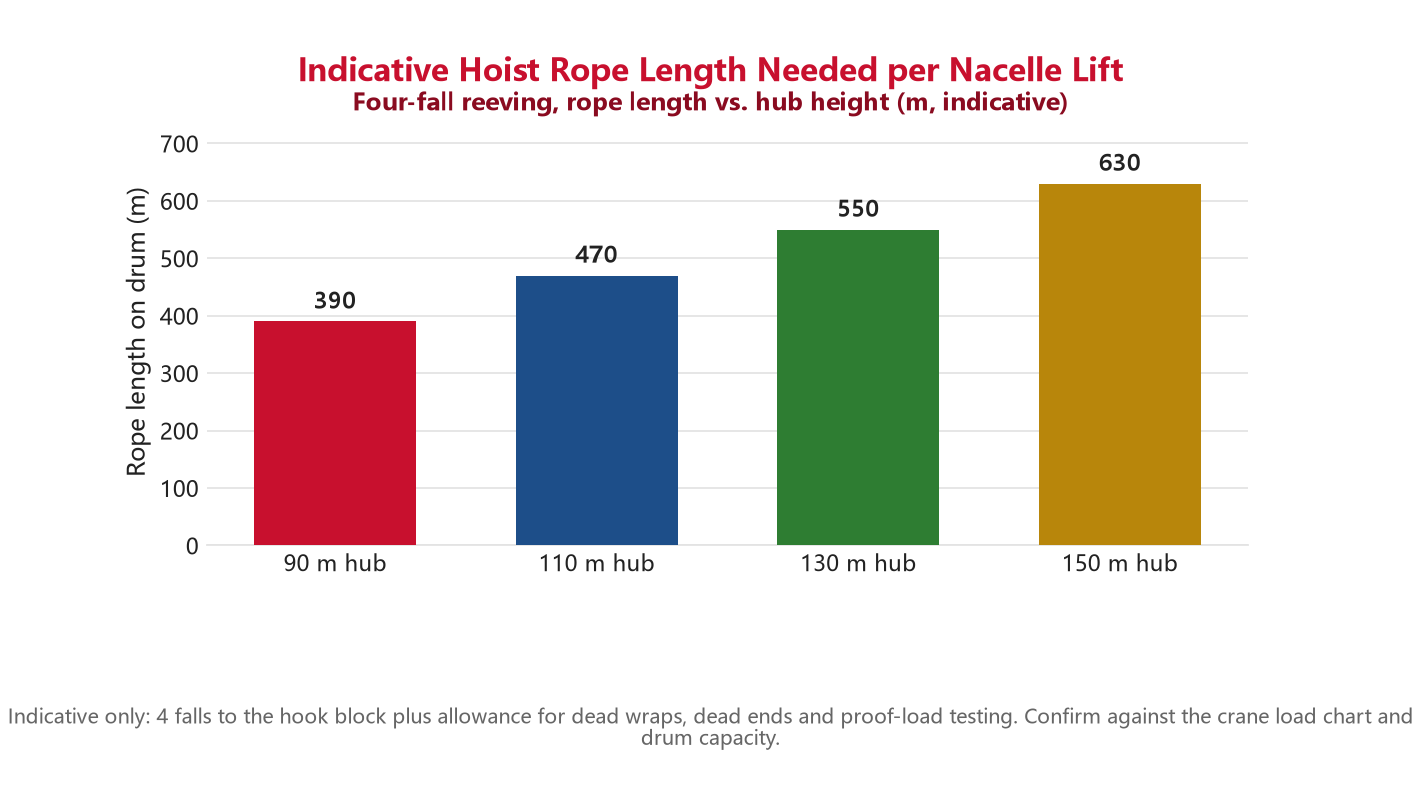
Two practical notes from the field. First, longer does not mean better spooled: a 600-metre rope that was stored badly or spooled under insufficient tension will cut its own life short in the bottom drum layers. Second, on four-fall reeving the rope bends over every sheave on every cycle — D/d ratios on the hook block sheaves are fixed by the crane, which is exactly why rope construction matters more than raw strength once the MBL requirement is met.
Why Rotation Resistance Matters So Much at Height
A long free-hanging load will always find a way to rotate, and the rope is the only thing that can stop it — or let it happen. In a 35×K7-class rope, the outer strand layers are laid in opposite directions so that, under tension, the tendencies to untwist cancel out. When the load is a 90-metre blade in a crosswind, that balance is the difference between a controlled lift and a spinning, snatching load that damages the blade root.
The flip side: rotation-resistant ropes are less forgiving of abuse than ordinary 6-strand ropes. They need larger D/d ratios where possible, correct reeving, and they should never be allowed to jump a sheave or run loose and slack. If a rotation-resistant rope has ever kinked or birdcaged, do not try to “work it straight” — it is scrap, and the decision is not worth debating.
Cold, Salt and Coating Choices
Wind farms are built where the wind is — which means alpine cold, coastal salt fog, or offshore. Rope protection has to match the site:
- Cold sites: at sustained sub-zero temperatures, ordinary lubricants stiffen and rope handling becomes brittle-prone. Low-temperature rope grades with cold-rated lubrication are the sensible choice for mountain and northern sites.
- Coastal and offshore: hot-dip galvanized ropes are my baseline, and for severe marine exposure, galvanized plus plastic impregnation. On offshore projects, the rope may never be re-lubricated in service, so the factory protection has to last the whole campaign. Our guide to galvanized vs. bright vs. stainless wire rope covers when each coating makes sense.
- Inspection visibility: bright (ungalvanized) ropes show corrosion early, which some inspectors prefer; galvanized ropes hide minor surface rust but resist it. Either way, corrosion that has pitted the wire is discard territory.
Nacelle Service Winches and Tower Elevators
After commissioning, the ropes that work hardest over the turbine’s life are the small ones. The nacelle service winch lifts tools, gearboxes, filters and spare parts up the tower for twenty years — usually a small-diameter 6×36-class IWRC rope on a tight sheave layout, exposed to the weather at the tower door. Tower internal elevators use personnel-rated elevator-type ropes and live under much stricter safety factors; those ropes are replaced on schedule, not on condition.
A common failure I see on service winches is not the rope itself but the drum: rope spooled carelessly by whoever used it last year, crushing itself in the bottom layers on a 7 mm rope. The same spooling discipline that applies to a 44 mm crawler hoist rope applies at 7 mm.
What About Pitch, Yaw and Rotor Lock?
This question comes up because people search for a “yaw rope” or “pitch rope”. Here is the honest answer: on most modern utility-scale turbines, pitch and yaw are not rope-driven at all — pitch is actuated electrically or hydraulically at each blade, and yaw is driven by geared slewing rings. Rotor locking is done mechanically with a lock pin into the rotor. So if a supplier offers you a “yaw system wire rope” for a modern turbine, ask a lot of questions.
Where you genuinely still meet rope-type functions on wind turbines is on smaller and legacy machines — some older or small-turbine designs used rope or rod linkages for blade pitching or furling — and on the many rope applications around the turbine: erection cranes, service winches, tower lifts, met mast guys and site rigging. In my experience, that is where nearly all of the rope engineering of a wind project actually lives.
Handling, Storage and Installation on Site
Site rope handling is where I see the most avoidable damage. Three rules I insist on:
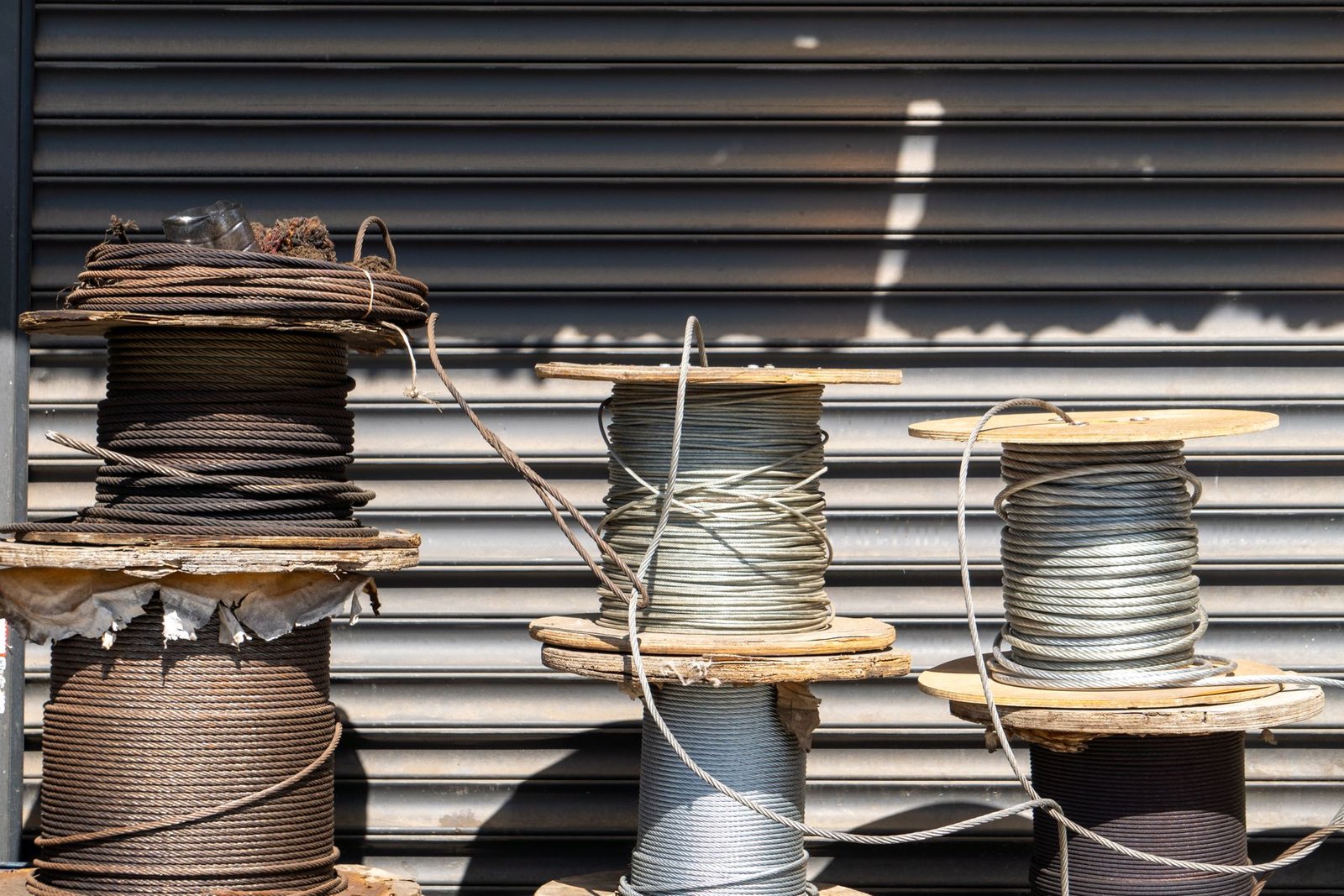
Reel handling. Never drop a rope reel off a truck and never roll it over rough ground. A dented reel flange can deform the rope; a reel dropped on its side can permanently damage the spooling underneath. Follow the storage and handling practices we detail in our wire rope storage guide — reels on supports, off the ground, covered but ventilated.
Spooling under tension. The rope must go onto the drum under controlled tension and with correct fleet angle, otherwise bottom-layer loose wraps will crush and gouge as soon as the crane works. Every wind-project rope I have seen fail prematurely had a spooling story behind it.
One-time rigs. Plan the reeving so the rope never needs to be pulled back through the sheaves “just to check”. Every unnecessary bend at installation is fatigue you pay for later.
Inspection and Replacement Triggers
Wind-project crane ropes should be inspected against ISO 4309-type discard criteria — broken wires, diameter reduction, corrosion, kinks, and damage in the multi-layer spooling zones. The highest-stress zones on an erection crane rope are predictable: the bottom drum layers, the dead end anchorages, and wherever the rope passes over sheaves during the highest, fastest lifts. Our detailed inspection and discard guide walks through the criteria an inspector will apply.
On wind projects specifically, I tell crews to check after the first lifts following installation (spooling settles in and reveals tension problems), after any overload or shock event such as a load snatching, and before the blade-setting season if the crane has been idle through winter. A rope that shows a flat band or wire breaks concentrated in the bottom drum layers is telling you the drum was spooled wrong — replace it and fix the spooling, not just the rope.

Choosing a Supplier for Wind-Project Ropes
Wind farm ropes are not a commodity purchase. You are buying a certified product that has to arrive on a remote site on time, in perfect condition, with the paperwork your crane OEM and your insurers will ask for. When I help customers plan a wind project, I look for a supplier that offers: ropes manufactured to EN 12385-4 with full traceability; quality systems such as ISO 9001 and third-party certification (BV, ABS, DNV, RMRS, CE are the ones we work with); large production capacity and stock availability so replacements do not stall a campaign; custom assemblies with sockets, ferrules and terminations delivered ready to rig; and optional third-party testing before shipment.
Aulone is a professional manufacturer and supplier of steel wire ropes, wire rope slings, synthetic ropes and rigging hardware for lifting, marine, mining, construction and industrial applications. With more than 20 years in the rope business and an annual capacity of around 200,000 tonnes, we supply compacted rotation-resistant crane ropes, plastic-impregnated hoist ropes and custom assemblies for wind and heavy-lift projects, and we welcome third-party inspection on every shipment. If you are planning a wind farm campaign and want a second opinion on your rope specification, send your crane model, hub height and reeving details to info@wireropes.net — I will gladly run the sizing arithmetic with you.
Frequently Asked Questions
What wire rope is used on wind turbine erection cranes?
Typically a compacted rotation-resistant rope in the 35×K7 class (35WXK7 or similar) on the main hoist, with 19×7-class ropes on smaller cranes and auxiliary duties. The exact diameter and construction come from the crane manufacturer’s specification; the certificate must state the minimum breaking load your lift plan requires.
Why do wind turbine crane ropes need to be rotation-resistant?
Because blades, tower sections and nacelles hang free on long ropes. A conventional rope under tension will unwind and spin the load, which can birdcage the rope and swing the blade dangerously. Rotation-resistant constructions balance the lay torque internally so the load stays controllable.
How long does a wind turbine erection crane rope last?
There is no fixed number — it depends on lift counts, reeving, spooling quality and site conditions. Ropes on high-cycle erection work are often replaced within one or two campaigns, while lightly used auxiliary ropes last much longer. Inspect against ISO 4309-type discard criteria rather than counting calendar months.
Should the rope be galvanized for a coastal wind farm?
As a rule of thumb, yes. Hot-dip galvanizing is my baseline for coastal and offshore projects, with plastic impregnation added for severe exposure or long campaigns without re-lubrication. For inland sites, bright rope with good lubrication is common and shows corrosion early during inspection.
How much rope do I need on the drum for a 120-metre hub height?
Multiply the hook travel by the number of falls, then add allowance for dead wraps on the drum, dead ends and testing. On a four-fall reeving that is roughly 500 metres or more — check the crane’s drum capacity sheet, because over-filling the drum is a common cause of crushing damage.
Do wind turbines use wire ropes for pitch and yaw systems?
On most modern utility-scale turbines, no — pitch is electric or hydraulic per blade and yaw uses geared slewing rings; rotor lock is a mechanical pin. Rope-type pitch or furling linkages appear mainly on smaller and legacy machines. The heavy rope work on a wind project is in the cranes, service winches, elevators and site rigging.
Can I reuse the rope from the last wind project?
Only after a competent-person inspection against discard criteria, and only if the rope’s history is known. A rope that has sat spooled on a drum for a year, exposed to weather, may have corrosion or crushed bottom layers you cannot see from the outside. For nacelle and blade lifts, I recommend new rope with certificates.
What information should I give a supplier when ordering a wind-project rope?
Crane make and model, reeving (number of falls), required rope diameter and length, required minimum breaking load, drum and sheave diameters, site environment (cold, coastal, offshore), and whether you need terminations fitted. With that, a rope manufacturer can quote a certified rope and, if needed, a tested custom assembly.