By Andri — Technical Writer & Crane Rope Specialist, Aulone (www.wireropes.net)
If you are weighing up galvanized vs bright vs stainless steel wire rope, here is the short answer: bright (uncoated) carbon steel rope gives you the highest breaking strength and the best bending fatigue performance for the lowest cost, but it belongs indoors or anywhere you can keep it clean and lubricated. Galvanized rope trades a slightly rougher surface for a sacrificial zinc layer that shrugs off rain, humidity and most outdoor conditions. Stainless steel rope – 304 or, near the sea, 316 – is the only finish I would specify for constant saltwater or chemical exposure, and you pay for it with a price premium and a lower breaking force at the same diameter.
I have spent more years than I will admit testing, inspecting and writing about rope for cranes, ports, mines and marine winches. In this guide I will explain how each finish actually protects (or fails to protect) the steel underneath, compare them side by side, and share the mistakes I see buyers make when they choose on price alone.
What “Bright” Wire Rope Actually Means
Bright wire rope is uncoated carbon steel rope straight off the closing machine – no zinc, no polymer, nothing between the steel and the air except a film of factory lubricant. A common misconception is that “bright” means polished or corrosion-resistant. It does not. It simply means bare.
That bare surface is exactly why bright rope dominates indoor crane work. Without a coating the wires keep their original drawn surface and geometry, which means full tensile strength, excellent contact with sheave grooves and the best bending fatigue life of the three finishes. It is also the easiest rope to inspect: broken wires, wear crowns and corrosion pits are all visible immediately.
The weakness is obvious. Once the lubricant dries out or washes away, bright rope starts to oxidize within days in humid air, and pitting follows quickly. In my experience a bright rope that is re-lubricated on schedule in a dry workshop will outlast almost anything; the same rope left outside uncovered can be discarded in months. Bright rope also costs the least, because there is no coating step in production.
How Galvanizing Protects a Wire Rope
Galvanized rope is carbon steel rope whose individual wires are coated with zinc before stranding. The zinc works in two ways: as a physical barrier against moisture, and – more importantly – as a sacrificial layer. Zinc is more electrochemically active than steel, so when the coating is scratched or worn, the zinc corrodes first and keeps protecting the exposed steel around it. That is why a scuffed galvanized rope does not rust along the scratch the way a painted or bright rope would.
Hot-Dip vs Electro-Galvanizing, and How Much Zinc You Are Actually Buying
There are two production routes. Electro-galvanizing deposits a thin, uniform zinc layer by electroplating – smooth surface, tight diameter tolerance, suited to light-duty or indoor-adjacent use. Hot-dip galvanizing dips the wire into molten zinc and builds a far thicker, metallurgically bonded layer – this is what outdoor and marine-adjacent ropes need. Under EN 12385-4 and the related wire standards, coatings are specified by zinc mass per unit area, and “heavy galvanized” (Class B) coatings carry several times the zinc of standard coatings. More zinc means proportionally longer protection time, because the coating is sacrificial: it is consumed as it works.
| Coating type | Typical zinc layer | Indicative zinc mass on stranded wire | Best suited to |
|---|---|---|---|
| Electro-galvanized | Thin, uniform | Light deposit (roughly 10–40 g/m²) | Light duty, low humidity, tight tolerances |
| Hot-dip, standard (Class A) | Thick, bonded | Moderate deposit, varies with wire diameter | General outdoor lifting and rigging |
| Hot-dip, heavy (Class B) | Thickest | Several times standard class | Year-round outdoor, coastal, mining, permanent rigging |
The exact zinc mass is specified per wire diameter in the product standard, so when you compare quotations, ask which coating class is being offered – the price difference between a light and a heavy coating is small, and the service-life difference is not.
Stainless Steel Wire Rope: 304 vs 316
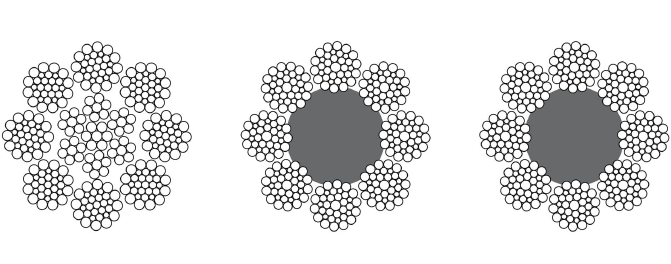
Stainless rope does not rely on a coating at all. Chromium (at least 10.5%) and nickel in the alloy form a passive oxide film across the entire cross-section, and the film self-repairs when scratched. Corrosion resistance is built in, which is why stainless stays bright with minimal maintenance.
Two grades cover most requirements:
- 304 stainless – the general-purpose grade. Good resistance to freshwater, humidity and many chemicals; the sensible choice for architectural rigging, food-grade and hygienic environments, and inland applications where appearance matters.
- 316 stainless – the marine grade, with 2–3% molybdenum added for chloride resistance. This is what I specify for dockside equipment, yacht rigging, submerged fittings and any site washed by salt spray.
One caution from experience: stainless is not immortal. 316 will still pit in crevices and under deposits in warm seawater, and stainless rope works hardening at terminations. It also costs several times more than carbon steel rope and, for the same diameter and construction, delivers roughly 15–25% lower breaking force, because the alloy wires cannot be drawn to the same tensile strengths as high-carbon steel.
Bright vs Galvanized vs Stainless: Side-by-Side Comparison
| Property | Bright (Uncoated) | Galvanized (Zinc) | Stainless (304 / 316) |
|---|---|---|---|
| Corrosion protection | None – lubricant only | Good, sacrificial zinc layer | Excellent, built into the alloy |
| Saltwater / marine suitability | Unsuitable | Moderate – light spray only | Excellent (316 for immersion) |
| Breaking strength, same diameter | Highest | Essentially equal to bright | About 15–25% lower |
| Bending fatigue life | Best | Very good; slightly rougher surface | Good for most duties |
| Appearance | Industrial grey | Matte grey to spangled | Bright, clean, decorative |
| Inspection | Very easy | Easy once zinc wears | Easy; watch for hidden pitting |
| Initial cost | Lowest | Moderate | Highest (3–5× carbon steel) |
| Maintenance | High – regular lubrication | Moderate – lubrication still required | Low |
| Typical service | Indoor cranes, hoists, slings | Outdoor cranes, winches, general rigging | Marine, chemical, architectural |

Does Galvanizing Reduce Breaking Strength?
This question comes up on almost every enquiry, so let me answer it directly: no, not in any way that matters. High-carbon wire is drawn to its final tensile grade – typically 1770, 1960 or 2160 MPa – and then zinc-coated. The zinc adds a few microns of diameter and a tiny mass increase; certified minimum breaking forces for galvanized and bright ropes of the same construction and grade are essentially identical. If anything, the zinc layer adds a small amount of wear life on drums.
The real strength gap is between carbon steel and stainless. The table below gives an illustrative example for one common construction – always verify against the certified test certificate for the actual reel.
| Rope: 6×36 WS + IWRC, 10 mm | Typical wire grade | Approx. minimum breaking force |
|---|---|---|
| Bright | 1960 MPa | ≈ 64 kN (6.5 t) |
| Galvanized (heavy zinc) | 1960 MPa | ≈ 64 kN (6.5 t) |
| Stainless 316 | ≈ 1450–1570 MPa | ≈ 48–52 kN (4.9–5.3 t) |
If you are sizing a rope against its working load limit, remember the design factor sits on top of these numbers. We explain the whole chain from breaking force to WLL in our article on wire rope breaking strength, MBL and safety factors.
Where Each Finish Wins: Application Guide
| Application | Recommended finish | Why |
|---|---|---|
| Indoor overhead and gantry cranes | Bright | Best fatigue life, easy inspection, controlled environment |
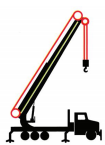
| Mobile and tower cranes (general sites) | Galvanized or bright | Galvanized if the crane stays outside; bright with disciplined lubrication works for active fleets |
| Winch lines, logging, oilfield | Galvanized | Abrasion plus weather; zinc survives intermittent wetting |
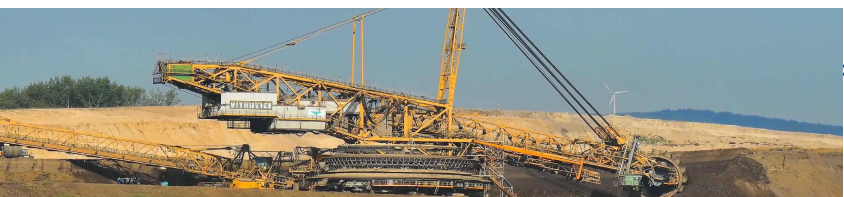
| Mining shovels and draglines | Heavy galvanized or bright | Abrasion dominates; heavy zinc helps in open pits, bright used with strict re-lubrication |
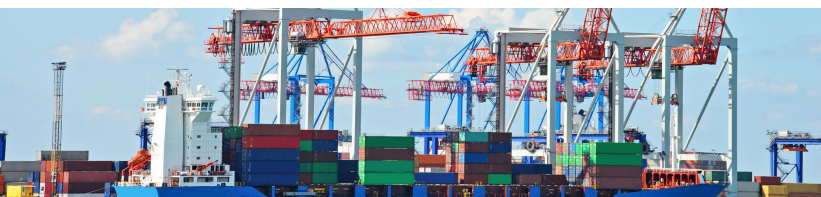
| Port STS and harbor cranes | Heavy galvanized; stainless for exposed fittings | Salt air, high cycles – carbon strength still needed for hoisting |
| Marine, yachts, submerged gear | Stainless 316 | Constant chloride exposure defeats zinc within months |
| Architectural, railings, facades | Stainless 304/316 | Appearance and zero maintenance |
| Food, pharma, clean rooms | Stainless 304 | Hygiene and washdown compatibility |
Three Mistakes I See Buyers Make
- Buying stainless for a high-cycle crane hoist. Corrosion resistance is excellent, but the lower breaking force and higher cost rarely justify it when a heavy-galvanized rope with good lubrication does the same job. Stainless shines on slow or static lines, not on high-cycle hoisting.
- Treating galvanized as maintenance-free. Zinc slows rust; it does not replace lubrication. The rope’s internal wires still need lubricant to stop internal corrosion and friction – the zinc only protects the outside. I have seen galvanized ropes fail inspection from internal wear while their zinc surface still looked respectable.
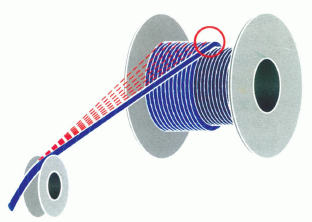
- Storing bright rope outdoors “just for a few weeks”. Uncoated reels left in the rain start rusting before installation, and surface pitting at the drum crossover points becomes a fatigue initiator for the rope’s whole life. Cover reels, keep them off wet floors, and rotate stock.
A Quick Decision Checklist
- Will the rope ever see saltwater or salt spray? Yes → 316 stainless (or heavy galvanized with frequent inspection for splash-zone-only exposure).
- Outdoor work, rain and humidity, normal lifting? → Galvanized, heavy zinc class if it stays out year-round.
- Indoor crane, hoist or sling duty with lubrication discipline? → Bright for the best fatigue life and price.
- Appearance or hygiene on the spec sheet? → Stainless 304.
- Not sure? Send me the environment, duty cycle, line pull and sheave diameters – a five-minute review usually settles it.
Frequently Asked Questions
Is stainless steel wire rope stronger than galvanized?
No. For the same diameter and construction, high-carbon bright and galvanized ropes are stronger – typically by 15–25% over 304/316 stainless – because high-carbon wire can be drawn to higher tensile grades. Stainless wins on corrosion resistance, not strength.
Does galvanized wire rope rust?
Eventually, yes. The zinc layer is sacrificial and gets consumed, faster near the coast or under constant abrasion. Once the zinc is gone at any point, the exposed carbon steel rusts like bright rope. Heavy-galvanized ropes simply buy you much more time.
Can I use bright wire rope outdoors?
You can, but only with a strict re-lubrication schedule and somewhere to store it dry between shifts. For a rope that lives outside permanently, I recommend galvanized from day one – the small price difference is cheaper than one early discard.
What is the difference between standard and heavy galvanized?
It comes down to zinc mass. Electro-galvanizing deposits a thin, uniform layer for light duty; hot-dip galvanizing builds a thicker layer, and heavy (Class B) coatings add substantially more zinc per square metre – several times the protection time of standard coating. If the rope spends its life outside, always ask for the heavy coating.
Which finish should I choose for a marine winch on deck?
For constant salt spray or immersion, 316 stainless. For a deck winch on a workboat that also needs real hoisting strength, the pragmatic choice is often a heavy-galvanized high-strength carbon rope with an aggressive lubrication program, because the breaking force per euro matters. Tell me the duty cycle and I will help you price both.
How do I know when a rope of any finish must be discarded?
The finish changes the timeline, not the criteria. Broken wire counts, diameter loss, corrosion severity and distortion follow ISO 4309 discard rules – we cover them in detail in our ISO 4309 inspection guide.
The Bottom Line
Match the finish to the environment first and the budget second: bright for dry indoor lifting, galvanized for everything that lives outdoors, stainless for salt and chemistry. Get that decision right and the rope construction, core and lubrication details become much easier.
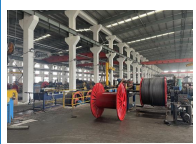
Aulone is a professional manufacturer and supplier of steel wire ropes, wire rope slings, synthetic ropes and rigging hardware for lifting, marine, mining, construction and industrial applications. With over 20 years of manufacturing experience, an annual capacity of 200,000 tons and EN 12385-4 compliant production certified to ISO 9001, BV, ABS, DNV, RMRS and CE, we supply all three finishes from stock, with custom assemblies, third-party testing on request and fast delivery worldwide. For a quote or technical advice on your application, email info@wireropes.net – I answer most technical questions the same day.