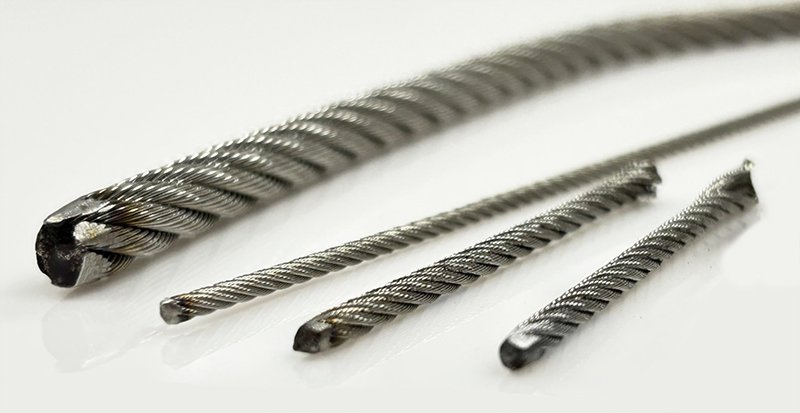
By Andri — Technical Writer & Crane Rope Specialist, Aulone (www.wireropes.net)
Direct answer: To choose wire rope for a crane, you must match five factors to your working conditions: (1) rope construction (6-strand line-contact, 8-strand, or rotation-resistant multi-strand), (2) core type (IWRC for crushing resistance, FC only for light duty), (3) rotation resistance (required for single-fall hoisting), (4) whether a compacted or plastic-impregnated rope is justified by duty cycle and drum layers, and (5) the D/d ratio of your sheaves and drum. Get these five decisions right and rope service life typically doubles compared with selecting by diameter alone.
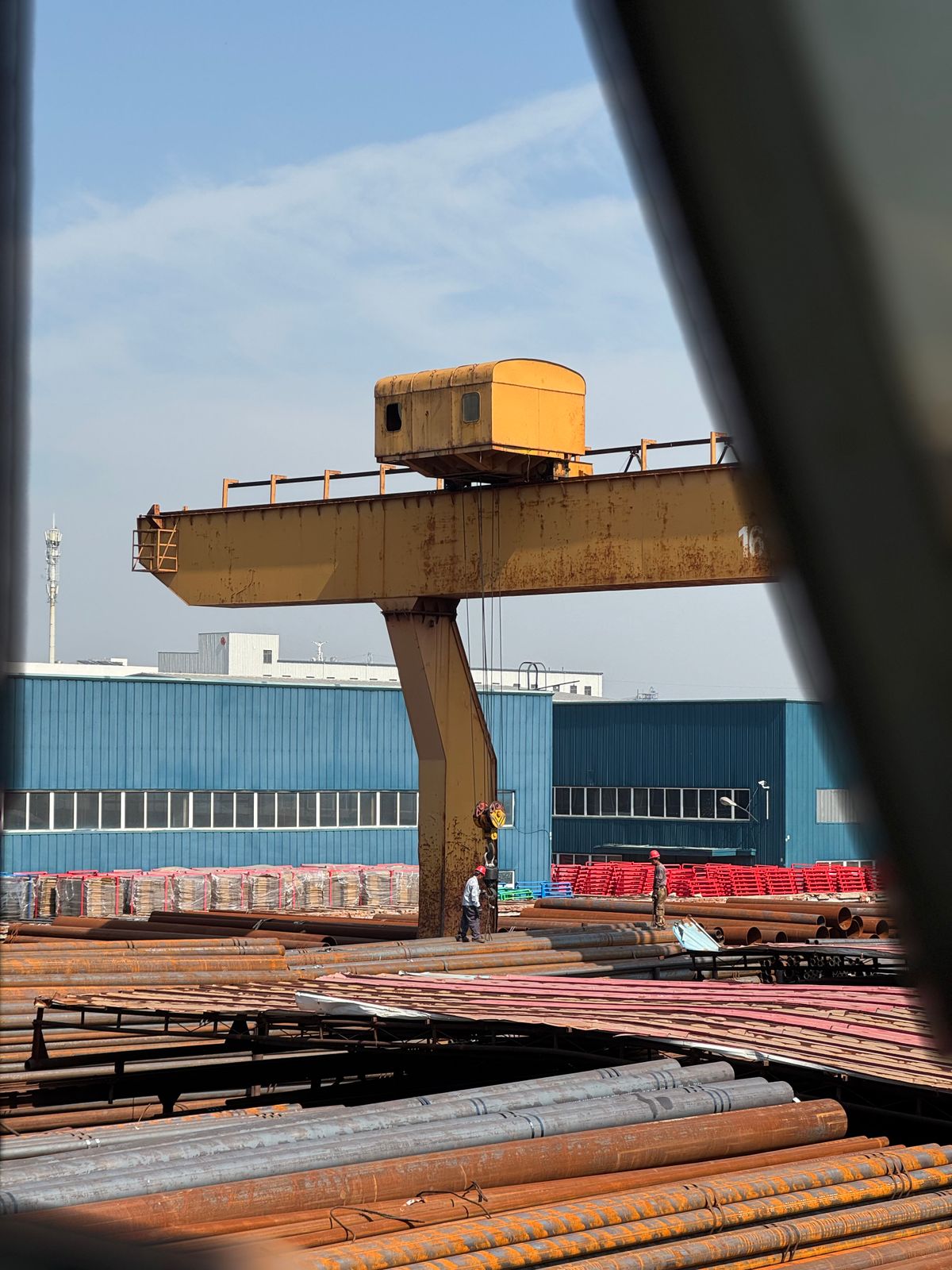
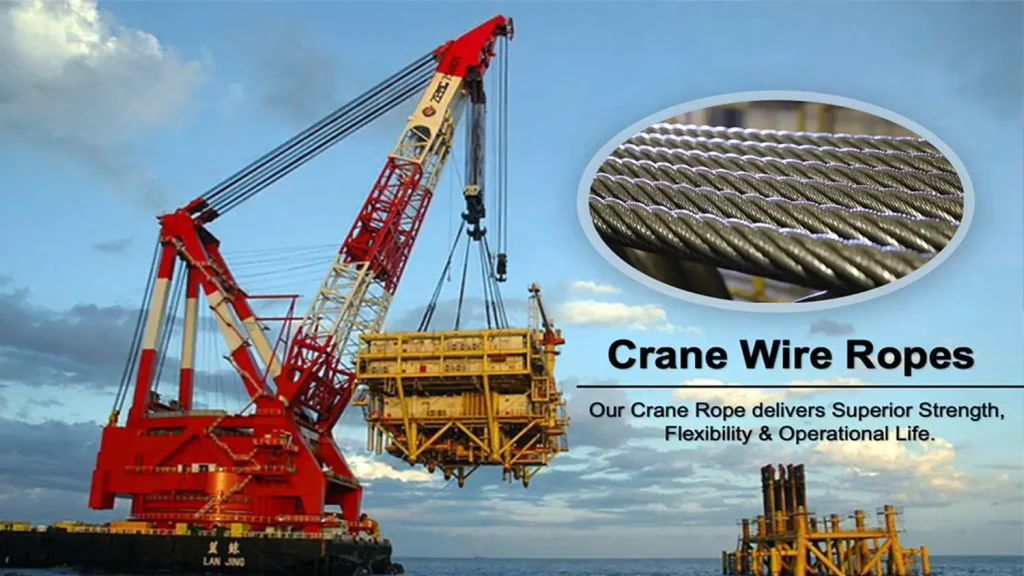
A working crane in a steel mill yard — this is the environment where a wrongly selected rope fails first. Image: Pexels (free license).
I have spent years answering one email over and over: “Which wire rope should I buy for my crane?” Buyers often send me nothing but a diameter and a breaking load, and my heart sinks a little, because those two numbers are maybe 30% of the real answer.
Most premature crane rope failures are not manufacturing defects — they are selection mistakes. A rope that works perfectly on a multi-fall crawler crane can birdcage within weeks on a single-fall tower crane. In this guide I will walk you through the same process I use when a customer asks Aulone for a recommendation: step by step, with the tables and numbers you can put straight into a quotation request.
Why Crane Wire Rope Selection Matters More Than Price
Wire rope is usually 2–5% of a crane’s purchase price but drives a disproportionate share of its downtime. Every rope change means scheduled stoppage, re-reeving labour, and a load test. On high-cycle port equipment, an incorrectly selected rope can be replaced three or four times as often as a correctly matched one — and each unplanned failure risks a dropped load and injured people.
Three hidden costs dominate total rope cost:
- Rope life in bending cycles. A rope that lasts twice as long per change cuts annual rope spend almost in half.
- Sheave and drum wear. A hard, unsupported rope wears the machinery; a soft, crushable rope wears itself. The right rope protects both.
- Downtime and safety exposure. Discard criteria under ISO 4309 are not suggestions — operating past them transfers liability to the crane owner.
Step 1: Define the Working Load and Required Safety Factor
Start from the real maximum line pull — not the crane’s rated capacity. The line pull on the rope is reduced by the number of rope parts (falls) in the reeving system:
Line pull per rope part = (hook load + hook block + sling weight) ÷ number of rope falls
Then verify the rope’s Minimum Breaking Force (MBF) against the required design factor:
| Application | Typical Safety Factor (MBF ÷ max line pull) |
| Mobile crane hoist rope | ≥ 5:1 |
| Tower crane hoist rope | ≥ 5:1 (often higher per local regulation) |
| General overhead crane | 5:1 – 6:1 |
| Heavy-duty, high-cycle or hot-metal duty | 6:1 – 8:1 |
| Personnel platform lifting | Per governing standard, typically ≥ 7:1 – 10:1 |
Example from my own quotations: a 50 t load on a 4-fall hook system produces roughly 12.5 t (≈122.6 kN) line pull per rope part, before dynamic factors. With a 5:1 design factor you need a rope with MBF of at least ~613 kN — then check the crane manufacturer’s rope diameter limit, because the rope must also physically fit the drum and sheave grooves.
Never select rope size by matching diameter to the old rope only. Old ropes are sometimes non-original substitutions, and diameter alone says nothing about breaking force. Always compare MBF values at the same grade (1770, 1960, or 2160 MPa) — a higher grade allows a smaller diameter for the same strength, which reduces drum size and whole-machine weight.
Step 2: Choose the Rope Construction — 6-Strand, 8-Strand, or Rotation-Resistant
This is the most consequential decision, and it is where most selection mistakes happen. Match construction to the reeving system and duty:
| Construction | Typical Structures | Best For | Key Character |
| 6-strand line contact | 6×19S/W, 6×25F, 6×26WS, 6×29Fi, 6×31WS, 6×36WS, 6×41WS, 6×49WS | Multi-fall reeving, general hoisting, winch lines | Balanced strength, abrasion and fatigue; the universal workhorse |
| 8-strand line contact | 8×19S/W, 8×25F, 8×26WS, 8×36WS | Cranes needing extra flexibility and fatigue life | More flexible than 6-strand, slightly lower abrasion resistance |
| Rotation-resistant, 18-strand class | 18×7, 18×K7 (compacted) | Tower crane hoisting, moderate lift heights | Good rotation resistance and flexibility |
| Rotation-resistant, 34/35-strand class | 35×7, 35×K7 (compacted), 24W×7, 24W×K7 | Single-fall hoisting, high lift heights, truck and offshore cranes | Outstanding rotation resistance, high breaking force when compacted |
| Special carrying/traction | 4V×39S+5FC | STS crane trolley traction | Oval-strand flat design for shaped sheaves |
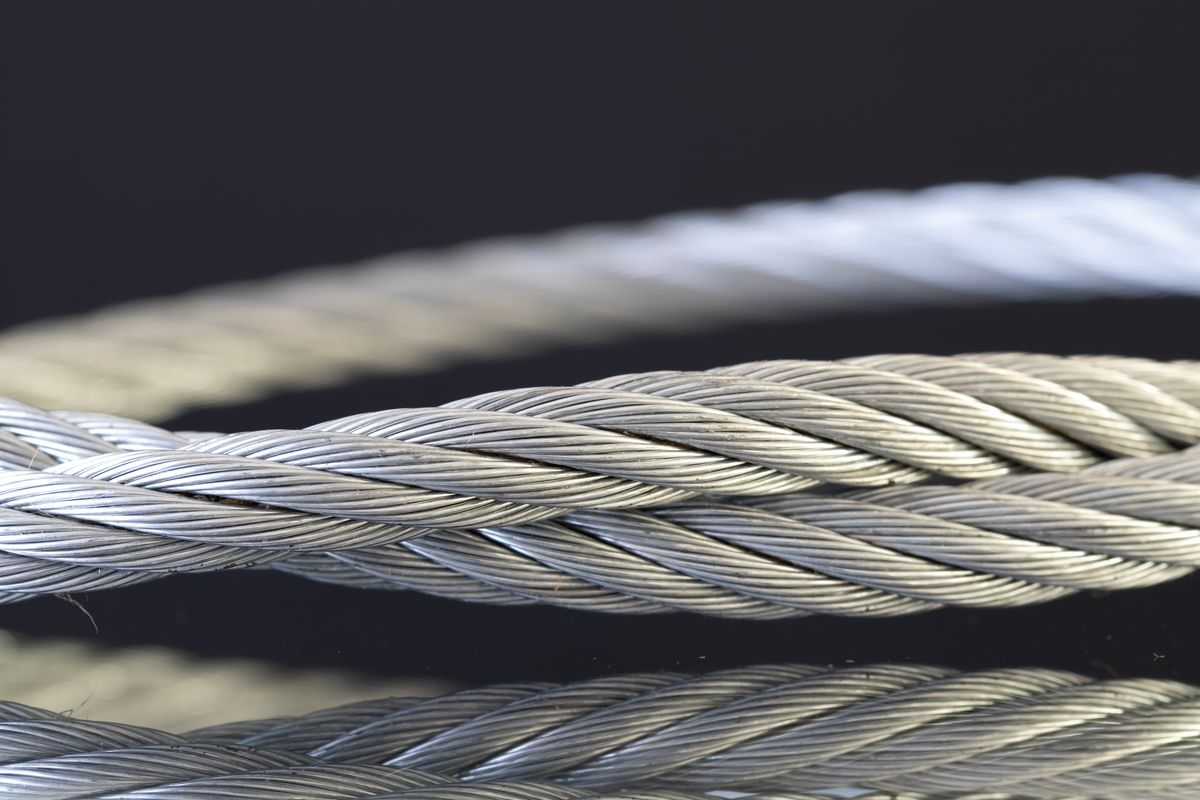
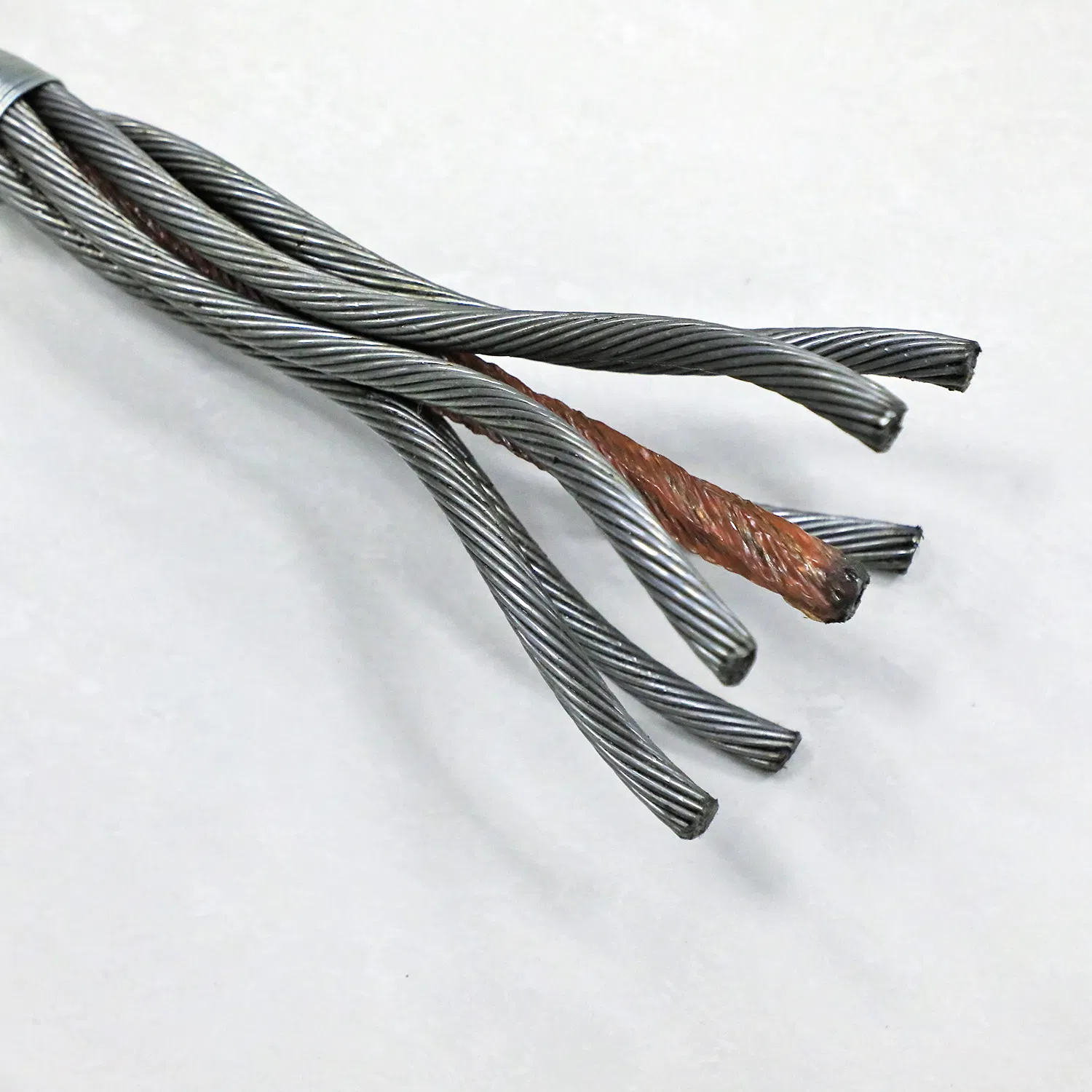
The twist of strands around the core is what decides how a rope rotates, bends and wears. Image: Pexels (free license).
The single-fall rule
If the load hangs from one rope part and is free to rotate, a conventional 6-strand rope will spin the load, double-seize itself, and eventually kink. Use a rotation-resistant rope — 18×7 class for moderate heights, 35×7 class for tall lifts and heavy loads. In multi-fall reeving, rotation is naturally balanced and a 6-strand or 8-strand line-contact rope gives better abrasion resistance at lower cost.
A common misunderstanding: 35×K7 vs 19×7 (18×7)
Both are rotation-resistant, but they behave differently. The 18×7 class is more flexible and easier to handle, with good rotation resistance for typical tower crane heights. The 35×7 class has more outer strands carrying load, giving higher breaking force and better drum-crushing resistance — which is why it dominates main hoist duty on large mobile, crawler and offshore cranes. Note that rotation-resistant ropes are torque-balanced structures: they must never be shock-loaded, and fleet angles above roughly 1.5° can distort the inner strands. Verify your crane’s geometry before ordering.
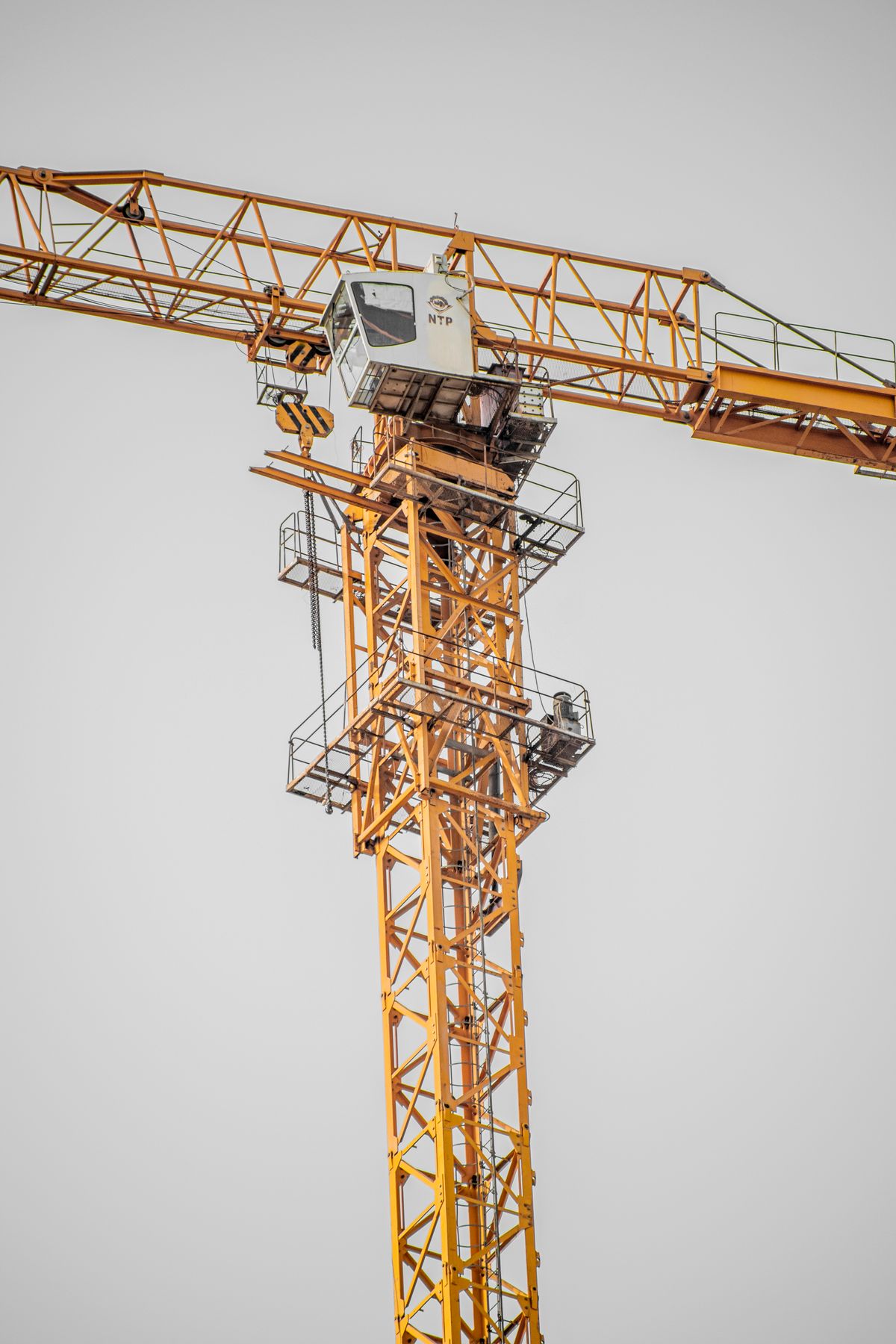
Tall tower cranes like this one are the classic application for 18×7 and 35×7 rotation-resistant ropes. Image: Pexels (free license).
Step 3: Choose the Core — IWRC vs FC vs Plastic-Impregnated Core
The core supports the strands and determines how the rope behaves under radial pressure:
| Core Type | Structure | Advantages | Limitations |
| FC (fiber core) | Natural or synthetic fiber | Flexible, cheap, retains lubricant | Low crush resistance, degrades in heat; unsuitable below about −20 °C or in multi-layer spooling |
| IWRC (independent wire rope core) | Small rope as core | ~7–10% higher breaking force, strong crush and heat resistance | Slightly less flexible |
| EPIWRC / PWRC (plastic-impregnated IWRC) | IWRC encapsulated in polymer | Distributes internal pressure, cushions wire-to-wire contact, locks in core lubricant, blocks contaminants | Higher unit cost, justified by much longer life in heavy duty |
For crane hoisting, IWRC is the default. FC survives only on light-duty overhead cranes with single-layer spooling. For multilayer drum winding — where bottom layers are crushed under every upper layer — specify either a compacted rope or a plastic-impregnated core. The polymer layer between the outer strands and the steel core is the single most effective feature for extending life on port cranes, ladle cranes and beam launchers, which is why Aulone’s heavy-duty series such as 6×K36WS-EPIWRC and 8×K26WS-EPIWRC are built with injected polymer cores as standard.
Step 4: Compacted or Non-Compacted?
Compaction (drawing the stranded or closed rope through a die) flattens the outer wires into a smoother, denser surface:
- +10–15% higher breaking force at the same diameter and grade
- Larger contact area on sheaves and drum → less wear on both rope and machinery
- Better structural stability and crush resistance for multi-layer spooling
- Somewhat lower flexibility — compensate with a slightly larger D/d ratio
My rule of thumb: high duty cycle, multi-layer drum, or rated-capacity operation → compacted (e.g., 35×K7, 18×K7, 6×K36WS). Light-to-medium duty with generous sheaves → standard round-strand rope is fully sufficient and more economical.
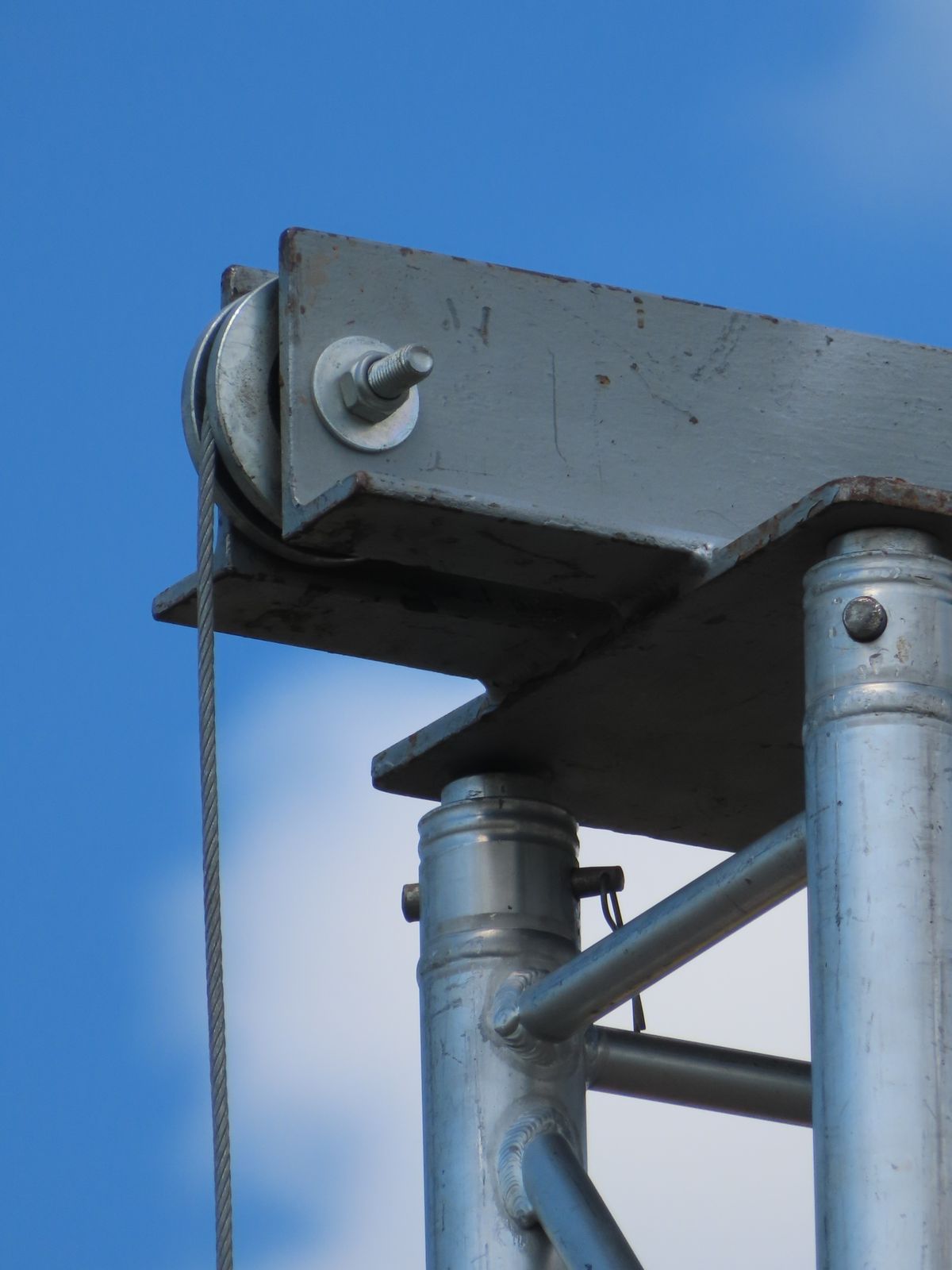
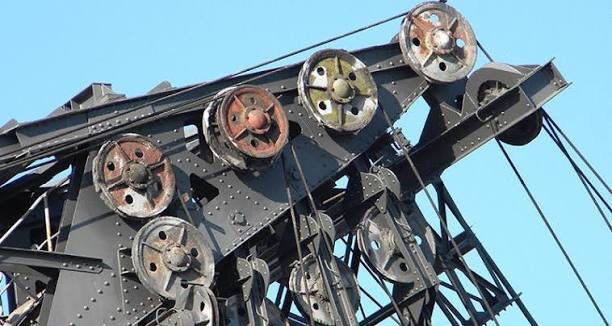
Where the rope runs over sheaves, contact area and D/d ratio decide its fatigue life. Image: Pexels (free license).
Step 5: Check the D/d Ratio — The Silent Fatigue Killer
The D/d ratio is sheave (or drum) pitch diameter divided by rope nominal diameter. Bending stress rises steeply as this ratio falls, and fatigue life falls faster still:
| D/d Ratio | Relative Bending Fatigue Life (indicative) |
| 10:1 | ~15–20% |
| 16:1 | ~45–50% |
| 20:1 | ~75% |
| 25:1 | 100% (reference) |
| 34:1 | ~150% |
Practical minimums: 18:1 for crane hoisting wherever possible, and never below the crane manufacturer’s specified value. Also check sheave groove radius: the groove should support 135–150° of the rope’s circumference. Too tight pinches the rope; too loose (more than 5% oversize against the rope radius) lets it flatten under load, concentrating contact pressure at two points and generating fatigue breaks in the valleys between strands — the classic pattern of two broken-wire bands 120° apart.
Step 6: Match Surface Finish and Lay to the Environment and Drum
- Bright (ungalvanized): lowest cost, correct for dry indoor duty.
- Galvanized: mandatory for outdoor yards, coastal and offshore atmospheres, and anywhere corrosion would pit the wires. Hot-dip galvanizing gives the heaviest coating.
- Lay direction: match the rope’s lay to the drum’s spooling direction so the rope winds smoothly. On lebus or multi-layer drums, follow the drum manufacturer’s specification (right regular lay RHRL is the most common). Wrong lay direction causes loose winding, rope-on-rope crushing, and dramatic life loss.
When ordering, specify the full designation so quotations are comparable, e.g.: 6×36WS-EPIWRC, 1960 MPa, RHRL, galvanized, 20 mm, EN 12385-4 — including length tolerance, end terminations, and any third-party certification required (ABS, DNV, BV, LR, RMRS for offshore and marine scopes).
Step 7: Plan for Inspection and Replacement from Day One
Selection is only half of life-cycle cost. Build the inspection regime into the purchase decision. Under ISO 4309 (and equivalent local rules), ropes need daily visual checks, periodic thorough examination, and detailed examination with diameter measurement — plus NDT on critical equipment. Typical discard criteria include:
- Visible broken wires exceeding the standard’s count in one lay length (rotation-resistant ropes use stricter limits, since inner-layer breaks are hidden)
- Diameter reduction of 7% or more from nominal (10% for FC-core ropes)
- Birdcaging, kinking, wave deformation, or core protrusion
- Severe internal or external corrosion, or a stiff, dry rope that no longer lubricates
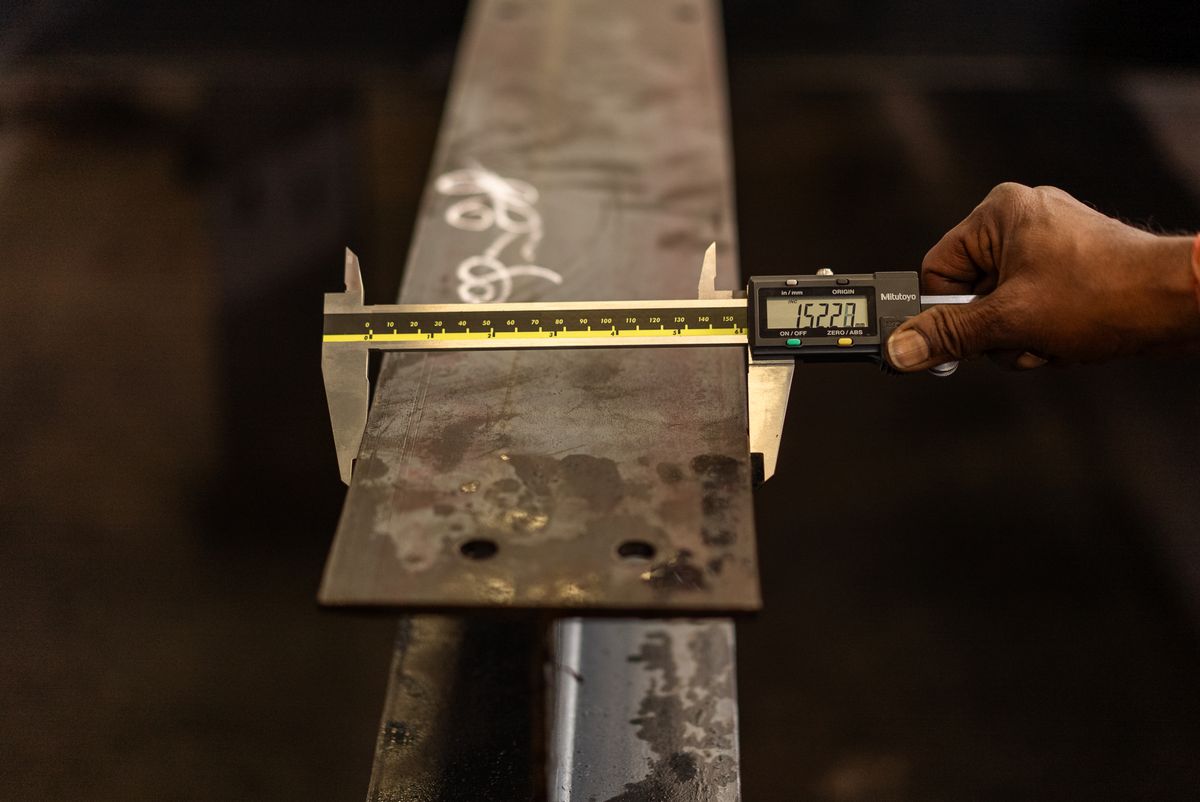
Regular measurement against discard criteria is what keeps a good rope selection paying off. Image: Pexels (free license).
Quick Selection Summary by Crane Type
| Crane Type | Recommended Rope |
| Tower crane, single fall | 18×K7 or 35×K7 rotation-resistant, compacted |
| Truck crane (all terrain) main hoist | 35×K7 or 35WXK7 rotation-resistant |
| Crawler crane main hoist | 35×K7 / 6×K36WS-EPIWRC / 8×K26WS-EPIWRC |
| Overhead / gantry crane | 6×36WS IWRC (compacted or EPIWRC for heavy duty) |
| Rotary drilling rig | 35WXK7 rotation-resistant (most widely used), 6×K36WS-EPIWRC / 8×K26WS-EPIWRC for heavy rigs |
| STS / port container crane | 6×K36WS-EPIWRC hoist + 4V×39S+5FC or AL FLEX-7 traction |
| Offshore platform / ship crane | 35×K7 galvanized, or 6-strand large-diameter rope |
| Metallurgical ladle crane | 6×K36WS-EPIWRC or 8×K26WS-EPIWRC, heat-resistant lubrication |

Port machinery is the highest-cycle rope application in the world — this is where plastic-impregnated compacted ropes earn their cost back fastest. Image: Pexels (free license).
FAQ
Q1: What is the best wire rope for a mobile crane? For the main hoist on a single-fall system, a 35×7 class compacted rotation-resistant rope (35×K7) is the usual answer — high breaking force, strong drum-crushing resistance, and stable torque balance. For multi-fall reeving, a 6×36WS or 8×26WS line-contact rope with IWRC or plastic-impregnated core is more economical and abrasion-friendly.
Q2: Can I use a non-rotating rope on a multi-fall crane? Yes, but it is rarely necessary. Rotation is already balanced across falls, and rotation-resistant ropes cost more, tolerate fleet angles poorly, and use stricter discard criteria. Standard 6-strand rope is normally the better choice for multi-fall systems.
Q3: What safety factor should crane wire rope meet? Most crane applications require a design factor of 5:1 (MBF to maximum line pull); heavy-duty, high-cycle, or hot-metal service typically needs 6:1–8:1. Always apply the stricter of: your local regulation, the crane standard in force, and the crane manufacturer’s manual.
Q4: IWRC or fiber core — which is better for cranes? IWRC, in nearly all crane hoisting. It adds roughly 7–10% breaking force and resists the crushing that fiber cores cannot survive on multi-layer drums. FC is only sensible for light-duty indoor overhead cranes.
Q5: How often should crane wire rope be replaced? There is no fixed calendar life — replacement follows discard criteria from ISO 4309 or your local standard, based on broken-wire counts, diameter loss (typically ≥7%), deformation, and corrosion. High-cycle port equipment may need replacement every 6–18 months; lightly used tower cranes can go several years with good maintenance.
Q6: Does galvanizing weaken wire rope? Not meaningfully at the grades used for crane rope. The zinc coating is applied to the wire before stranding, and galvanized ropes are rated to the same 1770/1960 MPa grades as bright ropes. The small strength trade-off is far outweighed by corrosion protection in outdoor, coastal and marine service.
Work With a Manufacturer Who Selects With You
Aulone is a professional manufacturer and supplier of steel wire ropes, wire rope slings, synthetic ropes and rigging hardware for lifting, marine, mining, construction and industrial applications. With more than 20 years of manufacturing experience, 200,000 tons of annual capacity, strong stock availability, and certification to EN 12385-4 and ISO 9001 (with BV, ABS, DNV and RMRS third-party testing available), Aulone supplies compacted, rotation-resistant and plastic-impregnated crane ropes — including custom assemblies terminated to your drawings.
Send me your crane model, reeving system, lift height, drum and sheave dimensions, and working environment. I will recommend the optimal construction and return a quotation — and if you are unsure why your current rope is failing early, I will help you diagnose it.
Request a quotation or technical support: Email: info@wireropes.net Website: www.wireropes.net
Send your wire rope specifications today — customized solutions and third-party testing (BV, ABS, DNV, RMRS) are available on request.