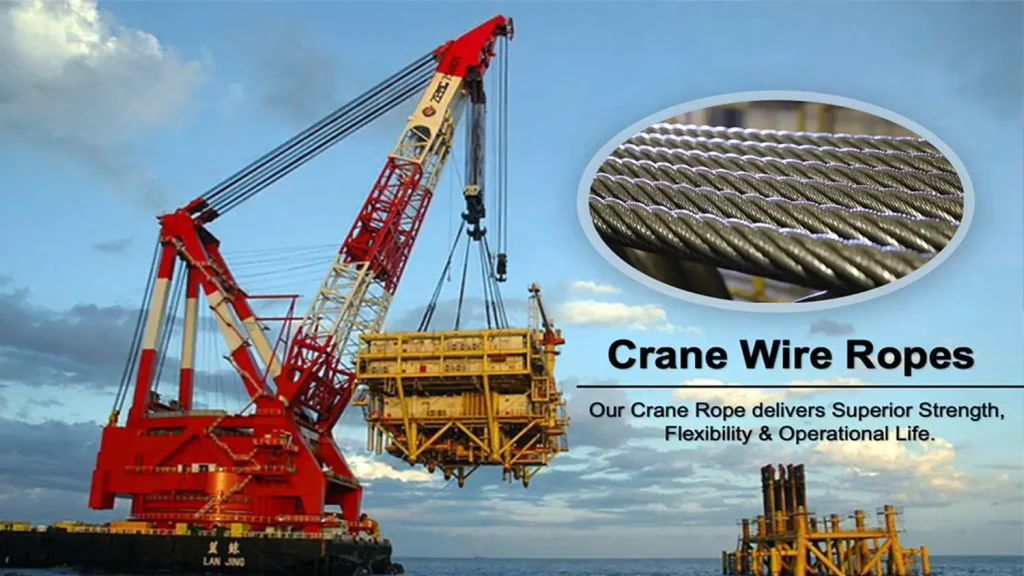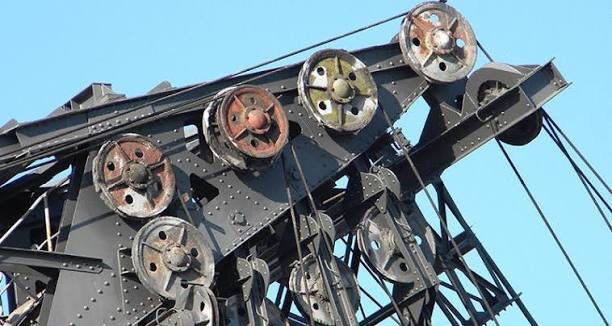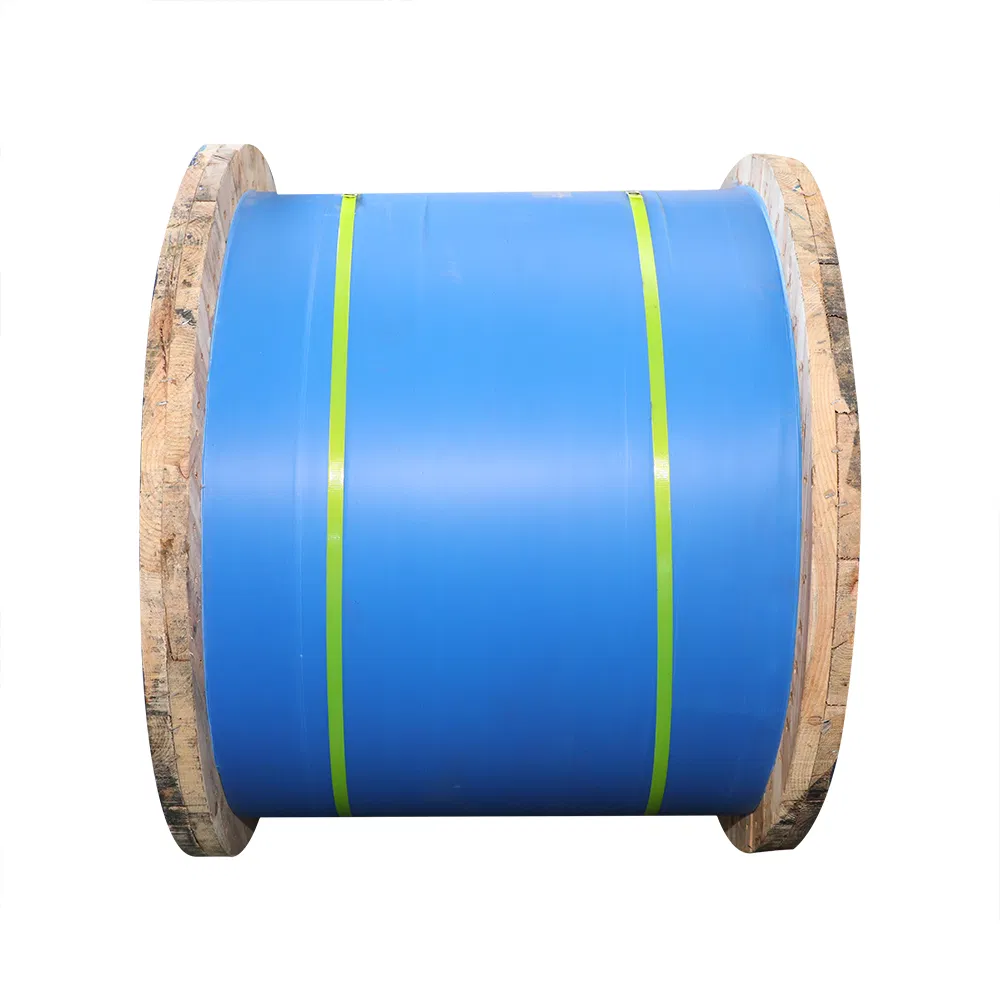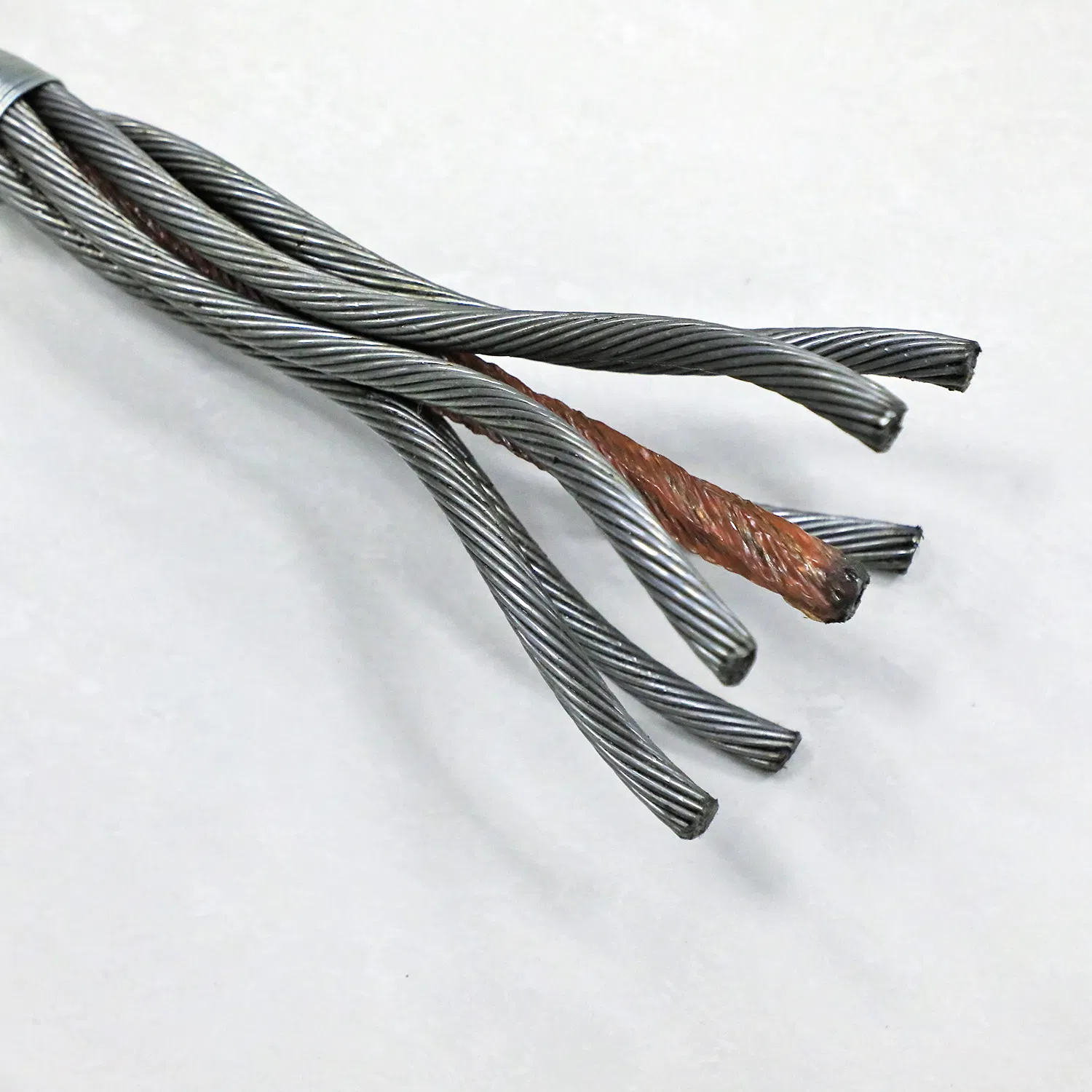
Direct answer: 6×36 wire rope is a six-strand rope whose strands contain 27 to 49 wires each — in practice, almost always the 6x36WS (Warrington-Seale) construction with an independent wire rope core (IWRC). It is the most flexible rope in the common 6-strand families, with the best bending-fatigue life, at the cost of slightly lower abrasion resistance than 6×19 class. Typical sizes run from 8 mm to 52 mm, with minimum breaking force from about 45 kN (8 mm) up to roughly 1,700 kN (52 mm) in 1960 MPa grade. It is the default choice for overhead crane hoist ropes, mobile crane main hoist lines, winch lines and machine-made slings wherever the rope bends over sheaves all day long.
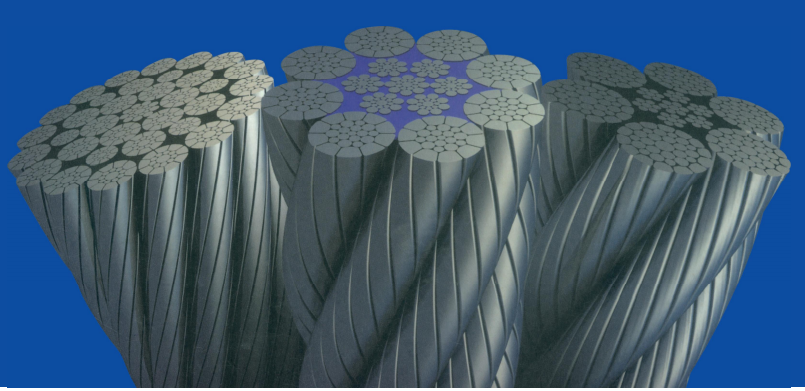
Of all the emails I answer, the 6×36 family generates the most confusion per millimetre. Buyers ask for “6×36” and mean three different things: a class of rope, a specific Warrington-Seale construction, or a general-purpose hoist rope their crane OEM originally fitted. In this guide I will clear that up, give you real specification and breaking strength numbers in both metric and imperial, and explain where 6×36 beats 6×19 — and where it does not.
What the “6×36” Designation Actually Means
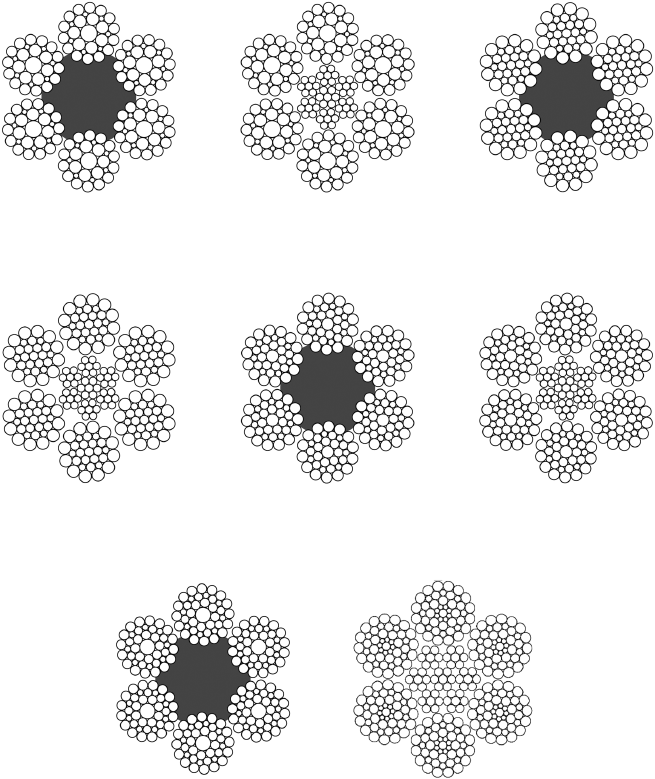
Wire rope nomenclature is simple once someone shows you the trick. In 6×36, the first number is the count of strands (6), and the second is the nominal number of wires in each strand (36). But here is what most catalogue tables do not tell you: 6×36 is technically a classification, not a single construction. Under EN 12385-4 and the equivalent North American standards, the 6×36 class covers 6-strand round strand ropes with 27 to 49 wires per strand. Ropes of 6x31WS, 6x36WS, 6x37S, 6x41WS and 6x49SWS all belong to this class, and within a given diameter and grade they share the same minimum breaking force and weight.
In day-to-day trade, when someone says “6×36” they nearly always mean 6x36WS — Warrington-Seale — with an IWRC core. That specific construction has become the benchmark of the class because it balances fill factor, fatigue life and abrasion resistance better than the alternatives. A complete specification line looks like this:
6x36WS + IWRC, RHRL (right hand regular lay), 1960 MPa, galvanized or bright, EN 12385-4
Every element of that line matters, and each one is a decision I walk through with customers before quoting. Get the diameter right but the lay or grade wrong, and the rope will still fail early — just more expensively.
The Warrington-Seale Strand: Why 6x36WS Dominates the Class
A Warrington-Seale strand uses three layers of wires. The outer layer consists of large Seale-type wires of equal diameter, which give the rope its abrasion-resistant working surface. Beneath them, the intermediate Warrington layer alternates large and small wires so the layers nest tightly together. The result is a dense strand with a high metallic cross-section (fill factor typically 0.55–0.59) and excellent support between wire layers.
Why does that matter to you? Because fatigue life lives or dies on how well the wires slide against each other as the rope bends over a sheave. More, smaller, well-supported wires = more bending cycles before broken wires appear at the strand crowns. That is precisely the failure mode that governs rope replacement under ISO 4309 inspection.
6×36 vs 6×19 Class: Which One Do You Need?
This is the most common selection question I get. The honest answer: for anything that bends frequently over sheaves, 6×36 usually wins; for straight-line pull and abrasion-dominated work, 6×19 holds its own and costs less.
| Property | 6×19 Class (e.g. 6x19S, 6x25FW, 6x26WS) | 6×36 Class (e.g. 6x31WS, 6x36WS, 6x41WS) |
|---|---|---|
| Wires per strand | 16–26 | 27–49 |
| Outer wires | Fewer, thicker | More, thinner |
| Abrasion resistance | Excellent | Good |
| Bending fatigue resistance | Fair | Excellent |
| Flexibility | Moderate | High |
| Crush resistance | Good (better with IWRC) | Moderate — specify IWRC for multi-layer spooling |
| Weight and MBL | Identical size for size within the same grade and core | |
| Typical duty | Winch lines, boom pendants, straight pull, abrasive surfaces | Crane hoist ropes, high-cycle reeving, small D/d sheaves |
A practical rule from my own quotations: if your rope spends its life cycling over sheaves — overhead crane hoists, mobile crane main hoist, grab cranes, elevator-like duty — choose 6×36. If it spools straight onto a drum and drags against abrasive surfaces more than it bends — drag lines, some winch lines — 6×19 class often gives a cheaper, longer-wearing life.
Core Options: IWRC vs FC vs WSC
The core is the rope’s spine. It supports the strands, holds lubricant and — critically for cranes — resists crushing when the rope spools in multiple layers on the drum. Your core choice changes strength by roughly 7–12% and changes service life much more than that.
| Core Type | Meaning | Relative MBL | Best For | Avoid When |
|---|---|---|---|---|
| FC | Fiber core (natural or PP sisal/polypropylene) | ~88–92% of IWRC | Light duty, max flexibility, slings with hand-spliced eyes, low crushing | Multi-layer drum spooling, high loads, high temperatures (fibre degrades above ~100 °C) |
| WSC | Wire strand core (a 7-wire strand) | ~95–98% of IWRC | Small-diameter ropes needing steel support, static guylines | Heavy crushing duty — less mass than a full IWRC |
| IWRC | Independent wire rope core (its own small rope) | 100% (reference) | Crane hoist ropes, multi-layer spooling, marine winches, heavy lifting | Cost-driven light duty where flexibility matters more than strength |
For crane hoist applications I specify IWRC essentially every time. The small premium in rope price buys a large margin against drum crushing — the flattening damage that shows up when a rope runs under several dead wraps on the bottom layer. If your rope ever ran through a multi-layer drum without an IWRC, you have probably seen that signature diamond-shaped strand flattening at inspection.
6×36 Wire Rope Specifications and Breaking Strength
The two tables below are the numbers people actually email me for. Values are for 6x36WS + IWRC, right hand regular lay, grade 1960 MPa to EN 12385-4. Always confirm against the manufacturer’s certified data sheet for the exact production batch — but these are the figures you can use for engineering comparisons.
Metric sizes (6x36WS + IWRC, 1960 MPa)
| Diameter (mm) | Approx. Weight (kg/m) | Minimum Breaking Force (kN) | Approx. WLL at 5:1 Safety Factor (t) |
|---|---|---|---|
| 8 | 0.26 | 44.7 | 0.9 |
| 10 | 0.41 | 69.8 | 1.4 |
| 12 | 0.59 | 100.5 | 2.0 |
| 13 | 0.69 | 117.9 | 2.4 |
| 14 | 0.80 | 136.8 | 2.8 |
| 16 | 1.05 | 178.6 | 3.6 |
| 18 | 1.33 | 226.1 | 4.6 |
| 20 | 1.64 | 279.1 | 5.7 |
| 22 | 1.98 | 337.7 | 6.9 |
| 24 | 2.36 | 401.9 | 8.2 |
| 26 | 2.76 | 471.7 | 9.6 |
| 28 | 3.21 | 547.0 | 11.2 |
| 32 | 4.19 | 714.5 | 14.6 |
Imperial sizes (6×36 Class IWRC, EIPS)
| Diameter (inch) | Weight (lb/ft) | Minimum Breaking Force (tons of 2,000 lb, EIPS) | Approx. WLL at 5:1 (short tons) |
|---|---|---|---|
| 1/2 | 0.44 | 13.3 | 2.7 |
| 5/8 | 0.69 | 20.6 | 4.1 |
| 3/4 | 0.99 | 29.4 | 5.9 |
| 7/8 | 1.35 | 39.8 | 8.0 |
| 1 | 1.76 | 51.7 | 10.3 |
Three notes I give every buyer with these tables:
- Grade moves everything. The same 6x36WS+IWRC construction is available in 1570, 1770, 1960 and 2160 MPa grades. Stepping from 1770 to 1960 buys you roughly 10% more breaking force at the same diameter — sometimes the cheapest way to keep an older crane compliant with its design factor.
- Galvanizing can cost strength. Wires galvanized at finished size typically lose around 10% of breaking force; drawn-galvanized rope retains full bright-rope strength. Check which process your supplier uses.
- WLL is not MBL. The working load limit is the MBL divided by the design safety factor — 5:1 is a common general figure, but crane design factors are set by the crane standard and classification society, not by the rope vendor. Never lift based on the breaking load alone.
Finishes and Grades: Galvanized vs Bright vs Stainless
| Finish | Corrosion Protection | Strength vs Bright | Typical Use for 6×36 |
|---|---|---|---|
| Bright (ungalvanized, lubricated) | Relies on lubrication only | Reference (100%) | Indoor cranes, dry industrial environments — the cheapest option |
| Hot-dip galvanized (at finished size) | Good zinc barrier for outdoor and marine air | ~10% lower | Port equipment, offshore supply, outdoor gantry cranes |
| Drawn galvanized | Good zinc layer, denser after drawing | Equal to bright | Marine and offshore winches where full strength plus corrosion resistance are both required |
| Stainless steel (304/316) | Highest corrosion resistance | Typically lower than carbon steel grades; much higher cost | Food, chemical and marine instrumentation — rarely used for heavy crane hoisting |
My default recommendation for outdoor and port duty is drawn-galvanized 6x36WS+IWRC: you keep full EIPS-class strength and gain a genuine corrosion barrier. For indoor overhead cranes, bright rope with good lubrication discipline is the economical workhorse.
Where 6×36 Wire Rope Earns Its Keep
After twenty-plus years of watching ropes in service, I can group 6×36 applications into a short list:
- Overhead and gantry crane hoist ropes — arguably the single largest user of 6×36 class rope worldwide. The class is original equipment on many European and North American EOT cranes because bending cycles dominate their duty.
- Mobile crane main and auxiliary hoist lines — in multi-fall reeving, where rotation is managed by the reeving itself, 6×36 gives superior fatigue life. For single-part lines, switch to rotation-resistant 35xK7 instead.
- Winch and pull lines — construction winches, marine deck winches and spooling duties where flexibility aids smooth multi-layer spooling.
- Machine-made slings — 6×36 IWRC (and fibre core for hand-spliced eyes) is the classic sling construction, with WLL set by EN 13414 factors.
- General engineering — draglines on smaller machines, dredging, logging, and utility pulling where a flexible all-rounder is wanted.

One caution I repeat constantly: 6×36 is not rotation-resistant. It is a conventional 6-strand rope and will spin a free-hanging load. If your reeving is single-part or the load must not rotate — tower crane hooks, most modern truck crane single-line work — you need an 18xK7 or 35xK7 rotation-resistant rope, and I will steer you there even if you asked me for 6×36.
Quality, Certificates and What to Check When Ordering
Wire rope is a certified safety component, and the paperwork is part of the product. When I quote 6×36 rope, these are the checkpoints:
- Standard compliance: EN 12385-4 for general lifting ropes (the certificate of conformity should cite it), with mill test certificates showing actual batch breaking force.
- Grade verification: 1960 MPa is the modern default for crane duty; 1770 suits cost-sensitive general use; 2160 is for compacted and high-performance applications.
- Third-party certification: for marine and offshore buyers, BV, ABS, DNV or RMRS certification on the specific rope batch, not just the factory.
- Preformed, regular lay, lubricated: the default for 6×36 crane and winch duty — confirm it, because “non-preformed” still appears in some low-cost offers and it behaves badly once cut.
- Assembly capability: if you need swaged sockets, poured spelter sockets or pressed eyes, order the rope cut to length and terminated by the factory — terminations are where site-made work most often goes wrong.
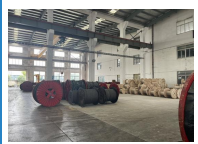
When you source from China, ask for the factory’s ISO 9001 certificate, recent third-party test reports, and — if your project needs it — which classification societies they hold. Aulone is a professional manufacturer and supplier of steel wire ropes, wire rope slings, synthetic ropes and rigging hardware for lifting, marine, mining, construction and industrial applications. We produce to EN 12385-4 under ISO 9001, with BV, ABS, DNV, RMRS and CE certification available, 200,000 tons of annual capacity and common 6x36WS+IWRC sizes in stock, plus custom-length assemblies with third-party testing on request.
FAQ: 6×36 Wire Rope Questions I Get Every Week
- 1. What does 6×36 mean on a wire rope?
- It is a classification: six strands, each with 27 to 49 wires (the nominal 36). In trade, “6×36” almost always refers to the 6x36WS Warrington-Seale construction, usually with an IWRC core, to EN 12385-4.
- 2. Is 6×36 wire rope rotation resistant?
- No. It is a conventional 6-strand rope and will rotate a free load under single-part reeving. For non-rotating duty use a rotation-resistant rope such as 18xK7 or 35xK7, or a 35WXK7 on drilling rigs.
- 3. What is the breaking strength of 6×36 wire rope?
- It depends on diameter, grade and core. A 20 mm 6x36WS+IWRC in 1960 MPa grade has a minimum breaking force of about 279 kN (roughly 28.5 tonnes); a 1-inch EIPS IWRC rope is rated around 51.7 US tons. Use the tables above and always deduct your design safety factor to get WLL.
- 4. Should I order 6×36 IWRC or 6×36 FC?
- For crane hoist ropes, winch lines with multi-layer spooling and anything heavily loaded: IWRC. Fibre core only makes sense for light duty, maximum flexibility, or traditional hand-spliced slings — and never where drum crushing or temperatures above about 100 °C are expected.
- 5. What safety factor should I apply to 6×36 rope?
- General lifting and slings commonly use 5:1 (WLL = MBL ÷ 5). Crane design factors are set by the governing crane standard — typically 3.5:1 to 5:1 for hoist ropes depending on duty class and the applicable regulation. Personnel platforms and some local codes require more. The crane’s documentation always wins.
- 6. Can 6×36 wire rope be used for slings?
- Yes — 6x36IWRC is the most common machine-assembled sling construction, and 6x36FC with hand-spliced eyes is traditional. Slings follow EN 13414 or the local equivalent for WLL markings and termination efficiency.
Get a Quotation for 6×36 Wire Rope
If you are matching a rope to a crane data plate, replacing a failed rope, or pricing a project volume, send me the diameter, construction, grade, length and termination details — or just a photo of the old rope’s tag. I will confirm the correct construction and reply with a quotation, stock status and lead time.
Email: info@wireropes.net
Aulone is a professional manufacturer and supplier of steel wire ropes, wire rope slings, synthetic ropes and rigging hardware for lifting, marine, mining, construction and industrial applications.
EN 12385-4 · ISO 9001 · BV · ABS · DNV · RMRS · CE — custom assemblies and third-party testing available.