Crane downtime often starts with one small mistake. Many people focus on the crane itself, but they forget the wire rope assembly. This can lead to safety risks, costly repairs, and unexpected failures.
A wire rope assembly is a complete lifting component that includes the wire rope, end fittings, and termination method. A properly designed assembly improves lifting safety, extends service life, reduces maintenance costs, and helps cranes meet international standards such as EN12385-4.
I still remember a project where a customer believed only the wire rope mattered. After checking the lifting system, I found the real problem was the damaged socket termination instead of the rope itself. That experience reminded me that every part of the assembly works together. In this guide, I will explain each part and show how to choose the right assembly for different lifting jobs.
What Is Included in a Wire Rope Assembly?
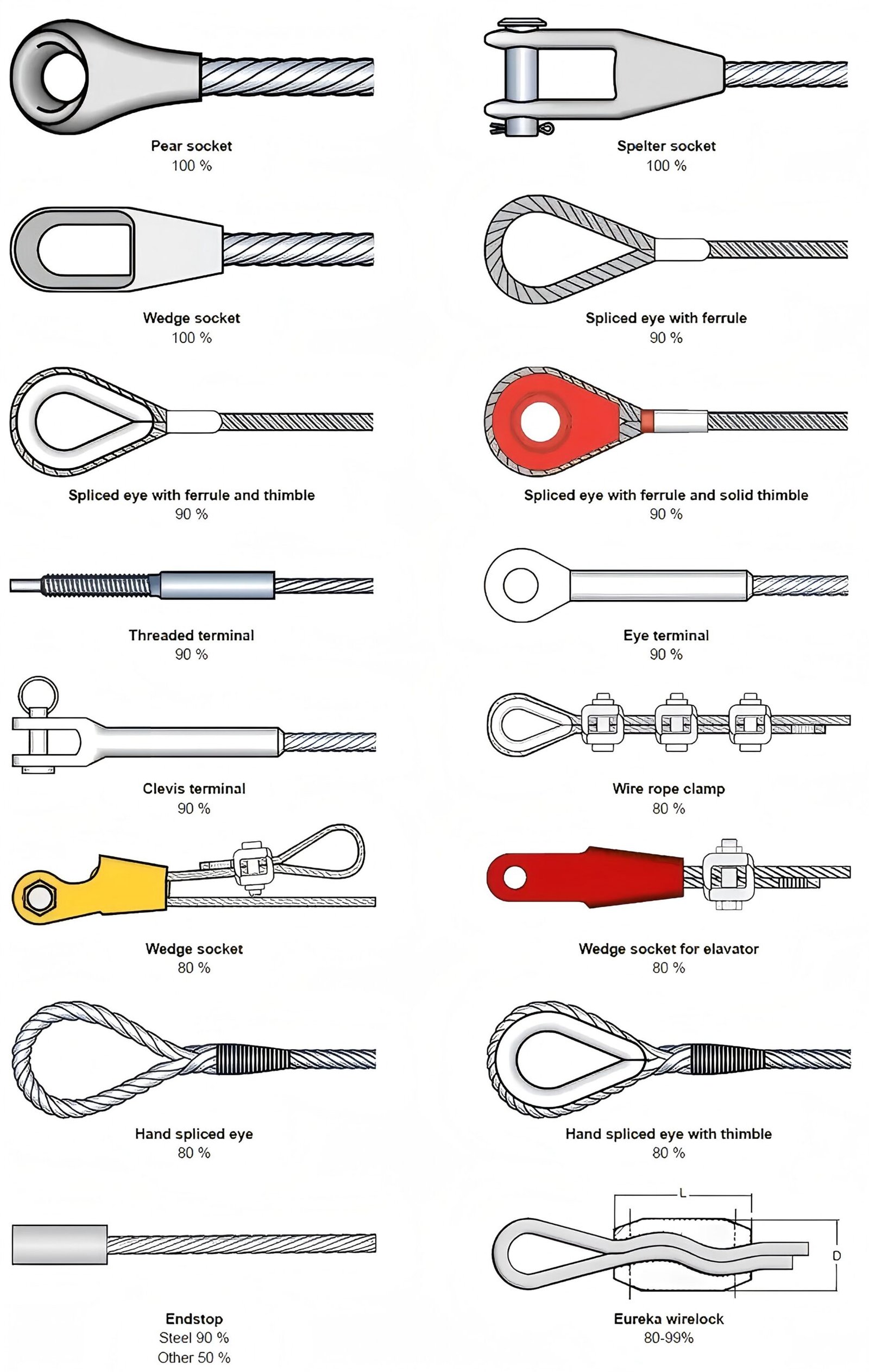
A complete wire rope assembly is more than a steel rope. Every part has its own job. Missing or poorly made components can reduce lifting safety.
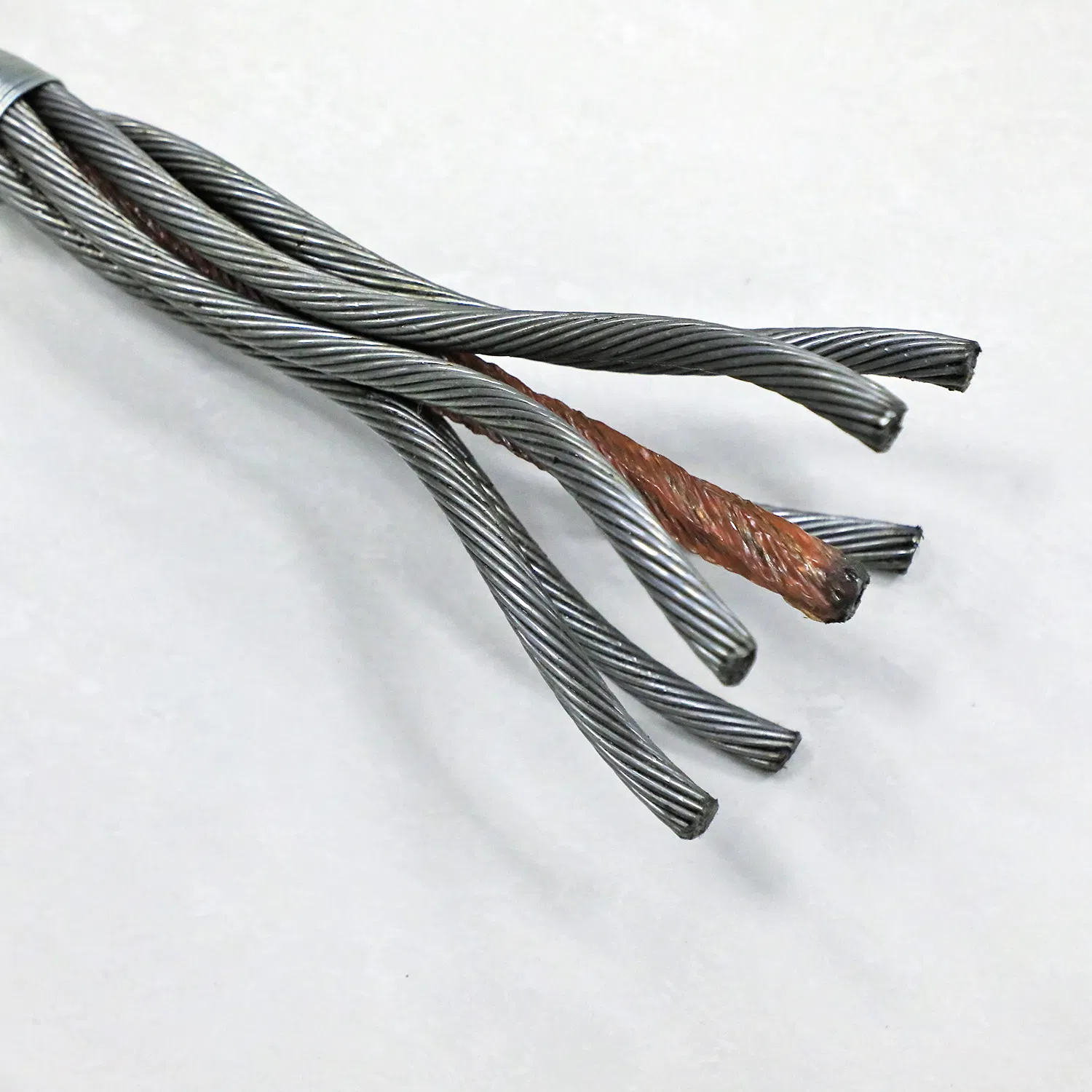
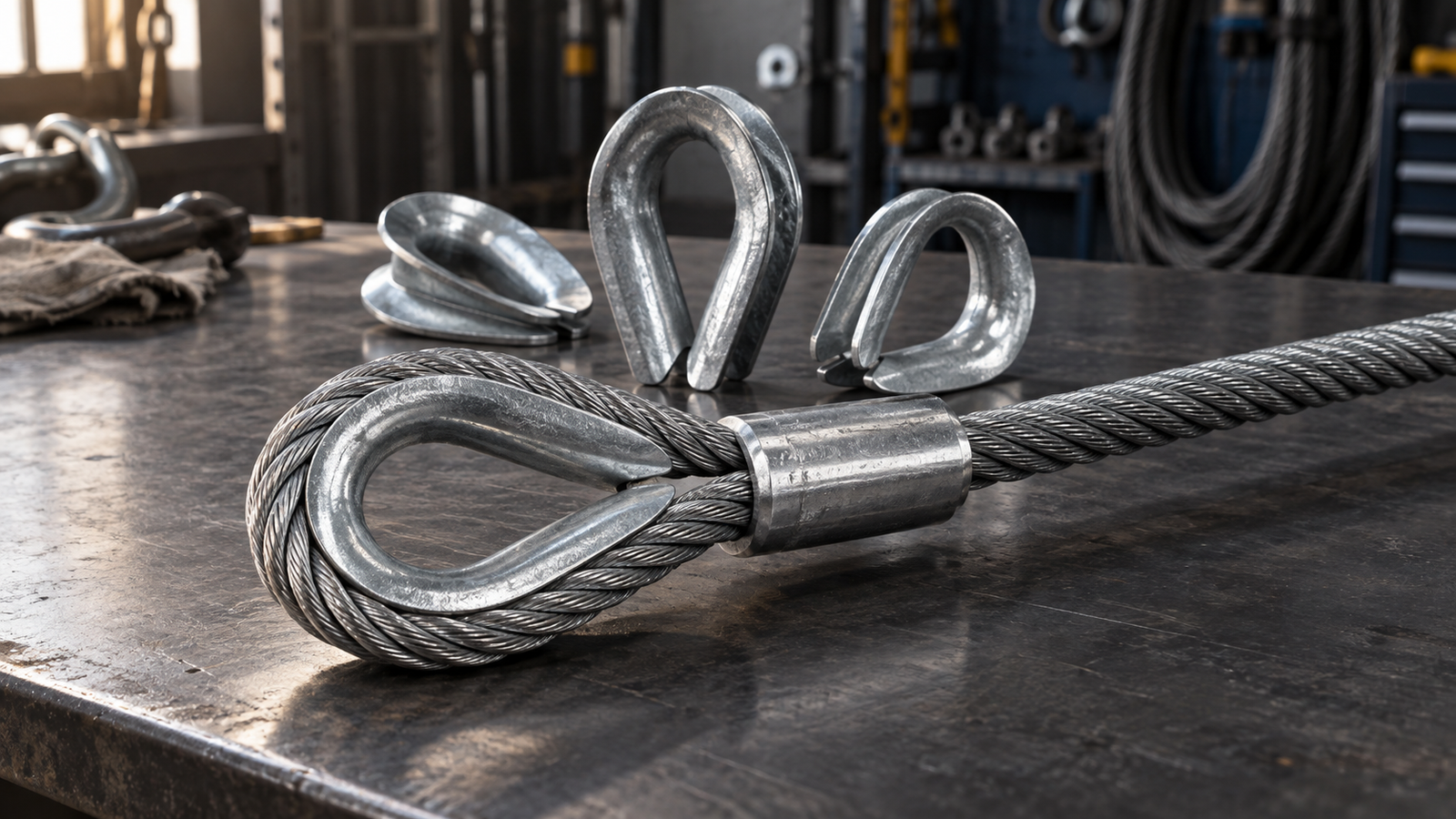
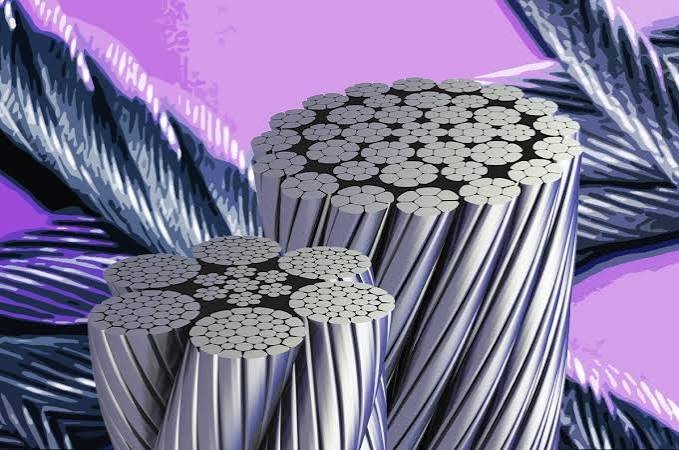
A wire rope assembly normally includes the wire rope, end terminations, sockets, thimbles, ferrules, hooks, shackles, or other connecting hardware. All parts work together to transfer lifting loads safely.
What are the main components?
| Component | Function |
|---|---|
| Wire Rope | Carries the lifting load |
| Socket | Connects the rope to equipment |
| Ferrule | Secures the rope termination |
| Thimble | Protects the eye loop from wear |
| Hook | Connects the load |
| Shackle | Joins lifting accessories |
| Swivel | Reduces twisting during lifting |
Every component affects the final strength of the assembly. A high-quality rope cannot perform well if the termination is weak.
Why are end terminations important?
The termination is usually the weakest point if it is not installed correctly.
Common termination methods include:
- Swaged ferrules
- Poured sockets
- Spelter sockets
- Wedge sockets
- Hand-spliced eyes
- Mechanical sockets
Each method fits different applications. I always recommend selecting the termination based on the lifting load instead of price alone.
How does the assembly carry the load?
The force moves through every component.
Load
 ↓
Hook
 ↓
Socket
 ↓
Wire Rope
 ↓
Drum or Anchor Point
If one part fails, the entire assembly fails.
Why Is the Wire Rope Assembly More Important Than the Rope Alone?
Many buyers compare only wire rope prices. I think this is one of the biggest mistakes in lifting equipment purchasing.
The complete assembly determines lifting safety because load transfer depends on every connected component. A premium wire rope cannot compensate for poor fittings or incorrect installation.
The assembly acts as one system
The wire rope does not work alone.
It depends on:
- Correct fittings
- Proper installation
- Accurate dimensions
- Compatible hardware
- Correct safety factors
Every part influences performance.
Common failure locations
From my experience, failures usually happen here:
| Failure Location | Common Cause |
|---|---|
| Socket | Poor installation |
| Ferrule | Incorrect crimping |
| Eye Loop | Excessive wear |
| Wire Rope | Fatigue |
| Hook | Overloading |
Many failures begin outside the rope itself.
Installation matters
Even the best assembly can fail if installers ignore basic rules.
Common installation mistakes include:
- Twisting the rope
- Wrong reeving direction
- Small sheave diameter
- Poor lubrication
- Shock loading
These problems shorten rope life quickly.
How Do Different End Terminations Compare?
Not every termination offers the same strength or service life.
Different end terminations provide different efficiencies, installation methods, and maintenance needs. Choosing the correct one depends on crane type, lifting frequency, and working environment.
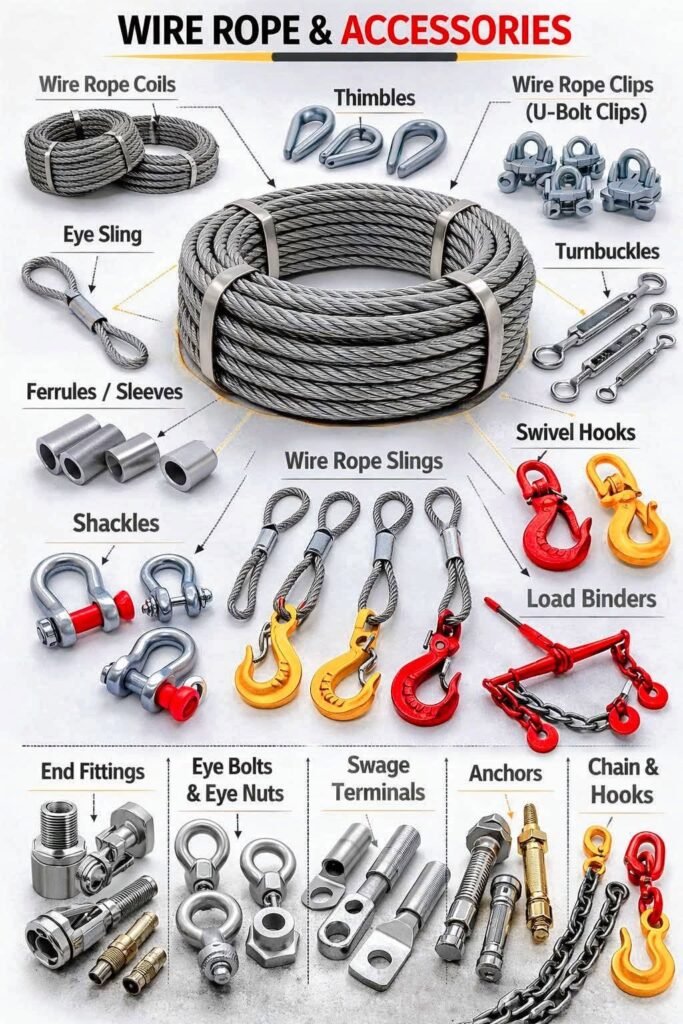
Comparison of common termination methods
| Termination | Efficiency | Typical Application |
|---|---|---|
| Spelter Socket | Nearly 100% | Heavy cranes |
| Swaged Socket | High | Mobile cranes |
| Wedge Socket | Medium | Temporary lifting |
| Hand Splice | Lower | Light-duty lifting |
| Ferrule Eye | High | Hoists |
Spelter sockets
Advantages:
- Very high efficiency
- Long service life
- Suitable for heavy lifting
Disadvantages:
- Higher installation cost
- Requires skilled workers
Wedge sockets
Advantages:
- Easy replacement
- Fast installation
Disadvantages:
- Requires regular inspection
- Incorrect installation reduces capacity
Ferrule eyes
These are widely used in factory-made assemblies.
Benefits include:
- Consistent quality
- Fast production
- Good appearance
- Reliable strength
How Do I Choose the Right Wire Rope Assembly?
Many buyers ask me for the strongest assembly. I always ask about the lifting application first.
The best wire rope assembly matches the crane, working load, duty cycle, environment, and safety requirements instead of simply choosing the highest breaking load.
Step 1: Know the working load
Always calculate:
- Working Load Limit (WLL)
- Maximum load
- Shock loading
- Dynamic load
Step 2: Choose the rope construction
Common constructions include:
| Rope Construction | Typical Use |
|---|---|
| 6×36 IWRC | General cranes |
| 35×7 | Tower cranes |
| 19×7 | Rotation-resistant lifting |
| 8×K36 | Offshore cranes |
Each construction has different flexibility and fatigue resistance.
Step 3: Select the termination
The termination depends on:
- Load size
- Crane design
- Maintenance schedule
- Local regulations
Step 4: Consider the environment
Outdoor cranes may require:
- Galvanized wire rope
- Plastic impregnated rope
- Stainless steel wire rope
Marine applications usually demand better corrosion resistance.
What Standards Should a Wire Rope Assembly Meet?
Standards help ensure consistent quality. They also simplify international purchasing.
Most industrial lifting assemblies should comply with recognized standards such as EN12385-4, while additional third-party certification may be required depending on the project and country.
Important international standards
| Standard | Purpose |
|---|---|
| EN12385-4 | Crane wire ropes |
| ISO Standards | Manufacturing quality |
| CE | European compliance |
| BV | Third-party inspection |
| DNV | Offshore certification |
| ABS | Marine applications |
| RMRS | Russian marine certification |
Why do certifications matter?
Many projects require third-party inspection before shipment.
Typical industries include:
- Offshore
- Mining
- Ports
- Shipbuilding
- Construction
- Energy
These certificates increase buyer confidence.
Factory quality control
At my factory, every production batch goes through several inspections.
Typical inspections include:
- Wire diameter
- Tensile strength
- Lay length
- Lubrication
- Surface condition
- Breaking load
Consistent inspection reduces quality variation.
How Can Proper Maintenance Extend Wire Rope Assembly Life?
Buying a good assembly is only the first step. Maintenance has a much bigger impact than many people expect.
Regular inspection, lubrication, proper storage, and timely replacement can significantly extend assembly life while reducing unexpected crane downtime.
Daily inspection checklist
Operators should inspect:
- Broken wires
- Corrosion
- Kinks
- Birdcaging
- Crushing
- Diameter reduction
Lubrication
Lubrication reduces:
- Internal friction
- Corrosion
- Wear
- Fatigue
Many failures start because lubrication is ignored.
Storage
Store assemblies:
- Indoors
- Dry
- Away from chemicals
- Off the ground
Poor storage damages the rope before installation.
When should an assembly be replaced?
Replace it when you see:
| Condition | Action |
|---|---|
| Broken wires exceed limits | Replace |
| Severe corrosion | Replace |
| Permanent deformation | Replace |
| Birdcaging | Replace |
| Heat damage | Replace |
| Core failure | Replace |
Waiting too long usually costs more than replacing the assembly early.
Why Should I Buy a Complete Wire Rope Assembly Instead of Separate Components?
Some buyers purchase every part from different suppliers. It may reduce the purchase price, but it often increases overall risk.
A factory-made wire rope assembly offers better compatibility, consistent quality, professional testing, and simpler installation than sourcing individual components separately.
Better compatibility
Factory assemblies ensure:
- Correct dimensions
- Proper fittings
- Verified strength
- Better appearance
Everything fits together correctly.
Factory testing
Complete assemblies can be tested before shipment.
Possible tests include:
- Proof load testing
- Tensile testing
- Visual inspection
- Dimensional inspection
Testing provides additional confidence.
Easier installation
Workers spend less time assembling parts on site.
Benefits include:
- Faster installation
- Fewer mistakes
- Lower labor cost
- Better safety
For many customers, this saves much more money than the small difference in purchase price.
Conclusion
A high-quality wire rope assembly combines the right rope, fittings, installation, and inspection. Choosing the complete system instead of individual parts improves safety, reliability, and long-term lifting performance.