One small fitting can decide how long a wire rope eye survives. I often see early wear begin with a thimble that does not fit.
I choose a wire rope thimble by matching its groove, duty class, material, and geometry to the rope and connector. A correct fit protects the eye from crushing, abrasion, and early deformation.
I once reviewed an inquiry that listed only rope diameter and quantity. I asked about the shackle, environment, and load cycle. Those answers changed the thimble from a light type to a heavy-duty galvanized design.
What Does a Wire Rope Thimble Do?
I treat a thimble as a working part of the rope eye. I do not treat it as a simple decorative insert.
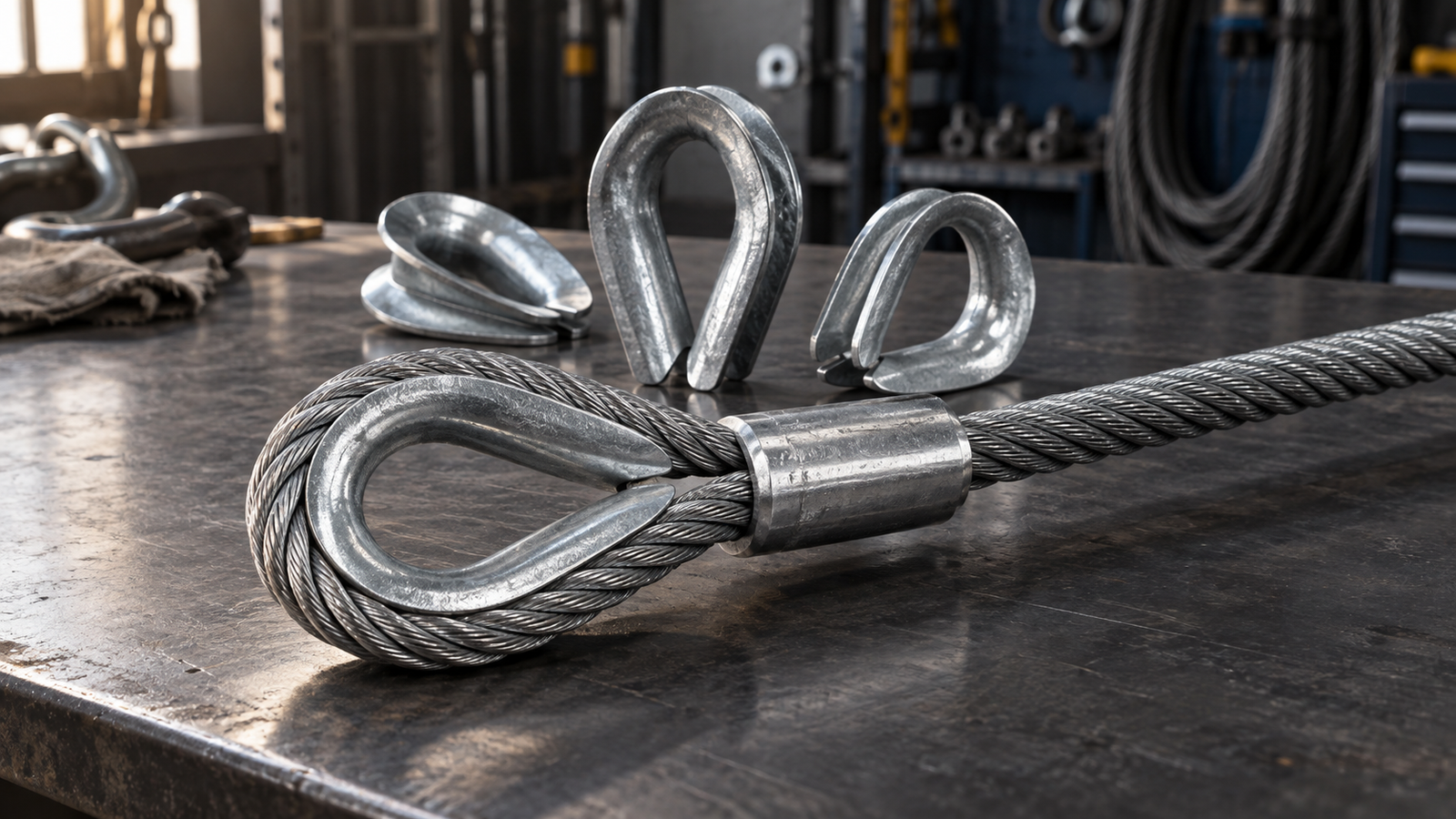
A wire rope thimble supports the inside of a rope eye and creates a shaped bearing surface. It helps the eye resist pinching, abrasion, flattening, and tight bending around a hook, pin, or shackle.
I Protect the Most Exposed Part of the Eye
The rope eye often carries concentrated pressure where it meets a connector. A bare eye can bend around a small pin. The outer wires can rub against the pin and against each other. The eye can then lose its shape.
I use a correctly fitted thimble to spread this contact over a larger and smoother surface. The thimble also helps the eye keep a stable curve. OSHA describes a thimble as a protective interface that helps prevent pinching and abrasion, and it states that the thimble should sit firmly in the eye.
| Function | What I expect from the thimble | What can happen with a poor fit |
|---|---|---|
| Support the eye | I expect the rope to follow the groove | The rope can flatten or leave the groove |
| Reduce abrasion | I expect a smooth bearing surface | The outer wires can wear quickly |
| Control bend shape | I expect a stable curve through the eye | The rope can bend too sharply |
| Match the connector | I expect the pin or hook to seat correctly | The thimble can twist or become side-loaded |
I Know What a Thimble Cannot Do
I do not use a thimble to correct an undersized rope, a weak termination, or the wrong connector. I also do not use it to increase the working load limit without approved assembly data. The finished eye depends on the rope, thimble, sleeve or splice, connector, fabrication method, and test basis.
I check the complete assembly. I want every part to work together. A strong thimble cannot protect a sling that has an illegible tag, damaged wires, a cracked fitting, or an unverified termination.
How Do I Match a Thimble to Wire Rope Diameter?
I start with the actual rope size. I then check the manufacturer’s dimensional table instead of relying on a general product name.
I match the nominal rope diameter to the thimble’s specified rope range. I check that the rope sits fully in the groove without excessive space, pinching, forced spreading, or contact with sharp edges.
I Check the Groove, Not Only the Label
I place the rope in the groove during sample inspection. The rope should follow the thimble smoothly. The groove should support the rope without cutting into it. The side plates should help retain the rope, but they should not crush the outer strands.
I reject a thimble that is so small that the rope rides on the edges. I also reject a thimble that is so large that the rope moves freely inside the groove. Excess movement can create local wear and can let the thimble rotate inside the eye.
| Fit check | Acceptable condition I look for | Warning sign I reject |
|---|---|---|
| Groove width | The rope sits naturally in the groove | The rope is pinched or loose |
| Groove depth | The groove supports and contains the rope | The rope rides above both edges |
| Eye closure | The rope follows the thimble shape | The eye pulls away from the crown |
| Surface | The bearing area is smooth | Burrs, cracks, or sharp edges are present |
| Stability | The thimble stays seated | The thimble turns or falls out easily |
I Confirm the Finished Eye Dimensions
I ask for the inside length and width of the eye when the connection space is limited. I also check the overall thimble length, throat opening, groove width, and plate thickness. These dimensions affect the sleeve position and the connector fit.
I state how the sling length is measured. A buyer may mean bearing point to bearing point, eye to eye, or total rope length. I put the measurement method on the drawing before production. This step keeps the completed sling within the required reach tolerance.
Should I Choose a Standard-Duty or Heavy-Duty Thimble?
I choose the duty class from the real contact pressure and service cycle. I do not choose it from appearance alone.
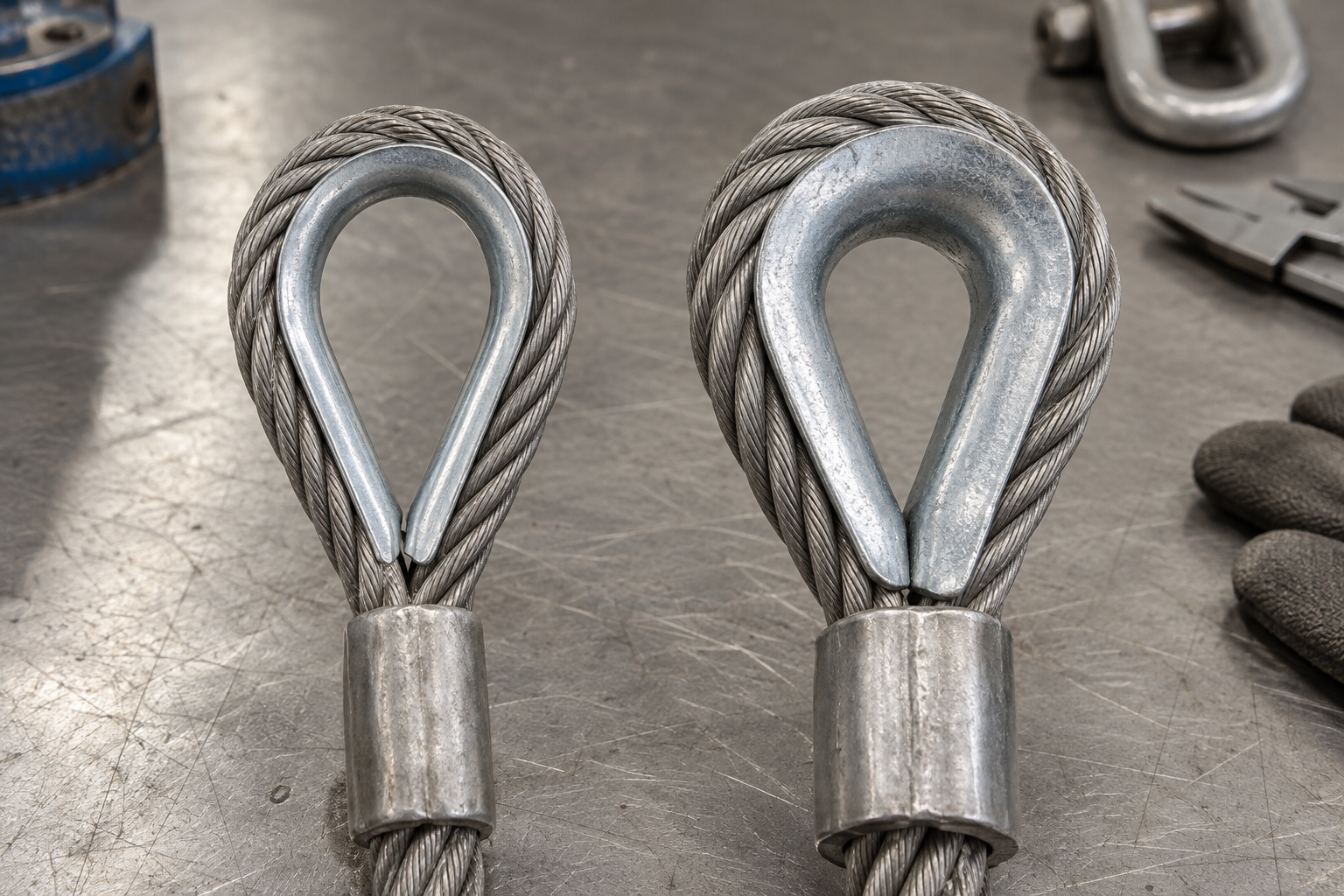
I use a standard-duty thimble for suitable light or general service. I select a heavy-duty thimble when the eye faces high loads, frequent cycles, rough handling, large connectors, or demanding industrial conditions.
I Compare the Working Conditions
A standard-duty thimble usually has thinner material and lower stiffness. It can work well when the rope, connector, and service conditions match its design. A heavy-duty thimble has a stronger section and usually keeps its shape better under concentrated contact.
I ask how often the assembly will lift, pull, or tension a load. I ask whether workers will drag the eye across a deck. I also ask whether the connector can strike or twist the thimble. These conditions can matter as much as the static load.
| Service condition | My usual starting point | What I still verify |
|---|---|---|
| Light, infrequent service | Standard-duty thimble | Manufacturer data and connector fit |
| Repeated industrial lifting | Heavy-duty thimble | Assembly rating and fatigue exposure |
| Marine deck handling | Heavy-duty corrosion-protected type | Coating, drainage, and inspection access |
| Static support connection | Project-specified thimble | Long-term load and environmental effects |
| Critical engineered lift | Qualified design selection | Drawings, test plan, and traceability |
I Avoid Simple Capacity Assumptions
I do not assign a working load limit to a loose thimble unless the manufacturer provides one for that exact product and use. Many thimbles protect the rope and shape the eye, but the completed assembly rating comes from more than the thimble thickness.
I ask for the sling or assembly working load limit. I also check the design factor, hitch, angle, D/d relationship, termination efficiency, and connector geometry when they apply. For complex lifts, I ask a qualified person to approve the configuration.
Which Thimble Material and Finish Should I Select?
I select the material after I understand moisture, salt, chemicals, temperature, wear, and the material of the connected hardware.
I use galvanized carbon steel for many outdoor and industrial applications. I consider stainless steel for stronger corrosion resistance, but I verify its grade, strength, connector compatibility, and cost before I approve it.
I Compare Common Options
I often choose a galvanized thimble when the assembly needs practical corrosion protection at a controlled cost. I inspect the zinc layer for coverage and damage. I also check cut edges and formed areas because poor forming can crack a coating.
I consider stainless steel for marine, food, architectural, or corrosive service. I do not write “stainless” as a complete specification. I state the required grade when the project defines it. I also check for galvanic effects when different metals remain wet and in contact.
| Material or finish | Why I may choose it | Point I confirm |
|---|---|---|
| Bright carbon steel | Controlled dry service and lower cost | Corrosion protection during use and storage |
| Galvanized carbon steel | Outdoor and general marine exposure | Coating quality and project acceptance |
| Stainless steel | Strong corrosion resistance | Grade, strength, and mating metals |
| Special coating | Project-specific protection or identification | Temperature, wear, and inspection limits |
I Match the Thimble to the Rope Finish
I normally pair galvanized rope with compatible galvanized hardware when the environment supports that choice. I may pair stainless rope with a suitable stainless thimble. I still review the complete system because the shackle, hook, sleeve, and structure may use different materials.
I pay more attention when the rope has a plastic coating. The nominal steel rope diameter and the finished outside diameter can differ. The coating can also compress or creep inside a tight groove. I ask the rope and thimble suppliers to confirm the correct size and termination method.

How Do I Match the Thimble to a Shackle, Hook, or Pin?
I measure the mating connector before I approve the eye. This step prevents a common problem that appears only during installation.
I match the thimble crown and eye opening to the connector’s pin or bearing surface. I make sure the connector seats centrally and does not spread, pinch, twist, or point-load the thimble.
I Check Bearing Geometry
I want the connector to bear on the intended curved area of the thimble. I do not want a wide hook to push against both side plates. I also do not want a small pin to sit at one sharp point. Either condition can deform the thimble and damage the rope eye.
I ask for the shackle pin diameter, hook section, or connection drawing. I check whether the connector must pass through the finished eye. I also allow enough clearance for installation without creating excessive movement during service.
I Control Side Loading
I align the eye with the direction of force. A thimble can twist when the assembly pulls from the side. The rope may then climb out of the groove or press against one plate. I use a suitable connector arrangement to keep the load centered.
I do not hammer a thimble eye onto a hook or pin. I do not grind the thimble to make it fit. If the geometry is wrong, I change the thimble, eye size, connector, or assembly design before use.
How Should I Specify and Inspect a Wire Rope Thimble Assembly?
I put the full requirement in the purchase order and drawing. I do not leave the supplier to guess the application.
I specify rope size, thimble type, material, finish, eye dimensions, termination, connector geometry, assembly rating, standard, marking, inspection, testing, certificates, quantity, and delivery requirements before production begins.
I Use a Complete RFQ Checklist
| RFQ item | Information I provide |
|---|---|
| Rope | Diameter, construction, grade, core, and finish |
| Thimble | Standard or heavy duty, size, material, and finish |
| Eye | Inside dimensions and measurement method |
| Termination | Sleeve, splice, socket, or approved assembly method |
| Connector | Hook, pin, or shackle dimensions |
| Rating | Required WLL and operating configuration |
| Documents | Drawing, material record, test report, and inspection scope |
| Marking | Assembly ID, capacity information, and custom logo if allowed |
I can provide steel wire rope that complies with EN 12385-4 when the ordered product falls within that scope. I do not use that rope standard as automatic proof for every completed assembly. I confirm the applicable assembly, machinery, lifting, marine, mining, or project rules separately.
I can also arrange relevant BV, CE, RMRS, DNV, or ABS documentation when the buyer defines the required scope. I ask whether the buyer needs a material certificate, design review, witness test, product approval, or another document. I confirm this point before production because a missed witness stage may not be recoverable later.
I Inspect Before and During Use
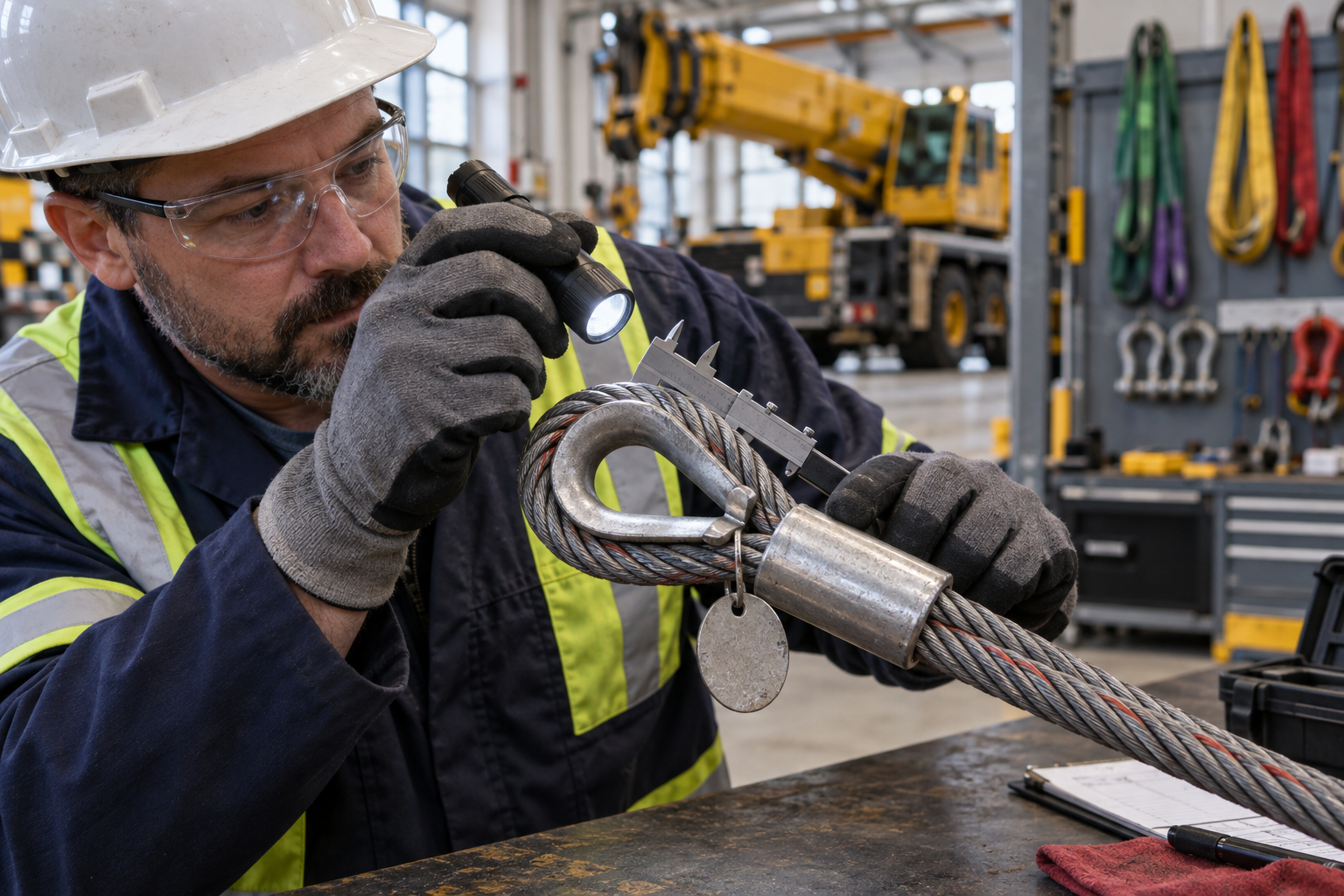
I inspect the thimble for cracks, bending, spreading, corrosion, sharp edges, coating damage, and poor seating. I inspect the rope where it enters and leaves the thimble because movement and contact can concentrate wear there. I also inspect the sleeve, splice, and connector.
I remove the assembly from service when damage or deformation creates doubt. I do not press a distorted thimble back into shape on site and return it to lifting service without an approved process. I follow the manufacturer, qualified person, and applicable workplace rules.
For wire rope slings in covered US general-industry work, OSHA requires a competent person to inspect the sling and attachments each day before use. OSHA also requires damaged or defective slings to be removed from service. I use these rules when they apply, and I check the local rules for every destination market.
Conclusion
I choose a wire rope thimble by matching size, duty, material, connector geometry, and assembly requirements, then confirming fit, documents, and inspection before use.