Tunnel Boring Machine Wire Rope: A Practical Guide to Hoist, Belt and Man-riding Ropes
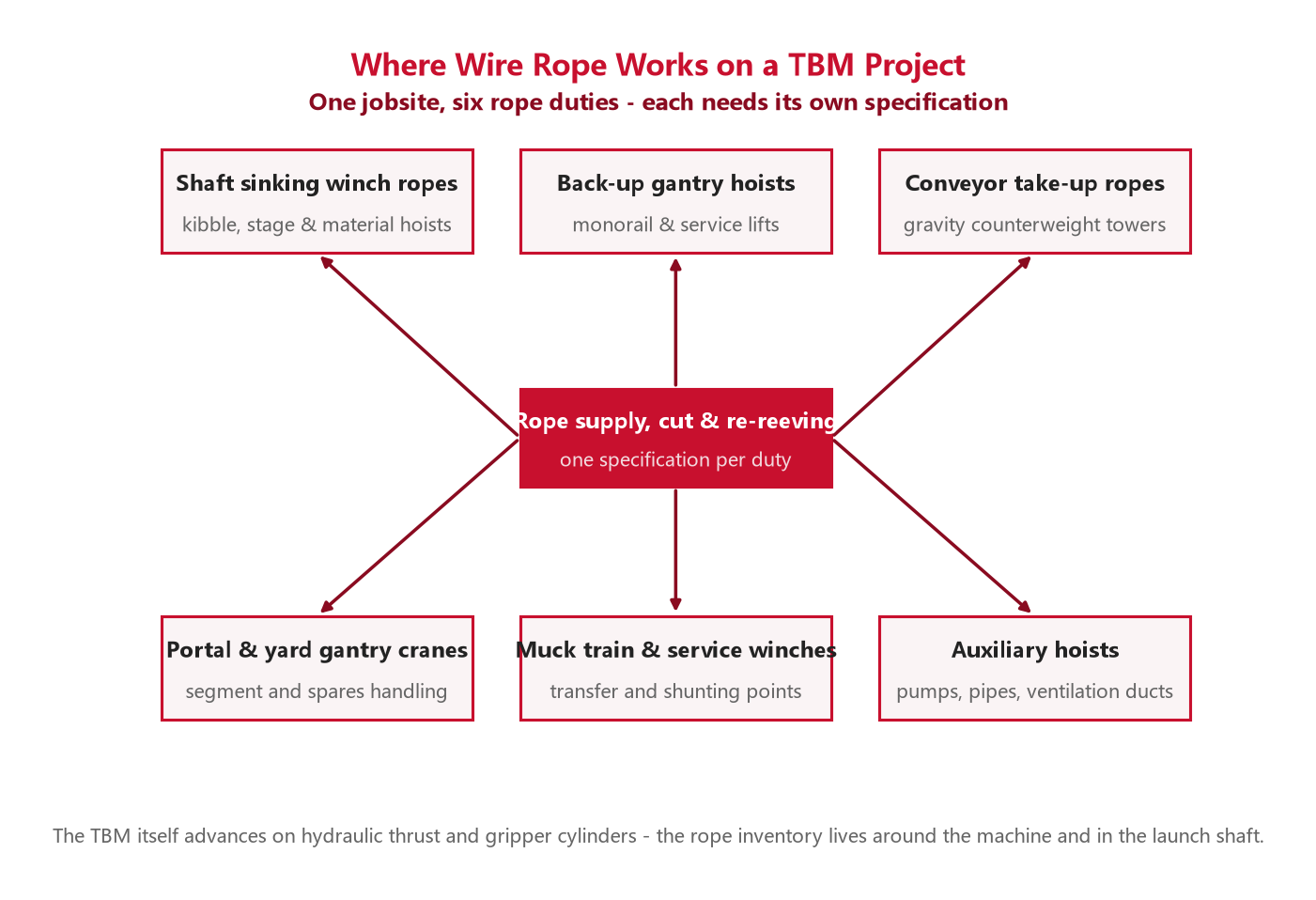
Most of the wire rope on a tunnel boring machine (TBM) project is not on the machine itself. A TBM advances on hydraulic thrust cylinders and positions its segments with a hydraulic erector, so the rope inventory lives around the machine: shaft sinking winches in the launch shaft, monorail and service hoists on the back-up gantries, conveyor take-up ropes at the drive head, and the portal cranes that feed segments and spares. For these duties the reliable default is a flexible, corrosion-protected construction — typically 6×36WS-IWRC galvanized or plastic-impregnated rope for wet shaft hoisting, and a 35×K7-class rotation-resistant rope where a single-fall hoist can spin — sized with a stricter design factor wherever people are lifted, and retired against ISO 4309-style discard criteria rather than guesswork.
I have supplied rope for tunnel projects for more years than I like to admit, and the pattern repeats on every job: the contractor plans meticulously for cutterheads and segment geometry, then calls us two weeks before launch asking for “whatever rope fits the shaft winch.” Tunnel rope is not complicated, but it is different from crane yard rope — wet and alkaline, cramped reeving, stop-start duty, and a man-riding kibble that is not a pallet of segments. Here is where rope actually works on a TBM job, and how I specify it.

Where Wire Rope Actually Works on a TBM Project
Let’s clear up the biggest misconception first. On almost every modern shield TBM — EPB, slurry or double shield — propulsion comes from thrust cylinders pushing off the segment ring, steering from articulated shield joints, and the segment erector is a hydraulic manipulator. There is no “main hoist rope” on the boring machine itself, the way there is on a crawler crane. When a client asks me for the “TBM hoist rope,” what they almost always need is rope for the equipment around the machine.
Shaft sinking and launch shaft winches
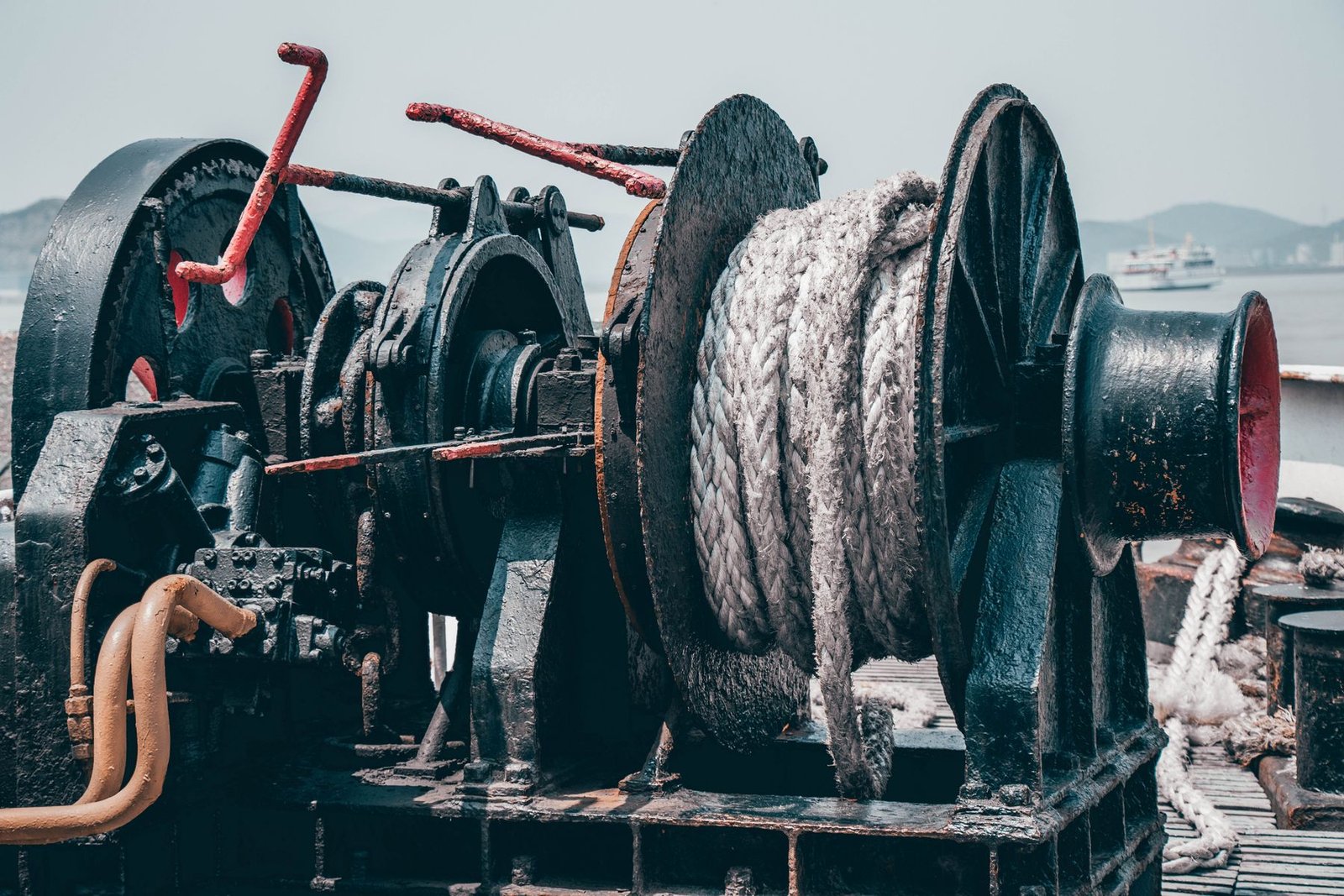
Before the TBM launches, the shaft itself has to be sunk, and on deep or hard-ground shafts that means wire-rope winches: sinking kibbles that carry crews, material hoists that muck the shaft bottom, and stage and platform winches. These are the highest-consequence ropes on the whole project — a kibble winch holding people over a partially completed shaft is a mining-grade duty, not a construction-crane duty. Even after the TBM is running, the shaft keeps working: hoists lower pumps, pipes and ventilation ducting, and on many jobs a service cage or platform remains in use for the whole drive.
Back-up gantry monorail and service hoists
Behind the shield, the back-up gantries carry a surprising amount of rope-driven kit. Monorail hoists move segment bolts, gaskets, grease drums and pump spares along the gantry beams; small winches handle segment feeder cars and cable reels; some machines carry service hoists for grout plant maintenance. These hoists typically run on small drums with poor D/d ratios, stop-start duty, and the wettest, grimiest air inside the tunnel. Individually they are small ropes — 8 mm to 16 mm, usually — but they fail more often than anything else in the tunnel inventory.
Conveyor take-up and portal cranes
Long TBM drives are mucked out by belt conveyor, and a conveyor kilometres long needs constant tension. That is usually provided by a gravity take-up tower, where counterweights hang on wire rope — or on some large systems, the take-up trolley itself is winched in and out on rope. At the surface, portal and yard gantry cranes lift segments, molds and the endless stream of spares a TBM consumes, often on the ropes they were delivered with years earlier, in an outdoor yard exposed to rain and grout wash-off — a quiet reliability problem I see on most sites I visit.
Why the Tunnel Environment Is Harder on Rope Than a Crane Yard
Three factors make tunnel rope age faster than the same construction would on a surface crane:
Wet and alkaline conditions. Water is everywhere underground: groundwater inflow, grout wash-off from segment handling, dust suppression water. Fresh cement grout is strongly alkaline, and alkaline water attacking bright steel accelerates corrosion from the outside in. Worse, once a rope’s internal lubricant is washed out, moisture wicks into the core and corrodes wires you cannot see during a visual check — which is why I push customers hard toward galvanized or plastic-impregnated rope for anything below ground level.
Abrasive grit. Muck fines, rock dust and shotcrete overspray are excellent lapping compounds. They work into the rope’s valleys and grind away wire diameter at sheave and drum contact points — which is why diameter reduction, not broken wires, is often the first discard trigger on tunnel hoists.
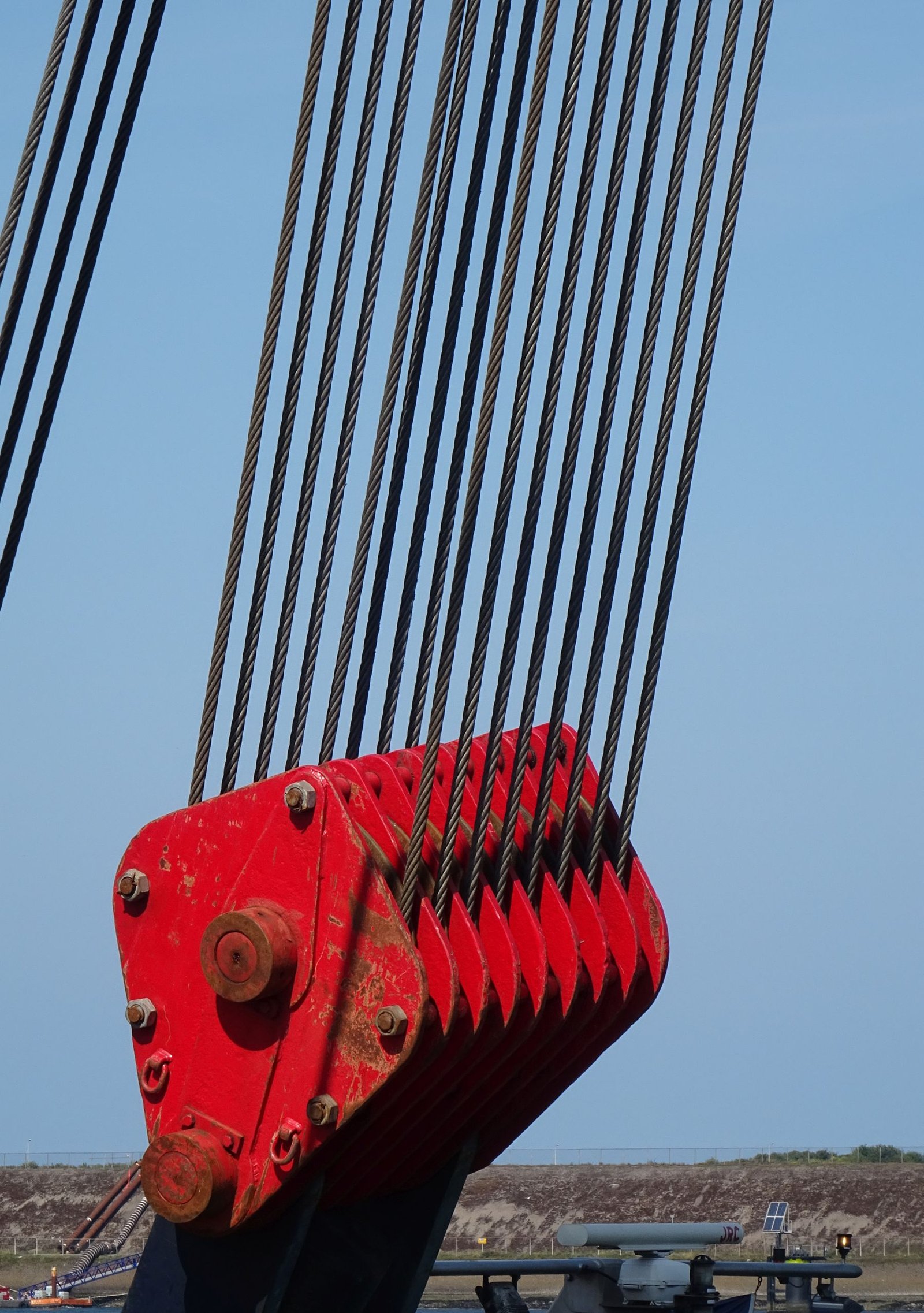
Confined reeving. Back-up gantry hoists and shaft headframe sheaves are compact by necessity. Small sheaves mean low D/d ratios, and low D/d ratios mean bending fatigue — a 6×36-class rope that would run happily for years over a 20:1 D/d crane sheave can age many times faster over a 12:1 gantry sheave. I will come back to this in the inspection section, because it changes what you should be measuring.
Choosing the Construction: Flexibility, Abrasion and Rotation
With the duties mapped, the selection logic is straightforward: you are balancing bending fatigue resistance (more, thinner wires), abrasion resistance (fewer, thicker wires), crush resistance (steel core) and rotation resistance (opposed strand layers). Here is the table I work from when a tunnel contractor sends me a duty list — treat it as a starting point, because the TBM OEM manual and your hoist manufacturer’s specification always take precedence.
| Duty | Typical construction | Why it works |
|---|---|---|
| Shaft sinking kibble / man-riding winch | Rotation-resistant multi-strand (e.g. 35×K7 or 4-strand opposed-lay), galvanized, IWRC | Single-fall hoists spin under load; rotation resistance keeps the kibble and stage stable, galvanizing handles wet shaft conditions |
| Shaft material / mucking hoist | 6×36WS-IWRC, galvanized | Good fatigue life over head sheaves with enough outer wire area to resist drum abrasion |
| Back-up gantry monorail hoists | 6×36WS-IWRC or 8×26WS compacted, bright or galvanized depending on wetness | Small sheaves demand bending fatigue; compacted ropes resist drum crushing in tight storage |
| Segment yard / portal gantry cranes | 35×K7 or 35WXK7 for multi-fall reeving; 6×36WS-IWRC where rotation is not a concern | Standard crane practice; rotation resistance matters with long free hook heights |
| Conveyor take-up ropes | 6×36WS-IWRC, galvanized or plastic-impregnated | Mostly static with slow adjustments; corrosion protection drives life more than fatigue |
| Auxiliary / pump / pipe winches | 6×19 or 6×36 galvanized, IWRC | Infrequent duty; prioritize corrosion protection over fatigue performance |
Two notes on that table. First, rotation resistance: a single-fall hoist with a free-hanging load — the classic kibble or monorail case — will rotate the load as tension builds unless the rope is rotation-resistant. Multi-fall reeving through a hook block does not have this problem to the same degree, which is why portal cranes can run ordinary constructions. If you are unsure whether a duty needs rotation-resistant rope, the mechanics are covered in dedicated guides on the difference between rotating and non-rotating constructions.
Second, on size: do not downsize a rope just to fit an existing sheave. If a gantry hoist was designed for 13 mm and you are tempted to run 12 mm to improve flexibility, stop — the hoist manufacturer’s specification exists for reasons including brake capacity and drum storage, not just strength.
Corrosion Protection: What to Order for Wet Ground
The corrosion question comes up on every tunnel job, and the answer depends on how wet the drive will be:
| Finish | Where it wins | Watch-outs |
|---|---|---|
| Bright (ungalvanized) | Dry back-up gantry interiors, short drives with good drainage | Relies entirely on lubricant; once water gets in, hidden corrosion starts. Only for genuinely dry duties |
| Galvanized (hot-dip wire) | Shaft hoists, conveyor take-ups, anything touching grout water | Zinc layer sacrifices itself over time; check coating condition at inspection, not just wire breaks |
| Plastic-impregnated | The wettest duties: shaft bottom winches, take-up ropes in flowing water | Slightly higher cost; the polymer fills the gaps between strands and locks moisture and grit out of the core |
On one utility tunnel drive I supplied, the contractor ordered bright rope for the shaft mucking hoist to save cost, then swapped to galvanized for the second shaft after the first rope failed an inspection at roughly half its expected life. My rule of thumb: if you can see your breath in the tunnel, order galvanized; if water is flowing anywhere near the rope, order plastic-impregnated and be glad of it. The full comparison is in our guide to galvanized, bright and stainless steel wire rope.
Design Factors: The Numbers That Matter for Man-riding
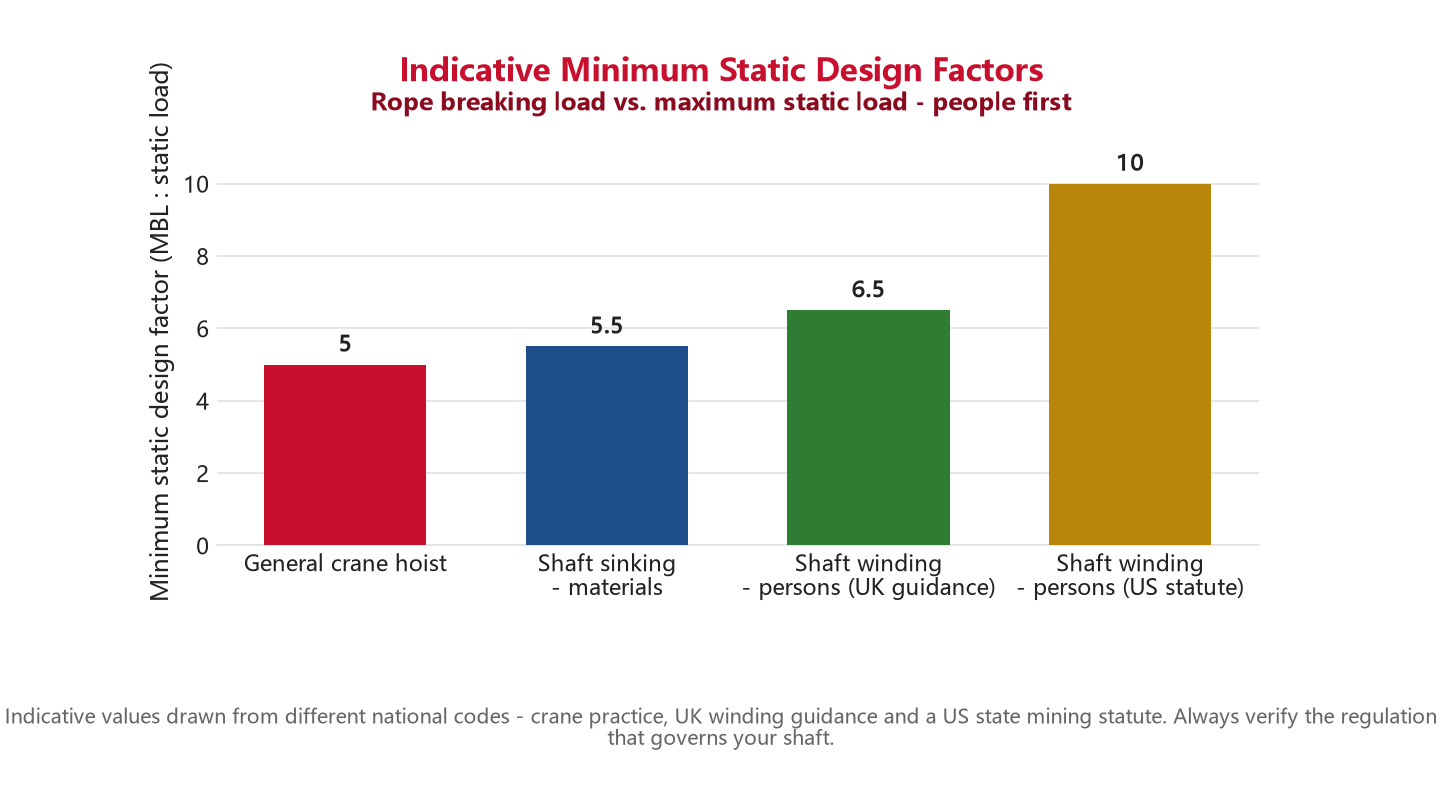
Design factor — rope minimum breaking load divided by maximum static load — is where tunnel rope differs most sharply from crane rope. General hoisting practice typically works on a 5:1 static factor. But the moment people ride the conveyance, most regulations climb sharply: I have seen codes ranging from a flat 10:1 for man-riding in US state mining statutes to formula-based factors around 6.5 to 7.5 that tighten with shaft depth in UK and Australian guidance. The exact number depends on the jurisdiction, the duty and the depth — the table below is indicative, and the regulation that governs your shaft always wins.
| Duty | Indicative minimum static factor | Notes |
|---|---|---|
| General crane and gantry hoisting | Approximately 5:1 | Standard lifting practice; check local code |
| Shaft sinking — rock and materials | Around 5.5, reducing with depth in some codes | Some regulations apply a depth formula |
| Shaft winding — persons (UK guidance) | Around 6.5 minimum | Applies to the rope plus suspension gear chain |
| Shaft winding — persons (US mining statute example) | Not less than 10:1 | One example; jurisdictions differ widely |
| Guide and rubbing ropes | Around 5:1 | Where rope-guided shafts are used |
Beyond the static factor, man-riding installations typically demand more of the whole system: independent brakes, overspeed detection, safety arrestors, and inspection intervals measured in shifts rather than months. If your shaft winch carries people, budget for a winding-grade rope and paperwork that will satisfy a mining inspector — not just a crane certificate. Our guide to mine hoist wire rope goes deeper into winding rope selection, capping and multi-rope load sharing.
Fatigue, D/d Ratios and Drum Storage on Cramped Sites
Fatigue is the quiet killer of tunnel hoist ropes, and D/d is the number to watch. As a rough guide, a 6×36-class rope wants a sheave D/d of around 18–20:1 for good fatigue life, and fatigue life falls steeply below roughly 15:1. Gantry hoists and shaft headframe sheaves rarely achieve those numbers, which means the rope’s fatigue budget gets spent faster — so track duty cycles, not just calendar time, and size the rope’s expected life conservatively.
Drum storage deserves a mention too, because tunnel sites are cramped and rope drums often end up stored flat on muddy ground for weeks before re-reeving. Keep drums off the ground, covered, and reeled — not coiled loose. Our guide on sheave and drum selection covers groove condition and fleet angle, which matter just as much: a worn or oversized groove will destroy a new rope in weeks.
Inspection and Replacement Triggers Underground
Inspection is where tunnel rope projects are won or lost, and my advice is simple: follow a recognized discard standard and inspect on a schedule that matches the rope’s real duty. ISO 4309 — the discard standard used across lifting equipment — gives you the framework: broken wires per lay length, diameter reduction, corrosion, and deformations such as kinks and birdcaging. We have a full walkthrough in our guide to ISO 4309 discard criteria. For the high-consequence ropes — anything man-riding in the shaft — add periodic electromagnetic (MRT) testing, and inspect shaft winding gear under the mining-style rules your jurisdiction applies, which typically include per-shift visual checks of accessible zones.
Three tunnel-specific triggers I tell every contractor to watch:
- Diameter loss at sheave contact points. Grit accelerates outer wire wear; measure the diameter at several points along the working length, not just near the socket.
- Lubricant wash-out. If the rope looks dry and grey between sheaves, the internal lubricant is going too — re-lubricate or retire early, because hidden wire corrosion follows.
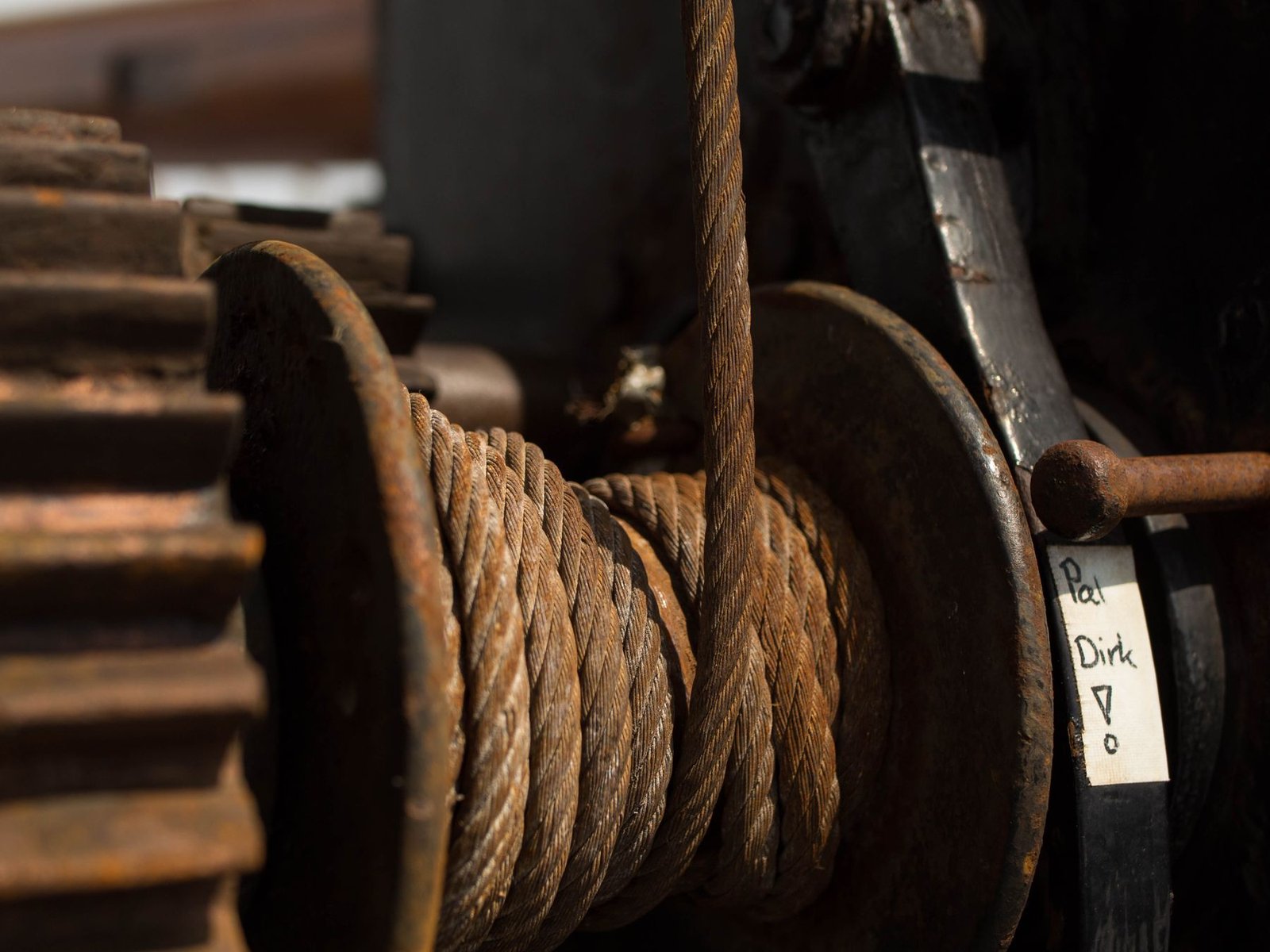
- Kinks from re-reeving. Most gantry hoist ropes I have seen retired early were killed during rope change, not in service. Reel, don’t coil; keep tension on the old rope as the new one goes on.
The failure patterns are worth studying before the failure happens — internal corrosion, kinks and sheave wear account for most of what tunnel crews retire early.
Ordering Checklist for Tunnel Contractors
When a tunnel contractor asks me to quote rope for a drive, here is what gets the specification right the first time:
- The duty list — which hoist, what load, how high or deep, single or multi-fall, man-riding or not.
- The hoist OEM’s rope specification: diameter, construction, minimum breaking load, finish, and any lay direction requirement to match the drum.
- Sheave and drum diameters, so I can sanity-check D/d and fatigue expectations with you.
- The governing regulation and design factor — especially for shaft work.
- Environment: wet or dry, grout exposure, abrasives, and how often the rope will actually be re-lubricated on site.
- Certificate requirements — EN 12385-4 or a national equivalent, third-party testing if your client or the inspectorate wants it, and batch traceability.
- Terminations: cappings, sockets or spelter sockets for shaft work, wedge sockets and thimbles for the gantry kit — assembled and proof-tested before delivery where possible.
That last point saves more time than people expect. A tunnel drive does not stop while someone fumbles a socket, so we supply custom wire rope assemblies cut to length with terminations fitted and tested.
How We Support Tunnel Projects
Aulone is a professional manufacturer and supplier of steel wire ropes, wire rope slings, synthetic ropes and rigging hardware for lifting, marine, mining, construction and industrial applications. With over 20 years in the rope business and an annual capacity of 200,000 tons, we keep common tunnel constructions in stock — galvanized 6×36WS-IWRC, rotation-resistant 35×K7-class ropes, compacted rope for small-sheave hoists — shipping to EN 12385-4 with ISO 9001, BV, ABS, DNV, RMRS and CE certification available on request. For shaft and man-riding duties we supply winding-grade rope with full batch traceability, third-party testing on request, and terminations assembled before delivery so your drive is not waiting on a socket. If you are specifying rope for a launch shaft, a back-up gantry or a conveyor take-up, send me the duty list and the hoist spec — I will come back with a recommendation and a certificate you can hand to the inspector. Reach me at info@wireropes.net.
Frequently Asked Questions
Does a TBM itself use wire rope to excavate or advance?
No — modern shield TBMs advance on hydraulic thrust cylinders pushing against the installed segment ring, and the erector is hydraulic too. Wire rope on a TBM project serves the shaft hoists, back-up gantry hoists, conveyor take-up systems and portal cranes around the machine. Some machines carry small rope-driven auxiliaries, but the boring function itself is hydraulic.
What rope should I use for a man-riding shaft sinking winch?
Use a rotation-resistant, winding-grade rope — typically a 35×K7-class or opposed-lay multi-strand construction, galvanized for wet shafts — sized to the design factor your mining or shaft regulation imposes for carrying persons. Confirm the factor, termination and inspection regime against the governing regulation before ordering, and buy against a certificate your inspector will accept.
Is galvanized rope really necessary underground?
If the rope sees grout water, groundwater or persistent humidity, yes — in my experience bright rope underground is a false economy unless the duty is genuinely dry and short. Alkaline water attacks bright steel, and once internal lubricant washes out, corrosion proceeds inside the rope where you cannot see it. For the wettest duties, plastic-impregnated rope is the better spend.
How often should back-up gantry hoist ropes be inspected?
Visually at least weekly in service, and more often if the hoist runs frequently or the tunnel is wet, with a documented thorough examination on the schedule your regulations set. Gantry sheaves tend to be small and D/d ratios poor, so track diameter loss and sheave condition closely — fatigue and abrasion show up there first.
What D/d ratio do tunnel hoist ropes need?
As a guide, aim for around 18–20:1 for 6×36-class ropes where the hoist design allows it, understanding that compact gantry hoists often run lower. Below roughly 15:1, expect noticeably shorter fatigue life and inspect accordingly. The hoist manufacturer’s specification is the binding number.
Can I reuse rope from a finished drive on the next project?
I would not, except possibly for the least critical duties after a full inspection including electromagnetic testing, and only if the rope’s history is documented. A rope that has lived through one drive carries fatigue cycles and hidden corrosion you cannot fully assess by eye.
What certificate should come with tunnel wire rope?
At minimum, a test certificate to EN 12385-4 (or your national equivalent) stating construction, nominal diameter, minimum breaking force and finish, with batch traceability. For man-riding shaft duties, expect the inspectorate to want winding-grade documentation, and order third-party testing in advance if your client requires it.
When should a conveyor take-up rope be replaced?
Against the same discard criteria as any hoist rope — broken wires, diameter reduction, corrosion and deformation — but with extra weight on corrosion, because take-up ropes sit mostly static in the wettest spot on the conveyor. A take-up rope that has lost zinc coating, shows rust staining or has seized up from grit should come off early; it is cheap insurance for a belt that represents a large part of the drive’s throughput.