Best Wire Rope for Overhead Cranes: An Engineer’s Guide to Construction, Core, Grade and Duty Class
By Andri — Technical Writer & Crane Rope Specialist, Aulone (www.wireropes.net)
The quick answer: for most overhead cranes — EOT bridge cranes, double-girder cranes and gantry cranes — the best all-round hoist rope is a 6×36WS class rope with an independent wire rope core (IWRC), grade 1960 MPa. It balances bending-fatigue life, abrasion resistance and crush resistance better than any alternative on the multi-layer drums and repeated high-cycle bending that overhead crane duty delivers. For light-duty indoor cranes a 6×19 class rope — or even a fibre-core rope — can be the more economical choice, while severe-duty cranes (steel mills, magnet and grab duty, continuous shifts) reward a compacted 6×K36 or 8×K36 rope with a plastic-impregnated steel core. In this guide I’ll walk you through the decision exactly the way I do it when a crane operator or procurement team asks me to spec a rope — by duty class, construction, core, grade and fit — based on more than twenty years of watching which ropes survive and which come back early.
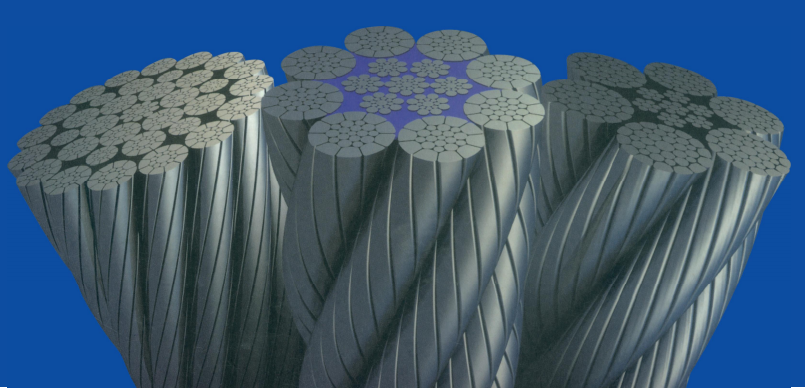
Why Rope Choice Makes or Breaks an Overhead Crane
An overhead crane is a bending-fatigue machine. Unlike a mobile crane that lifts occasionally, an EOT crane on a production line may complete thousands of hoisting cycles per shift, and every cycle bends the rope over the drum and sheaves. Add multi-layer drum spooling, the dust of a machine shop or the heat of a foundry, and you have an environment that punishes the wrong rope brutally.
Selection starts with the crane’s duty classification. Standards such as FEM 1Am and ISO 4301 group overhead cranes into duty classes (often quoted as A1–A8, with CMAA classes A–F used in North America), reflecting how often the crane lifts, how close it works to rated load, and how many operating hours it accumulates. The design factor for hoist ropes is normally around 5:1 between the rope’s minimum breaking force and the maximum line pull — I explain that calculation in detail in my article on wire rope breaking strength and safety factors. But the safety factor only keeps you legal; construction choice is what decides whether the rope lasts six months or six years.
Step 1: Match the Rope to the Crane Duty Class
Here is the mapping I use, distilled from what actually performs well in service:
| Duty class (FEM/ISO) | Typical CMAA class | Typical applications | Recommended rope |
|---|---|---|---|
| A1–A2 | A–B | Maintenance shops, standby cranes, infrequent light lifts | 6×19+IWRC or 6×36+FC; bright, lubricated |
| A3–A4 | C–D | Machine shops, warehouses, assembly halls, moderate cycles | 6×36WS+IWRC, grade 1960 |
| A5–A6 | E | Heavy machining, foundries, frequent near-capacity lifts | 6×36WS+IWRC, compacted strands preferred |
| A7–A8 | F | Steel mills, magnet and grab cranes, continuous duty | Compacted 6×K36 or 8×K36 with plastic-impregnated core |
Two honest notes. First, rotation-resistant rope is usually not needed on overhead cranes: multi-fall reeving balances the torque naturally (the one exception is covered below). Second, the duty class matters more than the crane’s tonnage — a 10-tonne crane running three shifts wears a rope harder than a 50-tonne crane running once a day.
Step 2: Choose the Construction
With the duty class fixed, you can pick the construction. These are the four families you will realistically choose between:
| Construction | Character | Best for | Watch out for |
|---|---|---|---|
| 6×19 class (e.g. 6×19S, 6×21FS) | Fewer, thicker outer wires; very abrasion-resistant; less flexible | Light duty, abrasive environments, low cycle counts | Shorter fatigue life under frequent bending |
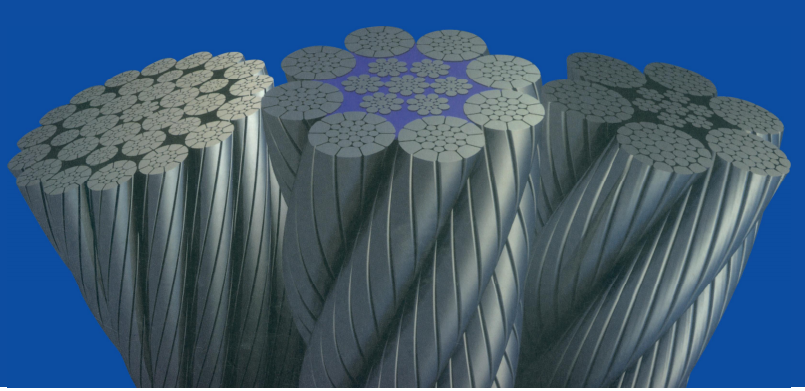
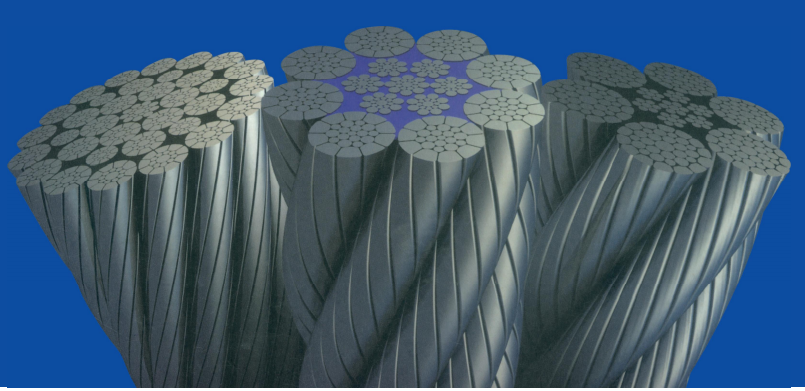
| 6×36WS class | More, thinner outer wires; flexible with good abrasion balance | The default for moderate and heavy overhead crane duty | Not rotation-resistant; needs correct groove fit |
| 8-strand class (8×19, 8×36) | Even more outer wires; best bend-fatigue life; slightly lower abrasion reserve | High-cycle hoisting, small D/d sheaves | Thinner outer wires wear faster on dirty tracks |
| Compacted (6×K36, 8×K36), optionally plastic-impregnated | 10–15% more breaking force at equal size; dense, crush-proof strands; polymer layer cushions the core | Severe duty, multi-layer drums, long-life buyers | Higher unit cost — usually repaid 2–3× in service life |
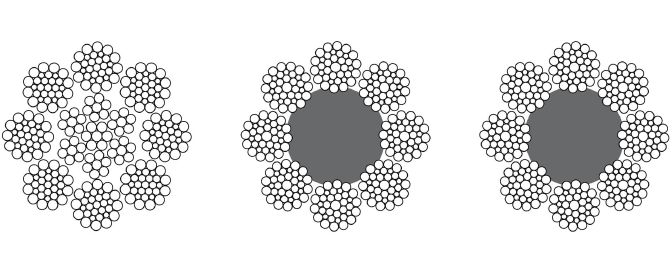
If you want the full data on the 6×36 class — wire counts, fill factors and MBL tables — see my detailed guide to 6×36 wire rope specifications.
Step 3: Get the Core Right
The core is the rope’s foundation, and on an overhead crane it is doing real work: every wrap on the drum presses the rope flat, and only a solid core stops the strands from cutting into each other. My rules:
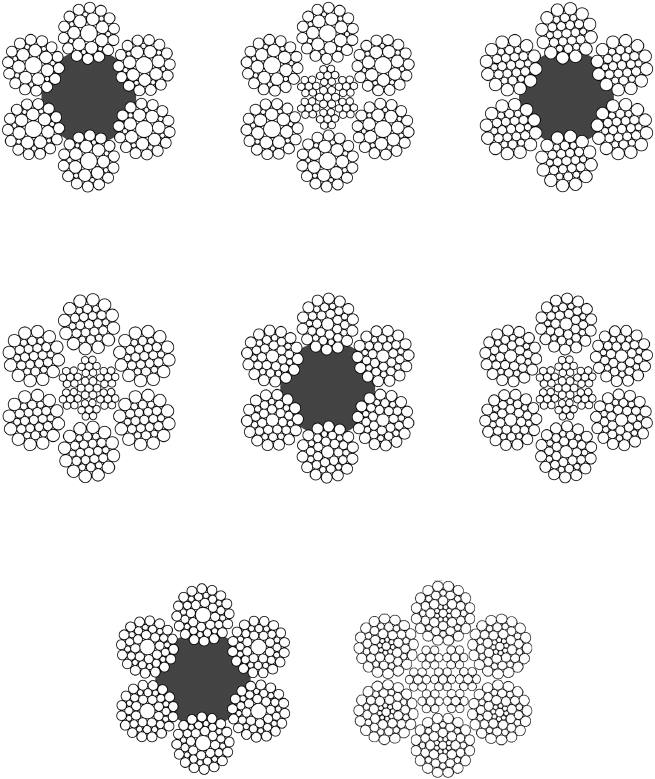
IWRC for nearly everything. It adds roughly 7–10% breaking force at the same diameter, resists crushing, and shrugs off heat that would cook a fibre core. Over 90% of the overhead crane ropes we build use it. Fibre core (FC) is acceptable only for light indoor duty on single-layer drums, where its extra flexibility and lubricant storage are genuinely useful — it will flatten under multi-layer spooling. Plastic-impregnated IWRC (EPIWRC/PWRC) is the premium option: the polymer layer between core and strands distributes internal pressure, locks in lubricant and blocks contamination. I compare all three in my guide to FC, WSC and IWRC cores.
Step 4: Grade, Finish and Lubrication
Grade: 1960 MPa is the modern default for crane duty. Dropping to 1770 saves little and costs strength; stepping to 1960 buys roughly 10% more breaking force at the same diameter, which is often the cheapest way to keep an older crane compliant with its design factor. Finish: for indoor cranes, bright (ungalvanized) rope with disciplined lubrication is the economical workhorse. For outdoor gantries, coastal plants and hot or corrosive processes, choose galvanized — and check whether your supplier galvanizes at finished size (about 10% strength loss) or drawn-galvanized (full bright strength retained). I lay out the trade-offs in my galvanized vs bright vs stainless steel comparison. Lubrication: never an option. A rope that leaves the factory fully impregnated and is re-lubricated in service will routinely outlast a dry one by a wide margin, and internal corrosion from a dry core is invisible until it is dangerous.
Step 5: Diameter, Sheave Fit and D/d Ratio
The best construction in the world fails early on a worn or undersized sheave. Three checks before you order: the rope diameter must match the sheave groove (a groove worn oversize lets the rope ovalise; a tight groove crushes it); the lay direction must suit the drum grooving; and the D/d ratio — sheave diameter to rope diameter — must meet the rope class minimums:
| Rope class | Typical minimum D/d | Good practice | Note |
|---|---|---|---|
| 6×36WS / 6×K36 | 25:1 | 30:1 or better | More flexible class; tolerates tighter bends |
| 6×19 class | 30:1 | 34:1 or better | Thick outer wires fatigue quickly on small sheaves |
| 8×19 / 8×36 | 24:1 | 28:1 or better | Best of the conventional classes for tight reeving |
| Rotation-resistant (18×7 / 35×7) | 30:1 | 35:1 or better | Torque balance is sensitive to small radii |
Exact values vary by manufacturer and standard, so treat these as planning figures and confirm against the rope data sheet — and always inspect sheaves and drum grooves when re-ropeing. New rope in a worn groove is a rope with a shortened life from day one.
When Does an Overhead Crane Need Rotation-Resistant Rope?
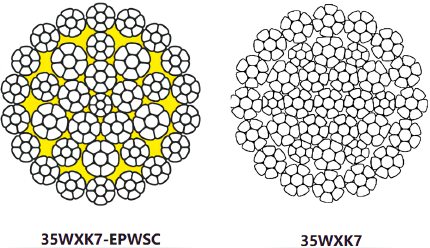
Almost never — but the exceptions matter. If the crane hoists on a single fall or an unbalanced reeving where the load hangs free and must not spin, a conventional 6-strand rope will rotate the load and can corkscrew itself. That is the territory of 18×7 / 18×K7 or 35×7 / 35×K7 rotation-resistant ropes, whose opposed strand layers balance torque. Tower cranes are the classic case; occasionally a jib or monorail-style overhead hoist needs the same treatment. Rotation-resistant ropes need larger D/d ratios, gentler handling and closer inspection — they must never be shock-loaded — so I recommend them only when the reeving genuinely demands them.

Inspection and Replacement: Let ISO 4309 Decide
Whatever you buy, it comes off the crane when it fails the discard criteria — not when it looks tired. We inspect to ISO 4309: broken wires in one lay length, diameter reduction (7% for steel-core ropes, 10% for fibre core), visible or suspected internal corrosion, and distortions such as kinks, birdcaging or flattened spots. On overhead cranes I pay special attention to the dead-end and equalizer areas and to the wraps that always sit on the drum at the bottom of the travel — those hidden wraps are usually the first to die. Record the initial diameter on installation day so your later measurements mean something.
Buying: What I Would Ask the Supplier
Ask for the full specification line — diameter, construction, core, grade, lay and finish — not just “14 mm rope”. Insist on a guaranteed minimum breaking force to EN 12385-4 with a 3.1 mill test certificate, and third-party testing if your insurer or customer requires it. Lead time matters more than unit price when a crane is down: a supplier who stocks common EOT crane sizes and offers custom cut lengths, sockets and terminations can save you days. Aulone is a professional manufacturer and supplier of steel wire ropes, wire rope slings, synthetic ropes and rigging hardware for lifting, marine, mining, construction and industrial applications. With more than 20 years in the industry, an annual capacity of 200,000 tons, EN 12385-4 certification, ISO 9001 quality management and class approvals including BV, ABS, DNV and RMRS plus CE marking, Aulone keeps standard overhead crane rope sizes in stock for fast delivery and builds custom assemblies to order. Our technical team can review your crane’s rope schedule — reach us at info@wireropes.net.
FAQ: Overhead Crane Wire Rope
What is the best wire rope for an overhead crane?
For most EOT and gantry cranes: 6×36WS+IWRC, grade 1960 MPa, bright for indoor duty or galvanized for outdoor and corrosive environments. It offers the best balance of bending-fatigue life, abrasion resistance and crush resistance. Severe-duty cranes should step up to compacted 6×K36 or 8×K36 with a plastic-impregnated core.
Can I use a fibre core (FC) rope on an overhead crane?
Only on light-duty indoor cranes with single-layer drums and moderate cycles. A fibre core adds flexibility and stores lubricant, but it crushes under multi-layer spooling and degrades with heat. For anything heavy or multi-layer, IWRC is the safe and ultimately cheaper choice.
Is rotation-resistant rope necessary for an overhead crane?
Usually not. Multi-fall reeving balances rope torque by itself. You need rotation-resistant rope (18×7/18×K7 or 35×7/35×K7 class) only for single-fall or unbalanced reeving where a free-hanging load must not spin — the same reason tower cranes use it.
How often should overhead crane wire rope be replaced?
There is no fixed calendar. Replace when the rope fails ISO 4309 discard criteria: too many broken wires in one lay length, diameter loss of 7% (steel core) or 10% (fibre core), corrosion, or distortions. Busy production cranes commonly re-rope every one to three years; a well-chosen compacted rope on a healthy crane can go considerably longer.
What safety factor applies to overhead crane hoist ropes?
A design factor of about 5:1 between the rope’s minimum breaking force and maximum line pull is the norm under FEM/ISO 4301 practice, with local standards such as CMAA specifying equivalent requirements. The crane manufacturer sets the exact factor; never size a rope on breaking force alone — check construction, core and D/d fit as well.
Where can I buy overhead crane wire rope with certification and fast delivery?
Choose a manufacturer that stocks standard EOT sizes, provides EN 12385-4 data sheets and 3.1 certificates, and offers custom assemblies. Aulone supplies overhead crane ropes from stock with custom cut lengths and terminations, third-party testing available on request — contact info@wireropes.net for a quotation or datasheet review.