By Andri — Technical Writer & Crane Rope Specialist, Aulone (www.wireropes.net)
If you only want the specification: a ladle or casting crane hoist rope should almost always be a compacted 8-strand rope — 8×K26WS or 8×K36WS with an independent wire rope core, grade 1960 MPa, bright finish with a high-temperature lubricant — sized at 6:1 to 8:1 on the worst rope tension, over sheaves of at least 25–30 times the rope diameter. Rotation-resistant ropes such as 35WXK7 are the wrong tool here: a ladle crane hangs its load on a multi-fall reeving, and that reeving needs bending fatigue life, drum crush resistance and heat tolerance, not torque balance. The second half of the answer matters just as much. On molten-metal duty the rope rarely fails from load; it fails from temperature, from a dry core and from an installation nobody checked.
I have quoted crane ropes into steel plants for the better part of twenty years, and I have never seen a ladle rope die of pure overload. I have seen plenty die of 90 °C air, a worn sheave liner and a rope installed without pre-tension.
Why a Ladle Crane Is a Different Animal
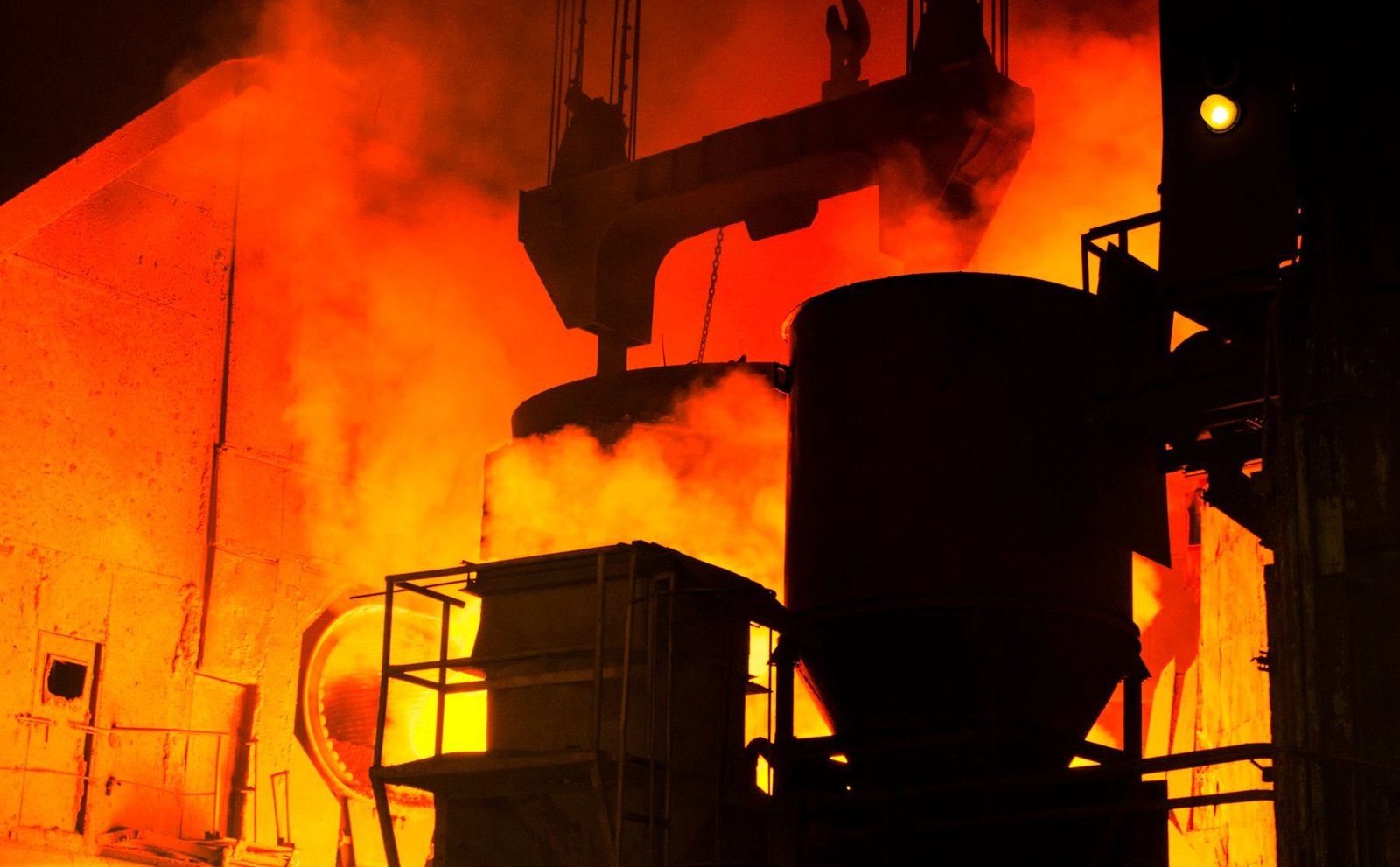
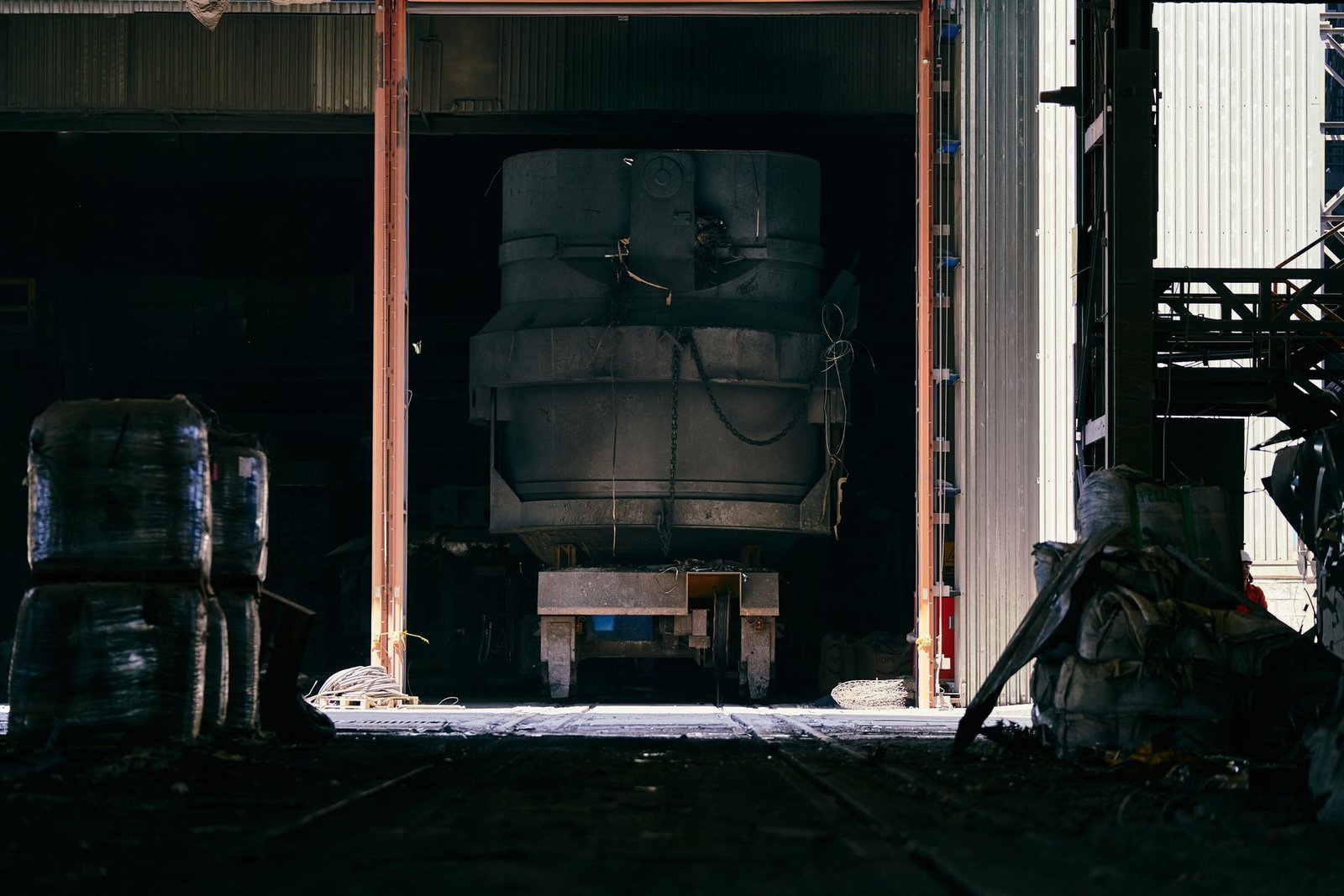
Everything on a ladle crane is written around one fact: the load is liquid metal at around 1,600 °C, hanging above people. A dropped coil is an insurance claim; a dropped ladle is a fatality and a plant that stops for months.
First, redundancy is designed in. Most ladle cranes run two drums with two ropes each, and each drum is sized to hold the full ladle alone after a single rope failure. The ropes are paired through an equalizer and replaced as a pair — never one at a time.
Second, the duty class is high. A converter-bay crane works a lift, travel and tilt cycle every few minutes, around the clock, at 250 to 400 tonnes. That is M7 to M8 duty: thousands of bending cycles a week, with almost no idle time for the rope to recover.
Third, inspection access is poor. The lower falls sit in radiant heat and dust, so the rope has to tolerate abuse — and be inspected on a schedule that assumes it is being abused.
The Rope Layout, and Which Rope Goes Where
People talk about the ladle crane rope as if one rope covers the machine. It does not — a modern ladle crane has four or five circuits with genuinely different duty. Table 1 is how I break them down when a mill sends a crane list.
| Circuit | What it does | Rope I specify | Why |
|---|---|---|---|
| Main hoist (2 drums × 2 ropes) | Lifts the full ladle on an 8-fall reeving; slow, heavy, high cycle | 8×K26WS+IWRC or 8×K36WS+IWRC, compacted, 1960 MPa, bright + HT lubricant | Best mix of fatigue life, crush resistance and symmetry in a multi-fall system |
| Auxiliary / service hoist | Ladle lid, lance, refractory, maintenance loads; often single fall | 35WXK7 or 18×K7 rotation-resistant, 1960 MPa | A free-hanging load on one fall will spin a standard 6- or 8-strand rope |
| Ladle tilt / rotating drive | Tilts the ladle to pour; slow, high static load, low cycles | 6×K36WS+IWRC or 8×K26WS, compacted | Strength and crush resistance matter more than fatigue life |
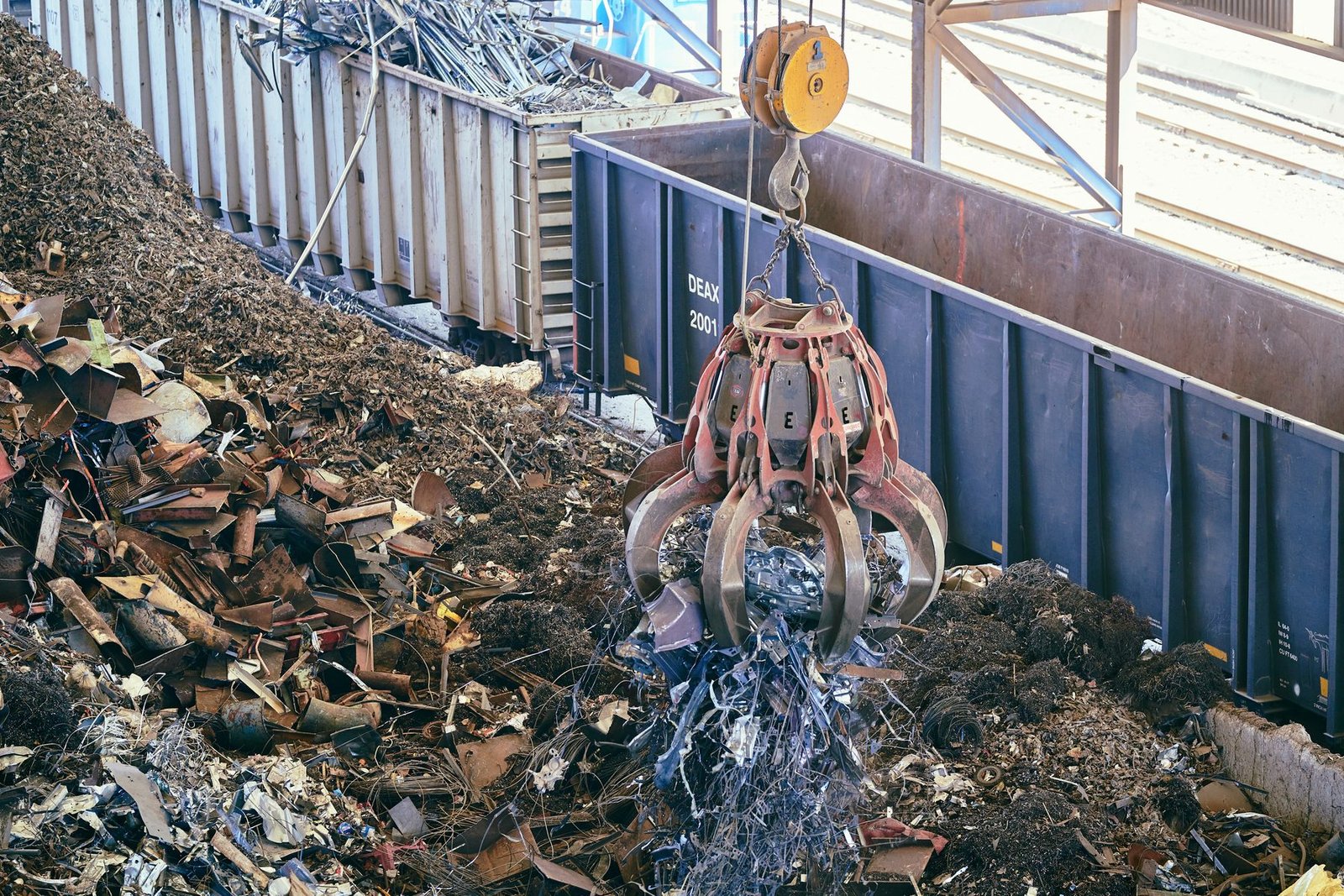
| Charging crane (scrap / bucket) | Feeds the furnace; grab or bucket duty, dust and heat | 6×K36WS+IWRC or 8×K26WS, matched lay pairs | High-cycle grab work with shock loads at the bite |
| Slab, billet and mould handling | Tongs, magnets and spreader beams; hot but shielded | 6×K36WS+IWRC, standard or compacted | General heavy-duty hoist duty; OEM specification usually governs |
Table 1 — Rope circuits on a ladle crane and the constructions I specify for each.
What Heat Actually Does to a Wire Rope
Heat is not one problem, it is four, and they arrive in a predictable order. Knowing the order tells you what you are looking at when a rope comes off early.
The lubricant goes first
Rope lubricant oxidises and migrates out of the strands long before anything visible happens to the steel — as a rule of thumb its life roughly halves for every 10 °C above about 70 °C. On a rope running at 90 °C in a furnace bay, the factory dressing is effectively gone within months, and with it the film that separates wire from wire inside the strand.
Then the core
Fibre dries, shrinks and crushes above roughly 100–120 °C: the rope loses internal support, diameter necks down and strands begin to cut into each other. That is why a fibre-core rope has no place here, and why a plastic-impregnated core is only safe where the rope stays below about 100 °C. Near the furnace you want a steel core, full stop.
Then the coating and the steel itself
Hot-dip zinc is consumed faster above about 200 °C, so galvanising buys little in the hottest zone — it is there for condensation and washdown, not radiant heat. Above roughly 200–250 °C the drawn wire loses the temper that gives it strength and ductility, and the signature is temper colour: straw, brown, purple, then blue. A blue rope has been cooked, and no amount of re-lubrication brings it back.


| Rope surface temperature | What is happening | What I do about it |
|---|---|---|
| 40–70 °C | Normal service. Lubricant stable, core sound, fatigue life as designed. | Standard lubrication interval; ISO 4309 routine inspection. |
| 70–120 °C | Lubricant oxidises and migrates; wire-to-wire friction rises; fibre cores dry out. | High-temperature lubricant; halve the re-lubrication interval; check diameter monthly. |
| 120–200 °C | Fibre core destroyed; plastic-impregnated core at its limit; zinc consumed quickly. | Steel core only; heat shields between ladle and falls; weekly inspection. |
| Above 200 °C | Wire temper lost, wires embrittle, core collapses, diameter necks down fast. | Shield or re-route the falls; a rope showing temper colours is scrap. |
Table 2 — Temperature bands on ladle crane duty and the response each one calls for.
Which Construction I Actually Specify
The default for a ladle main hoist is a compacted 8-strand rope with a steel core in grade 1960 MPa. Compacting — die-drawing the finished strand — raises the fill factor by roughly 10–15% over a standard rope of the same diameter, gives a denser surface that resists abrasion, and produces a rounder rope on multi-layer drums.
8×K26WS+IWRC — my first choice
Twenty-six wires per strand in a Warrington-Seale pattern gives a good balance: enough small outer wires for bending fatigue, enough large ones for abrasion, and eight strands is inherently more symmetrical than six. On an 8-fall reeving the rope bends constantly, and symmetry keeps the load evenly distributed around the core instead of ovalising it.

8×K36WS+IWRC — when fatigue life is the bottleneck
If ropes are discarded on broken wires rather than wear or heat, the 36-wire strand is the better answer: more, thinner outer wires tolerate more bending cycles. The trade-off is a slightly lower fill factor and a less abrasion-resistant surface, so it suits clean ladle duty more than dusty charging duty.
6×K36WS+IWRC — for auxiliary and tilt circuits
The 6×36 class is still a sound rope, and on a tilt drive or smaller auxiliary hoist it is often the economical choice. I avoid it on a large main hoist because a 6-strand rope is less symmetrical under load and less stable on a multi-layer drum. Where a mill already standardises on 6×K36WS, our 6×36 wire rope specification guide covers sizes and breaking forces.

Why not 35WXK7 here
Rotation-resistant ropes are brilliant at one job: stopping a free-hanging load from spinning on a single fall. A ladle main hoist is the opposite case — four or eight falls, a block that cannot spin — so the rope pays for its torque balance with a lower fill factor and inner layers that hide their condition. Put 35WXK7 on a ladle main hoist and you have bought a rope that is harder to inspect and no stronger.
From Ladle Tonnage to Rope Diameter
Sizing is a short calculation, and I would rather show it than quote a table. Take a 150-tonne ladle crane: 130 tonnes of hot metal plus a 20-tonne ladle and tackle, on 8 falls. Load per fall = 18.75 t, about 184 kN. Apply a 1.1 dynamic allowance for acceleration and the snatch when the ladle lifts off its stand: 202 kN. At the 7:1 safety factor most mill specifications call for, the required minimum breaking force is about 1,415 kN — which an 8×K26WS+IWRC in 1960 MPa delivers at 46 mm.
Two geometry checks follow, and both get skipped. The head sheave wants at least 25 × d (1,150 mm for 46 mm rope; 30 × d on M8 duty) and the drum the same. If the existing drum is 1,000 mm, that crane is asking for a 40 mm rope that cannot carry the load — the honest answer is more falls, not a smaller rope. Our sheave and drum guide covers the geometry, and the drum capacity calculation tells you whether a larger diameter will fit.
Core, Finish and Lubrication for Hot Duty
Core: steel, without exception, on the main hoist. A fibre core is a sponge for heat and moisture, and once it dries the rope loses diameter and internal support at the same time; the comparison is in our IWRC versus fibre core guide. A plastic-impregnated core is an excellent upgrade where the rope stays cool, but its polymer liner is not a 150 °C material, so I keep it out of the radiant zone.
Finish: bright rope with a high-temperature lubricant is the honest choice for a ladle hoist. Galvanising protects against condensation and washdown, and I specify it on charging cranes and outdoor slab yards, but zinc is consumed quickly once the rope runs hot. Heat is answered by shielding and geometry, not by coating.
Lubrication: the factory dressing on a standard rope is designed for 60–80 °C service. For ladle duty I ask for a high-temperature lubricant — synthetic base, good to about 150–180 °C — applied during stranding so it reaches the core, not just the surface. In the plant, re-lubrication follows inspection, not the calendar.
Installation Rules That Decide Whether the Rating Is Real
A correctly specified rope that is badly installed behaves like a badly specified one, and on a ladle crane you find out at the worst possible moment. Five rules I will not compromise on:
Replace as a matched pair. Same construction, same batch, same length, opposite lay direction where the drums are paired, so the torque of one rope cancels the other and the ladle hangs level.
Pre-tension during spooling. Reel the rope on under 1–2% of its breaking force and hold it there for the first layers. A loose bottom layer lets upper wraps cut down through it on the first heavy lift, and that damage is permanent.
Inspect sheaves and equalizer while the rope is off. A worn groove or collapsed liner will imprint itself into a new rope within weeks. Check equalizer travel too: if the two ropes are not sharing load, one is doing the work of two.
Get the termination right. Wedge socket or socketed terminal, depending on the OEM — either way the dead end must be secured, the wedge seated, and the assembly re-checked after the first loaded cycles.
Plan the change around the reline. The rope order has to be placed weeks earlier, in the right length, with the right terminations and with certificates the plant inspection department will accept on the day.
Inspection Under Heat: What I Look For
ISO 4309 gives the framework — broken-wire counts per lay length, diameter reduction limits, distortion and corrosion criteria — and our ISO 4309 discard criteria walkthrough sets out the tables by construction. Ladle duty adds three checks it implies but does not spell out.
Look for temper colour first: any straw, brown, purple or blue tint means that section has been above roughly 200 °C, and the wire will break without stretching. Then dry grey dust at the core when the rope is opened at a termination — a burnt-out core. And localised diameter necking rather than general wear: 5% loss over one lay length with no external wear means core collapse.
| Check | What it tells you | Action |
|---|---|---|
| Temper colour on outer wires | Local overheating above ~200 °C; wire embrittled | Discard the affected length; fix the shielding before the new rope goes on |
| Diameter at three points per lay | Core drying or collapse, especially localised necking | Compare with the discard limit; investigate above ~5–7% local loss |
| Broken wires at equalizer or head sheave | Fatigue from misalignment or unequal rope loading | Count per ISO 4309; check equalizer travel and sheave alignment |
| Core condition at the socket | Burned or dry core, internal corrosion | Discard if the core is brittle or powdery — a hidden failure mode |
| Lubricant on the rope surface | Whether the rope is lubricated at all in service | Re-lubricate with HT product; set the interval from measured temperature |
| Sheave groove and drum grooving | The real cause of most short rope life | Re-machine or replace before installing new rope |
Table 3 — Inspection points specific to ladle crane duty, on top of the ISO 4309 routine.
Frequently Asked Questions
What is the best wire rope for a ladle crane?
A compacted 8-strand rope with an independent wire rope core in grade 1960 MPa — 8×K26WS+IWRC as the default, 8×K36WS+IWRC where fatigue life limits rope life. Specify a steel core, a high-temperature lubricant and a safety factor of at least 6:1 on the worst rope tension.
Can I use a rotation-resistant rope on a ladle crane?
Only on the auxiliary hoist, where the load hangs from a single fall. On the main hoist the load rides on four or eight falls, so the block cannot rotate — a rotation-resistant rope gives you lower fatigue life and inner layers you cannot see, solving a problem the main hoist does not have.
Why do my ropes fail before the broken-wire limit?
Because they are failing from heat and core collapse, not bending fatigue. Temper colours, a powdery core and localised necking are heat signatures, and they appear long before a wire count reaches the ISO 4309 limit. Change the shielding and the lubricant before you change supplier.
What safety factor should a ladle hoist rope have?
Most steel-plant specifications I work to call for 6:1 to 8:1 on the worst rope tension, including the dynamic allowance for lifting the ladle off its stand. General crane duty is often 5:1; molten metal justifies the extra margin. National regulation and the crane OEM manual take precedence.
How often should ladle crane ropes be replaced?
On condition, but with a planned maximum: most mills change main hoist ropes at shutdowns every 12 to 24 months and inspect weekly in between. A rope showing temper colour, core collapse or a kink comes off immediately.
Does galvanising help on a ladle crane?
Marginally. Zinc protects against condensation and washdown, which matters on charging cranes and outdoor yards, but it is consumed quickly above about 200 °C. For furnace-side falls, spend the money on shielding and a steel core instead.
Where Aulone Fits
Aulone is a professional manufacturer and supplier of steel wire ropes, wire rope slings, synthetic ropes and rigging hardware for lifting, marine, mining, construction and industrial applications. We have made rope for more than twenty years, with an annual capacity of 200,000 tons, stock availability in common crane and ladle-hoist constructions, production to EN 12385-4 and ISO 9001, and BV, ABS, DNV, RMRS and CE certification on request. For steel plants we supply compacted 8-strand ladle ropes cut to length, with swaged or socketed terminations, matched pairs under one reel number and third-party test certificates.
If you are fighting short rope life on a ladle crane, send me the crane rating, reeving, rope diameter, duty cycle and photographs of the last rope that came off — the wear and colour pattern usually says more than the specification sheet. You can reach me and the technical team at info@wireropes.net.