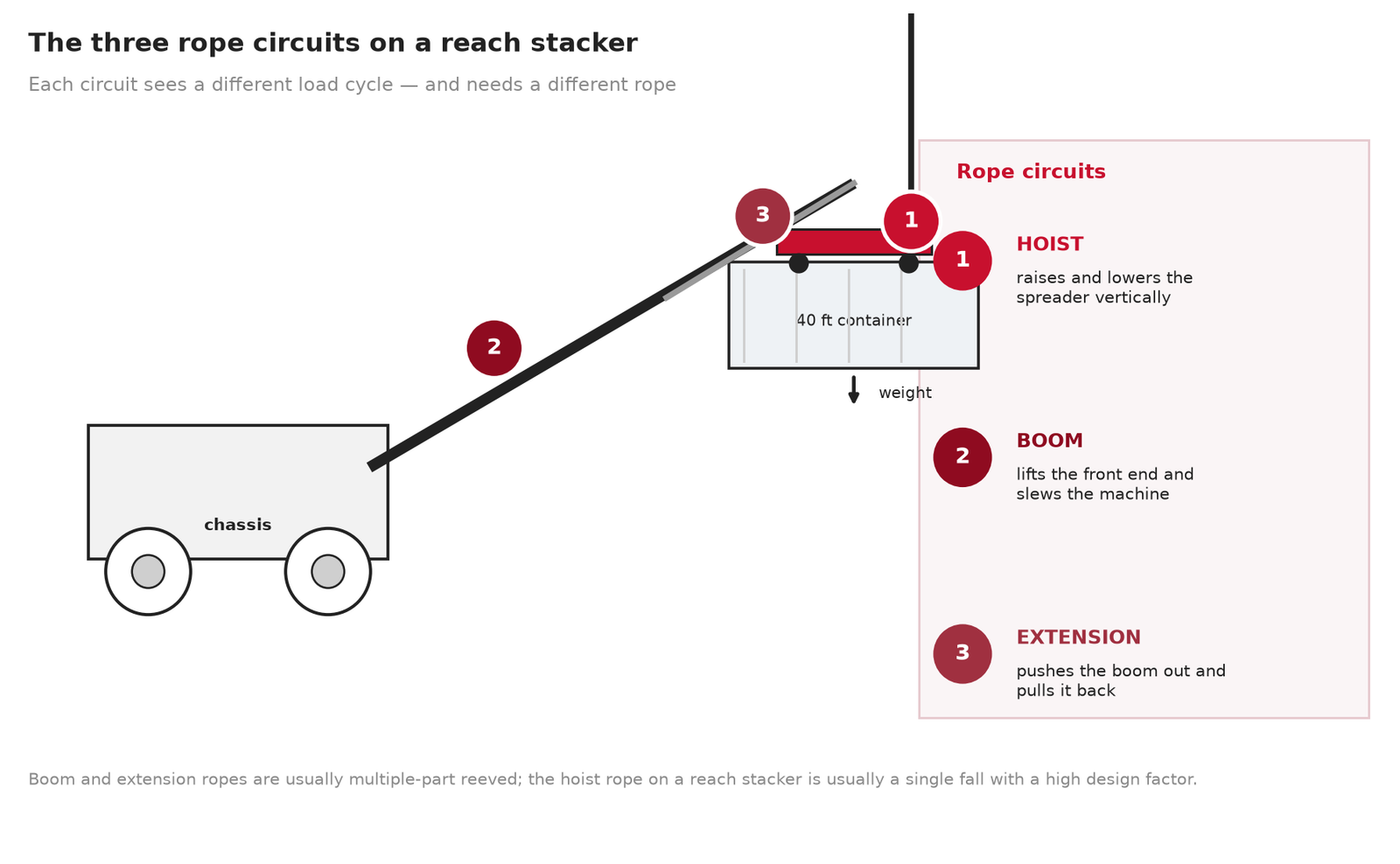
The short answer: a reach stacker runs three separate rope circuits, and they do not want the same rope. The hoist rope lifts the spreader and the container and works on a single fall, so it needs a high design factor and a rotation-resistant construction. The boom and extension ropes are usually multi-part reeved, so they need a flexible, fatigue-resistant rope that spools cleanly on a drum. And all three work outdoors in salt spray, so the finish is not optional. Get any one of these three wrong and you get the same result: a rope that fails well before its rated life, in the middle of a container yard.
A reach stacker is a strange machine from a rigging point of view. It carries a 40 ft container on a spreader at the end of a telescopic boom, and it moves that load through the full range from a low pick position to a high stack position, in a yard where the ground is uneven, the load swings, and the operator works to a shift pattern. It is a crane, a forklift and a stacker in one, and the rope selection has to satisfy all three roles at once.
Why Reach Stacker Rope Fails Differently From Other Crane Rope
The working cycle is what makes reach stacker rope unusual. Every lift starts with a rapid hoist from ground level, then a boom raise to stack height, then a controlled slew and a lower. The load is never static. It accelerates hard at the start of the hoist, it swings when the slew starts and stops, and it lands with a shock as the spreader meets the stack or the truck bed.
Three separate damage mechanisms follow from that, and they are worth separating because each one points at a different specification decision.
Fatigue from repeated bending over small sheaves. The sheave diameters on a reach stacker are small in absolute terms, and the rope flexes through them many times per shift. This is the dominant wear mechanism and the reason flexibility matters more here than abrasion resistance.
Shock from the load landing. Setting a container down hard puts a spike through the hoist rope that never appears in a static test. A rope that has been sized only on static load will accumulate damage from these spikes without showing it.
Corrosion from salt spray. This is the difference between a reach stacker and a tower crane. A container terminal is, in marine terms, a permanently damp place with salt in the air and on the ground. Ungalvanized rope in that environment corrodes from the outside in, and the visible rust is the least of the problem, because the same moisture gets inside the rope and attacks the core.
There is also a fourth mechanism that is not a failure mode but a selection trap, and it is worth stating plainly: the broken-wire count on its own does not tell you whether a reach stacker rope is safe. Broken-wire limits from ISO 4309 are a lagging indicator. The dangerous condition on a container handler is often a rope whose core has quietly lost its lubricant and become dry and brittle inside, while the outside still looks serviceable. That is why a rope that has been running in a salt-laden yard with a neglected lubrication schedule needs replacing on evidence of internal condition, not on the count of visible broken wires.
The Three Circuits and What Each One Needs
Table 1 — Reach stacker rope circuits, load cycles and the specification that fits
| Circuit | What it does | Load cycle | Recommended rope |
|---|---|---|---|
| Hoist | Raises and lowers the spreader and container | Single fall, high shock on landing, fast acceleration | Rotation-resistant 35WXK7 or 19X7, IWRC core, 1960 N/mm² or higher, hot-dip galvanized |
| Boom lift | Raises the whole front end of the machine | Multi-part reeved, slow steady movement, very high static load | 6X36WS-IWRC, high strength, galvanized, drum-spooling friendly |
| Extension | Pushes the boom out and pulls it back | Multi-part reeved, frequent reversals, rope runs through the boom head | 6X36WS-IWRC, flexible, plastic impregnated core for salt exposure |
Note the split. The hoist rope is the one that carries the shock and the one that works on a single part, so it is the rope that needs rotation resistance and the highest design factor. The boom and extension ropes are multi-part, which means the reeving itself balances the torque, and they can therefore use a conventional six-strand rope that is cheaper, more flexible and better at bending.
This is the same logic that applies to crawler cranes and truck cranes, and it is the reasoning behind the crawler crane rope guide and the truck crane rope guide already on this site. The difference on a reach stacker is that you cannot substitute the other way round: putting a cheap six-strand rope on the hoist of a single-fall circuit is the single most common specification error I see in enquiries from terminals.
The Hoist Rope: Design Factor Is the Whole Argument
The hoist rope on a reach stacker carries the container on one fall. That single fact drives everything: the design factor, the construction and the frequency of inspection.
EN 12385-1 deals with lifting appliances and gives the general framework; EN 12385-4 covers wire rope for lifting appliances specifically. For a machine of this class the design factor applied to a single-fall hoist rope is normally at least 5, and many terminal operators run higher than the minimum because the shock loads they see are not in the standard’s model of a normal lift. If your machine is rated for a 40 tonne container and the rope is a single fall, the arithmetic is unforgiving: the rope’s minimum breaking force has to be at least five times the worst-case static load, and the rope has to survive the dynamic spike on top of that.
Construction follows from the design factor. A rotation-resistant rope such as 35WXK7 (35W×K7) gives a meaningful strength advantage over a six-strand rope of the same diameter, because the compacted strands pack more steel into the same space. In the EN 12385 naming system, the W stands for the Warrington wire pattern in the strands and the K for the compacted construction, and the concentric layers are counter-laid against each other so the rope stays essentially twist-free under a single-line pull. That last property matters more than it sounds: a single-fall hoist rope that twists will spin the spreader, and a spreader that spins on a container with the twistlocks engaged is a serious problem on its own.
Where the terminal cannot use 35WXK7 — cost, availability, or an OEM restriction to a specific construction — 19X7 is the fallback. It is a less compact, less strong rope of the same diameter, so you either accept a smaller working load or move up a diameter. Compare the two properly before you decide, because "same diameter, more rope in the reel" is not a free choice.
Boom and Extension Ropes: Multi-Part Reeving Changes Everything
The boom lift rope on a reach stacker supports the entire front end of the machine, which means it carries a very high static load in a very short length of rope. It is normally reeved with multiple parts to keep the rope diameter within a workable range. The extension rope, which pushes and pulls the boom through the boom head, is also multi-part.
Multi-part reeving brings three consequences that should drive the specification.
Rotation stops being the problem. With four or more parts, the reeving balances the torque generated by the rope. A conventional six-strand rope becomes a perfectly sensible choice and usually a better one, because it is more flexible, bends better over the sheaves in the boom head and costs less for the same strength.
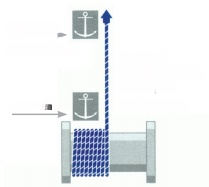
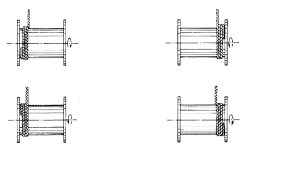
Drum spooling quality becomes critical. These ropes live on a drum and get spooled and respooled every shift. A rope that lays down unevenly develops a crossover, and a crossover under load is where a rope gets crushed and where the core fails. A rope with good resistance to crushing is worth more here than a rope with marginally better fatigue numbers. Six-strand 6X36WS with an IWRC core handles multi-layer spooling well.
The sheave diameter matters more than the strength grade. Every part of line adds a bend cycle. A rope that is stronger but stiffer will fail sooner at the sheave than a slightly weaker but more flexible rope of the same diameter. Check the boom head sheave diameter against the rope diameter — the usual rule of thumb is a minimum D/d ratio of 20 to 25 for a rope working continuously over sheaves.
One detail catches people out: the boom and extension ropes on a reach stacker are usually routed through the boom head in a way that exposes them to abrasion against the structure itself. Where the rope runs through the boom, check the wear pattern and grease the routing points. Abrasion against a steel edge removes material far faster than normal wear, and it does it in one narrow band that an inspector can miss if they are only looking for broken wires.
Galvanizing Is Not a Preference in a Container Yard
This is where I push hardest with buyers, because it is the specification decision most often left to price. A reach stacker spends its life in a salt-laden environment. Ungalvanized wire rope there will show surface rust within months, and the internal corrosion arrives faster than most operators expect, because salt spray and moisture draw into the core through the strand interfaces.
Three finishes are realistic options.
Hot-dip galvanized. The standard answer for port work, and the right default. The zinc coating protects the outer wires, and because the coating is applied to the finished rope it also seals the wire surfaces against the moisture that gets into the core. It is the finish I specify unless there is a reason not to.
Plastic impregnated (EPIWRC). A polymer layer is injected into the core during manufacture and fills the voids between core wires. This does three things at once: it locks lubricant in place, it cushions the core against the outer strands, and it seals the interior against moisture and grit. On the extension rope, which is the circuit with the most reversals and the most salt exposure per working hour, this is the upgrade I recommend most strongly. It is more expensive and it is worth it.
Stainless steel. For genuinely aggressive exposure or where the terminal specifies it. It is not the default because the economics rarely justify it on a reach stacker, and because the corrosion resistance of stainless does not protect the core if the rope has been damaged mechanically — and on a container handler, mechanical damage is a given.
One caution on lubrication, because it comes up constantly: galvanized rope is not lubricated with the same grease as bright rope. Conventional wire rope greases are acidic and will attack the zinc coating. If you specify hot-dip galvanized rope, specify a lubricant that is compatible with it.
Installation Details That Decide Rope Life
On a machine that gets 12 to 16 hours of work a day, installation quality shows up in the rope life far more than on a tower crane. A few points that matter.
Unreel, never uncoil. Pull the rope off the reel under control. A rope that kinks during installation is permanently damaged, even if it looks straight afterwards, because the kink closes the lay and the wires take a permanent set.
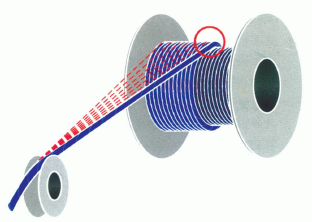
Seize before you cut. Bind the rope tightly on both sides of the cut. A rope that is allowed to unravel releases strand torque that can never be put back, and that released rope will not lie properly on the drum.
Spool with back tension. Keep the rope under tension as it winds. Loose bottom wraps dig into the layers above them and crush the core. This is the single most common cause of early failure on the boom circuit.
Match the terminations to the load. The hoist rope on a reach stacker usually runs through the spreader head and terminates at the hook block. Both terminations need to be matched to the rope diameter and the load, and both need to be the type that maintains its efficiency: a ferrule swage or a wedge socket, sized for the rope, with the rope running in line with the load. A termination that has to be improvised on a Saturday night is how ropes get killed.
What to Inspect, and How Often
Because a reach stacker works a hard shift pattern, the inspection regime has to be more frequent than on a tower crane, and it has to look in places that a general inspection misses.
Before every shift, by the operator. The visible broken-wire count on the hoist rope, the condition of the spreader attachment, and any rope that has been lying on the ground overnight. Look at the section of hoist rope just above the spreader, which is where the spreader weight and shock are highest.
Monthly, by maintenance. The rope in the boom head and the extension routing points, specifically for abrasion against the structure. This is the failure mode that a broken-wire count will not catch.
Quarterly or at the OEM interval, a documented inspection. Full discard-criteria check against ISO 4309: broken wires per lay length, diameter reduction, corrosion, deformation, and the condition of the terminations. Note the diameter limits, because they differ by construction: ISO 4309 sets 7 per cent for rotation-resistant ropes and 10 per cent for fibre core single-layer ropes, and getting the right one matters when the rope is near the limit.
Annually, or with any doubt, a magnetic examination. If the rope has been running in a salt-laden yard without a proper lubrication regime, the condition worth knowing about is the condition of the core, and that is exactly what a surface inspection cannot tell you. Magnetic flux leakage inspection finds the broken wires inside the rope that have not yet reached the surface.
And one more piece of advice that costs nothing: keep a rope log. Record which rope went on which circuit, when it was installed, how many hours the machine has run, and every replacement and every abnormal event. When a rope fails, the log is the only thing that tells you whether it was a bad rope, a bad installation, or a duty that has quietly changed — and in my experience that is the difference between replacing a rope and replacing a maintenance procedure.
Frequently Asked Questions
What wire rope is best for a reach stacker?
It depends on the circuit. For the single-fall hoist rope, a rotation-resistant construction such as 35WXK7 (35W×K7) or 19X7 with an IWRC core, in hot-dip galvanized finish, gives the best combination of strength, twist control and corrosion resistance. For the multi-part boom and extension ropes, 6X36WS-IWRC in galvanized finish is usually the more practical choice, with a plastic-impregnated core worth adding on the extension circuit.
Can I use a normal six-strand rope on the hoist?
You can, but you should not choose it on price alone. A six-strand rope on a single-fall hoist will twist under load and spin the spreader, and it delivers less strength for a given diameter than a rotation-resistant rope. If you do use one, size it up for the design factor and the shock loads, and check the twistlock engagement carefully during the first lifts with a new rope.
How often should reach stacker wire rope be replaced?
On the basis of condition, not on a calendar. Reach stacker duty is heavy enough that a rope in good condition can be well past a typical service life, and a poor one can fail early. Inspect to the ISO 4309 discard criteria at least quarterly, and treat internal condition as a separate question: if the rope has run in a salt-laden yard without proper lubrication, magnetic examination is the only way to know what the core looks like.
Does galvanized wire rope need special lubrication?
Yes. Conventional wire rope greases are acidic and will attack the zinc coating and cause it to break down. If you specify hot-dip galvanized rope, specify a lubricant approved for galvanized rope, and establish a re-lubrication interval that matches the shift pattern.
What breaks first on a reach stacker, the rope or the termination?
The termination, more often than the rope itself. The hoist rope terminates at the hook block and at the spreader head, and the spreader end in particular sees the full container weight and every landing shock. A correctly sized ferrule swage or wedge socket with the rope running in line with the load will outlast a perfectly good rope that has been terminated with the wrong fitting.
Is stainless steel wire rope worth it for a container handler?
Sometimes, but it is not the default. Hot-dip galvanized rope is the normal answer for port work, and a plastic-impregnated core addresses the internal corrosion problem more directly than stainless does, because it seals the core rather than just protecting the outer wires. Stainless earns its place where the exposure is genuinely aggressive or the terminal specifies it.