The short answer: a wire rope proof load test loads a finished assembly — a sling, grommet, pendant or bespoke rope assembly — to a defined force, normally twice its working load limit, holds it there, releases it and then checks for permanent deformation or damage. It is a pass/fail screening test of workmanship, and above all of the terminations, because the rope itself is predictable and the pressed ferrule, spliced eye or poured socket is where assembly quality actually shows up. What a proof test is not: a breaking test, a guarantee of the rope’s minimum breaking force, or a maintenance procedure you can repeat on used gear. Confusing these three things is the most common mistake I see in purchase orders and audit findings. Here is how the pieces fit together.
What a Proof Load Test Actually Is
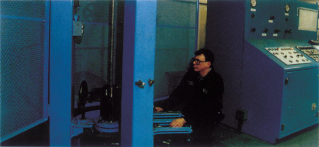
The procedure itself is simple, which is exactly why it is so effective. The complete assembly — rope, both terminations and every fitting in the load path — is placed in a calibrated tensile testing machine and pulled to the specified proof force at a controlled rate, held for a short period, then unloaded and examined. Before and after, the assembly is measured: length, and usually diameter at marked points. The inspector is looking for specific evidence:
- Termination slip. A ferrule-secured eye that has moved under load, or a splice that has started to pull out, fails the test even if nothing breaks.
- Cracks or deformation in fittings. Welded end attachments, master links, thimbles and hooks that distort or crack under proof load are rejected — which is precisely the point, since a crack found on the test bench costs a sling, while a crack found on the crane can cost far more.
- Permanent set. A small amount of length change on first loading is normal (more on that below); a rope that has visibly bird-caged, a ferrule that has bulged or a fitting that has taken a permanent set is not acceptable.
The machine matters as much as the load. A serious test is run on equipment calibrated to ISO 7500-1, accuracy class 1, with the proof force recorded — not estimated from a crane’s load chart or a spring balance. If a certificate cannot name the machine and its calibration, I treat the whole document as decoration.
The Three Tests People Keep Confusing
Proof testing sits between two other activities that get called “testing” in the trade. Keep them separate in your head and in your specifications:
| Proof load test | Breaking (destructive) test | In-service inspection & NDT | |
|---|---|---|---|
| What happens | Complete assembly loaded to the proof force and released | Sample loaded until it actually parts | Rope examined visually or with instruments, unloaded |
| Load level | Typically 2 × WLL (roughly 32–40% of the rope’s minimum breaking force) | To destruction | None |
| What it verifies | Assembly workmanship and termination integrity | The rope’s actual minimum breaking force for that production lot | Current condition against discard criteria |
| Destroys the product? | No | Yes | No |
| When it happens | At manufacture; after repair, by the manufacturer | On production samples per lot | Pre-use, periodic, annual |
| Key references | EN 13414-1, OSHA 1910.184, DNV 2.7-1 | EN 12385-4, API 9A | ISO 4309, ASME B30.9 |
One test proves workmanship, one proves strength, one proves condition. A certificate from any one of them does not answer the questions the other two answer.
Where the 2 × WLL Number Comes From
The proof force is not a magic number — it falls straight out of the sling calculation. Under EN 13414-1, the working load limit of a single-leg wire rope sling is:
WLL = (Fmin × KT) / (Zp × g)
where Fmin is the rope’s minimum breaking force, Zp is the design factor of 5, g is 9.81 m/s², and KT is the termination efficiency — 0.9 for a swaged ferrule, 0.8 for a hand splice. Proof testing the sling to twice its WLL therefore loads the rope to only:
(2 × 0.9) / 5 = 36% of Fmin for a ferrule-secured sling, or 32% for a spliced one.
Run the numbers for a real sling and the picture is clear. A 20 mm 6×36WS + IWRC rope in grade 1960 has a minimum breaking force of about 270 kN. Its single-leg WLL works out to roughly 4.9 tonnes, so the proof force is about 97 kN — around 36% of the rope’s breaking force. That is comfortably inside the elastic region: the test is meant to find a bad press, a weak weld or a poor splice, not to take the rope anywhere near its limits. Industry practice for offshore pendant lines and socketed assemblies follows the same logic, commonly specified as 40% of the assembly’s rated breaking strength.
This is also why I push back when a buyer asks us to proof test “higher, to be safe”. Loading further up the curve initiates permanent set and fatigue in a perfectly good rope. The proof test is a screening tool, not a strengthening treatment — the design factor of 5 does the safety work, and the proof test just confirms the assembly deserves its rating.
Proof Force Requirements by Product and Standard
Which product gets proof tested, at what load, and by whom depends on the standard your purchase order invokes. This is the table I keep by the desk when I review customer specs:
| Product | Typical proof load | Who tests | Notes from practice |
|---|---|---|---|
| Wire rope itself (on the drum) | No proof test — destructive break test on lot samples | Rope manufacturer | EN 12385-4 / API 9A; actual measured breaking force goes on the certificate |
| Single-leg sling (EN 13414-1) | 2 × WLL | Sling maker | Standard commercial practice; certificate per sling |
| Multi-leg bridle sling | 2 × WLL of the assembly | Sling maker | Confirm how the force was applied — legs loaded through the master link at the stated angle |
| Endless and grommet slings | 2 × WLL | Sling maker | Both bearing sides share the load; termination-free, so the test mainly verifies lay and length stability |
| Welded end attachments (OSHA 1910.184) | 2 × rated capacity, before first use | Manufacturer or equivalent entity | Employer must retain the certificate of proof test; applies to welded fittings on wire rope slings |
| Repaired slings (OSHA 1910.184) | 2 × rated capacity before return to service | Manufacturer or equivalent entity | No user-side re-testing beyond rated load — OSHA treats that as overloading |
| Metal mesh slings (OSHA 1910.184) | Minimum 1.5 × rated capacity | Manufacturer or equivalent entity | The odd one out — note it is 1.5×, not 2× |
| Offshore lifting sets (DNV 2.7-1) | Proof per DNV scheme, plus a break test | Lifting-set maker, DNV surveyor | A test leg with an eye at each end is broken from every delivered wire drum and referenced in each sling set certificate |
| Forged hardware (shackles, links, hooks) | Commonly 2 × WLL | Hardware manufacturer | Certificate to EN 13889 or equivalent; matched to the sling’s WLL, never below it |
The takeaway: name the standard in your purchase order, not just “proof tested please”. Whether every sling is individually proof tested, whether a witness is present, and what the certificate must show all follow from the standard you invoke.
The Rope Is Not Proof Tested — It Is Break Tested
This is the distinction most often missed when people ask me for “a proof test certificate for the rope”. Rope on the drum is verified differently from an assembled sling: production samples from the lot are pulled to destruction on a tensile machine, and the measured breaking force must meet or exceed the declared minimum. That destructive result — the actual Fm, not just the table value — is what a proper EN 12385-4 or API 9A certificate reports, together with the measured rope diameter and the lot number that ties the paperwork to your reel.
The DNV 2.7-1 offshore scheme makes the relationship beautifully explicit: for every delivered drum of wire, a test leg with an eye in each end is prepared from that drum and tested to breaking, and the drum test report is referenced in each sling set certificate. So the sling assembly carries a proof test, while the parent rope carries a documented break test — two documents, two questions answered. When a supplier offers you a proof test certificate in place of the lot breaking-force certificate (or vice versa), they have answered the wrong question, and you should say so before the rope ships.
What a Proof Test Can and Cannot Tell You
A pass is valuable, but it is a bounded kind of valuable. Here is the honest split:
| A proof test can detect | A proof test cannot detect |
|---|---|
| An under-strength or poorly pressed ferrule | Fatigue life — how the rope will age over thousands of cycles |
| A splice that pulls out under load | Internal wire breaks or core deterioration that develop later in service |
| Cracked or weak welded end attachments | Corrosion that starts after the test, in your environment |
| Gross material or manufacturing defects in fittings | Future abrasion, crushing or abuse on your crane |
| Permanent set the assembly takes under load | The rope’s minimum breaking force — that is the lot break test’s job |
And one more boundary: a proof pass is not permission to exceed the WLL. The assembly was verified at roughly a third of its breaking force, not at its limit. The design factor exists so that a rope working every day at WLL still has strength in reserve for dynamic peaks, wear and the unknowns of real service.
How to Read a Proof Test Certificate
Certificates vary in format but not in substance. These are the lines I check, in order, and the ones whose absence makes me write back to the supplier:
| Certificate field | Why it matters |
|---|---|
| Certificate number and unique sling serial / ID | Ties the paper to the physical tag on the sling — a generic certificate with no serial proves nothing about your unit |
| Standard(s) invoked | EN 13414-1, ASME B30.9, DNV 2.7-1 — each carries its own proof force, acceptance and marking rules |
| Rope identity: construction, diameter, grade, core, finish, lot number | Links the sling to the parent rope’s lot break test certificate |
| Termination type and efficiency | Ferrule (KT 0.9) vs splice (0.8) — it sets the WLL and the proof force |
| Proof force applied, in kN, and the WLL it is derived from | “Tested to 2 × WLL” without stating the WLL is an incomplete test — 2 × of what? |
| Test machine and calibration reference (ISO 7500-1 class 1) | An uncalibrated load path makes the whole document decorative |
| Held load and duration; elongation / permanent set recorded; length before and after | The acceptance evidence — what the inspector actually measured after unloading |
| Result, tester, date, and third-party witness where specified | BV, ABS, DNV, RMRS or another named body if your project calls for witnessed testing |
Length Change After Proof Loading — Plan for It
First loading at double the working load pulls out most of the rope’s constructional stretch — on an IWRC rope on the order of 0.25%. On a 10-metre sling that is around 25 mm, which matters when you have ordered matched sets or designed around a nominal length. EN 13414-1 anticipates this: a ferrule-secured sling must measure within two rope diameters or 1% of nominal length (whichever is greater), a spliced sling within four diameters or 2%. The practical advice I give buyers: state on the order whether the length is specified before or after proof test, and have the certificate record the as-tested length. If you are buying matched sets for a spreader arrangement, ask for post-proof length matching — it is a routine request for a sling shop that tests in-house.
Proof Testing Is Not Maintenance — Do Not Re-Test Used Gear
The most dangerous misconception I run into is treating the proof test as a periodic inspection tool — “let’s pull it to twice WLL every year to make sure it is still good”. Please do not. A used rope has already consumed part of its strength and fatigue life; pulling it to 36% of its original breaking force proves very little and may simply be completing a fatigue process that would otherwise have taken months to surface. OSHA’s position is explicit: proof testing is the responsibility of the sling manufacturer or an equivalent entity, loading a sling beyond its rated capacity outside the manufacturer’s written permission is a violation, and periodic re-testing is not a recognized inspection procedure. In service, the tools are the ones designed for condition: visual inspection against the discard criteria and, where the rope permits, non-destructive examination. If a sling has been repaired, it goes back to the manufacturer for proof testing before it returns to work — that is the one legitimate re-test.
Five Mistakes I See on the Buyer Side
- Accepting a proof certificate as a substitute for the lot breaking-force certificate. You need both, and they answer different questions.
- “Tested to 2 × WLL” with no WLL stated. The certificate must show the force in kN and the WLL it derives from, with the sling serial.
- Assuming the multi-leg assembly was tested leg-by-leg. Ask how the proof force was applied; a 4-leg bridle tested as an assembly is a different verification from four legs tested individually.
- Field DIY proof testing with a crane, shackles and a site load cell. Uncalibrated, unsafe and invalid — and for used gear, potentially destructive.
- Ordering proof tests the invoked standard does not require, or skipping ones it does. Specify the standard first; the test schedule follows from it, and your budget will thank you.
Frequently Asked Questions
What is the difference between proof load and breaking load?
Proof load is the test force a finished assembly must withstand without damage — typically twice its working load limit, or roughly a third of the rope’s breaking force. Breaking load (minimum breaking force, Fmin) is the force at which the rope itself actually fails in a destructive test. Every assembly sees the proof load once; no assembly should ever see its breaking load in service.
How often should a wire rope sling be re-proof tested?
Normally never. Proof testing is a manufacturing verification, not a maintenance routine. Re-testing beyond rated load in service is not permitted by OSHA and can damage a rope that still has plenty of safe life. The exceptions: slings repaired by the manufacturer are proof tested to twice rated capacity before returning to service, and some project specs (offshore schemes, critical lifts) call for documented re-qualification — always by the manufacturer or an equivalent entity.
Does a proof test certificate show the rope’s MBL?
No. The MBL comes from the destructive break test on samples of the production lot, reported on the EN 12385-4 or API 9A certificate with the lot number. A good supplier links the two: the sling proof certificate references the rope lot, and the lot certificate shows the measured breaking force. Ask for both with every order.
Does proof loading damage a new sling?
Done correctly, no. Loading to about a third of the breaking force stays within the elastic region, and the small length change you see is constructional stretch being taken up — which is why the length after proof test is the honest length. What does harm rope is repeated over-testing or testing used gear; that is why the test belongs at the manufacturer, on a calibrated machine, once.
Can I proof test a wire rope sling on site?
No. Proof testing requires a calibrated tensile machine (ISO 7500-1 accuracy class 1), a documented procedure and a manufacturer who takes responsibility for the result. OSHA treats user-side loading of slings beyond rated capacity as overloading unless the manufacturer has given written permission. On site, your tools are the pre-use and periodic visual inspections against the discard criteria.
What proof load applies to a 4-leg sling?
The proof force is applied to the complete assembly at twice the assembly’s rated WLL, with the legs loaded through the master link. Because a 4-leg sling is rated assuming only three legs carry load, confirm with the manufacturer exactly how the test was configured and at what leg angle — and make sure the certificate says so. If your application demands per-leg verification, say so at order stage so the test plan matches the rating method.
Aulone is a professional manufacturer and supplier of steel wire ropes, wire rope slings, synthetic ropes and rigging hardware for lifting, marine, mining, construction and industrial applications. We manufacture to EN 12385-4 under ISO 9001 with BV, ABS, DNV, RMRS and CE certification, with over 20 years in the industry and 200,000 tons of annual capacity. Common constructions are in stock for fast shipment, custom assemblies are proof tested and certified to the standard you specify, and third-party witnessed testing is available on request. Write to me at info@wireropes.net with your assembly drawing or duty description, and I will quote it with the right test package behind it.