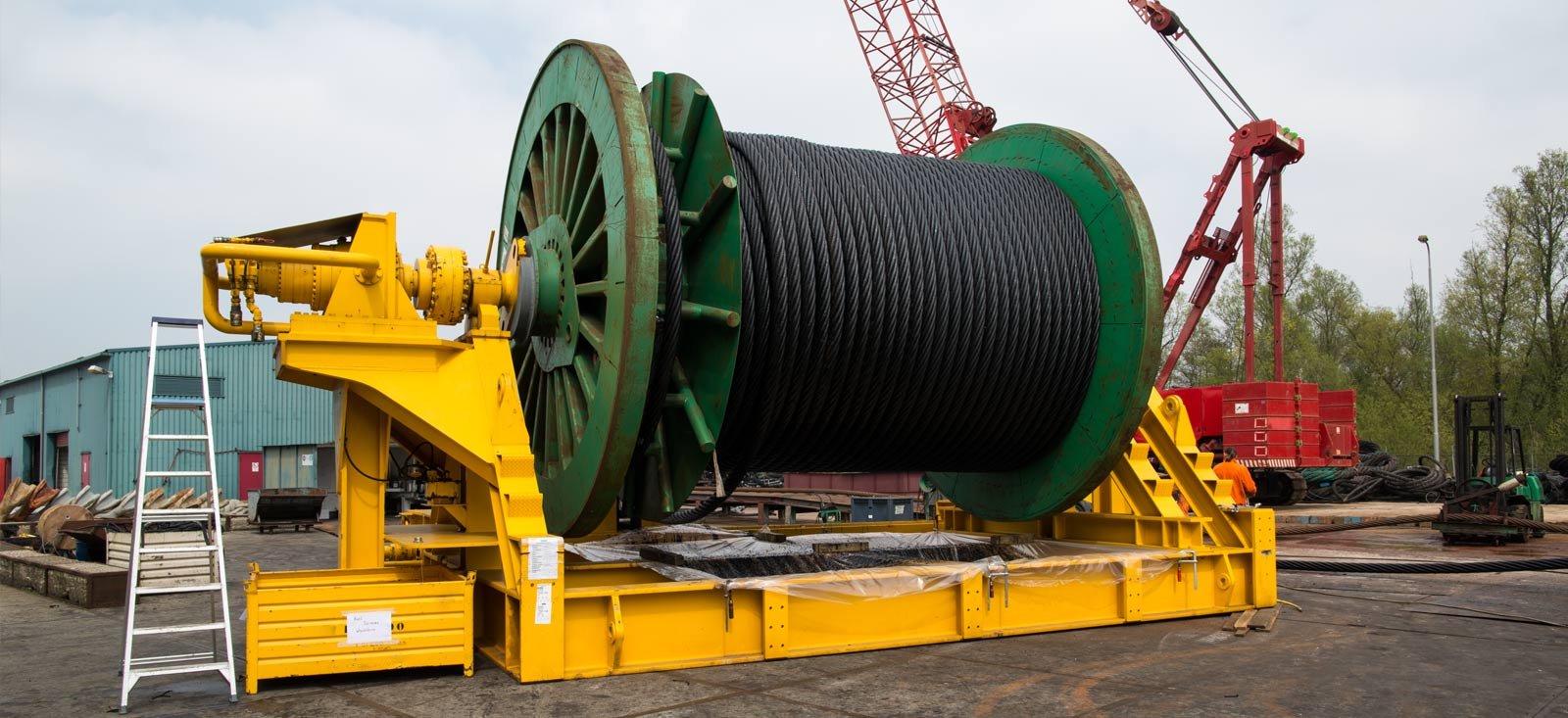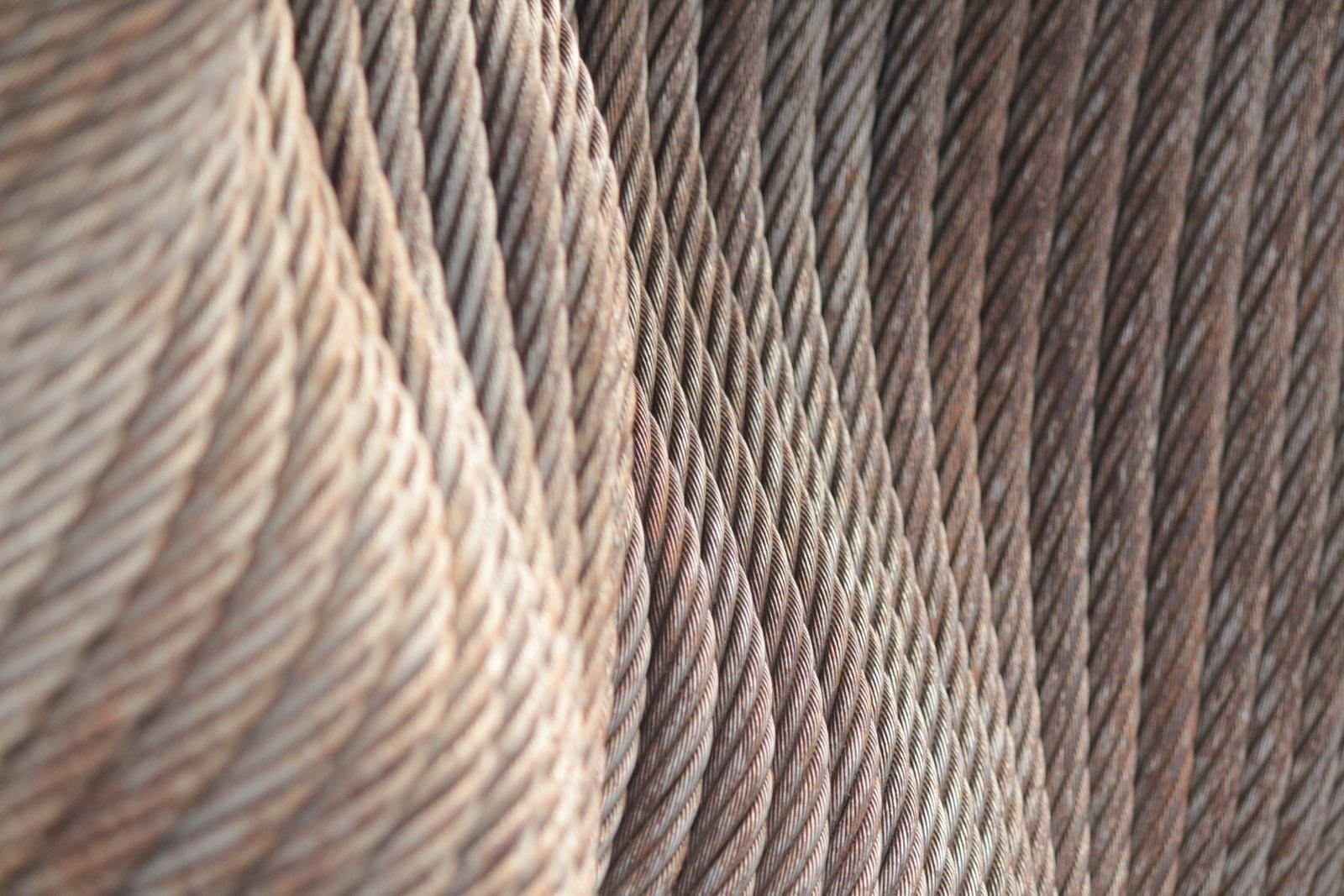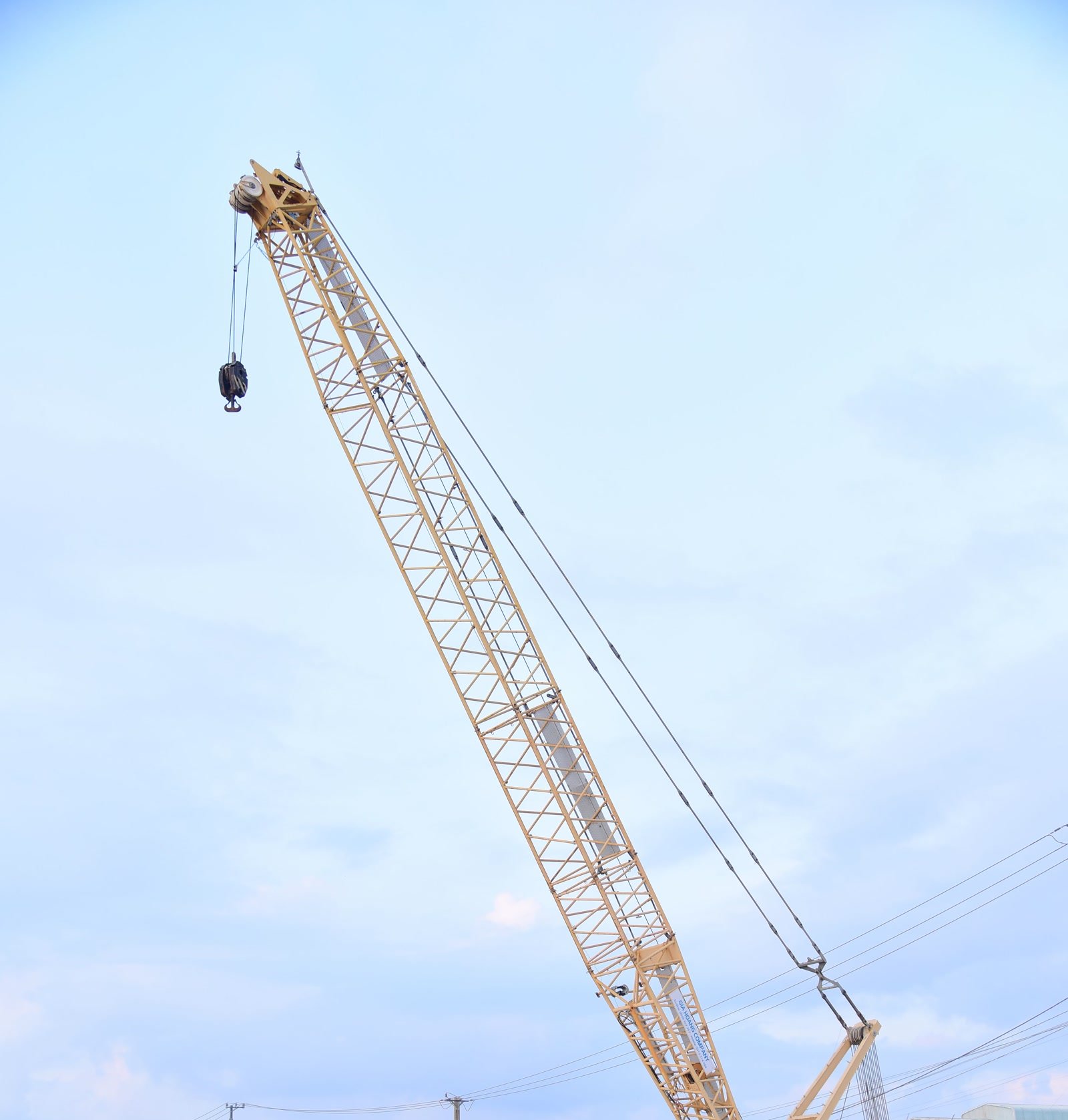
The short answer: for most rotary drilling rigs, the best wire rope is a compacted, rotation-resistant multistrand construction — 35WXK7 in 1960 or 2160 N/mm² grade, with a plastic-impregnated core (EPIWRC) where the budget allows. It is what most major rig builders fit as standard, because drilling places three demands on one rope that no ordinary construction satisfies at once: near-zero torque under single-line load, high breaking force in a compact diameter, and the toughness to survive multi-layer spooling in mud and slurry. The rest of this guide is about the details that decide how many drilled meters you get from that rope.
Why the Hoist Rope Works Harder on a Drilling Rig Than on a Crane
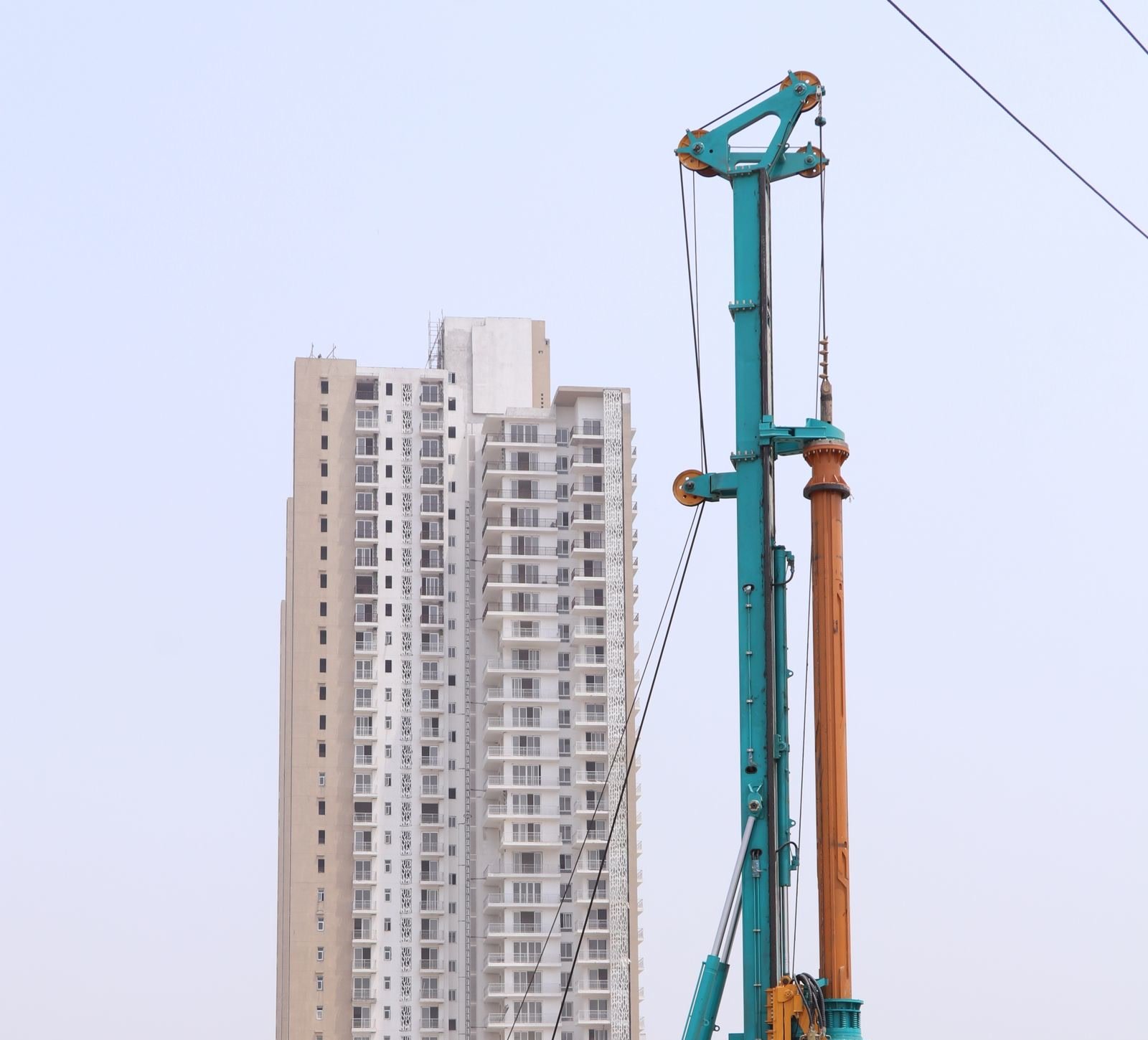
I have supplied ropes to piling contractors for years, and the question I get most often is why their ropes seem to die faster than the same construction does on a crane of similar capacity. The answer is the duty cycle. On a rotary drilling rig the main winch rope performs several jobs at once: it lowers and lifts the kelly bar and drilling tool hundreds of times a day, it holds the full string weight while soil is cut, and it absorbs shock loads every time the operator breaks the auger free from the slurry at the bottom of the hole.
Three design features make this harsher than crane duty. First, there is no floating pulley block: the rope runs as a single line from the winch over the crown sheave straight down to the kelly bar, so it sees the full line pull with no mechanical advantage. Second, the top of the kelly bar rotates with the drill string, which tries to wind torque into the rope. Third, the rope lives in drilling slurry and abrasive spoil, and it spools onto the winch drum in several layers, crushing itself between wraps. A rope that ignores any of these realities will disappoint, whatever its certificate says.
Why Rotation Resistance Decides the Whole Selection
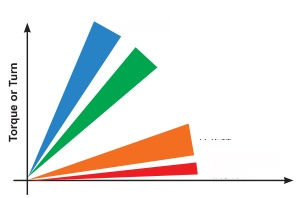
Because the upper end of the rope hangs on a swivel that turns with the drill string, any residual torque in the rope shows up as winding and unwinding. A standard six-strand rope reacts to single-line load by spinning; the outer strands loosen while the core tightens, the rope goes loose and sloppy on the drum, spools unevenly, and eventually develops a birdcage. Rotation-resistant ropes solve this structurally, not with hardware.
How 35WXK7 Cancels Torque
In the EN 12385 naming system, 35WXK7 means thirty-five strands arranged in concentric layers around the core, a Warrington wire pattern (W) within the strands, and compacted strands (K). Each layer is laid in the direction opposite to its neighbour, so the torque of one layer is balanced by the layer beneath it. Under load the rope stays essentially twist-free, which is exactly what a kelly line needs.

Compaction packs more steel into the same diameter, lifting breaking force by roughly 10 to 15 percent over a conventional rope of the same size and giving a smoother surface that spools and rides sheaves far better.
When to Step Up: 6×K36WS-EPIWRC and 8×K26WS-EPIWRC
35WXK7 is the mainstream choice and covers the overwhelming majority of rigs in service. On the heaviest rigs, or where the manufacturer’s manual specifies a compacted six- or eight-strand rotation-resistant design, 6×K36WS-EPIWRC and 8×K26WS-EPIWRC are the secondary options: an even higher breaking force per diameter with excellent fatigue behaviour, and a plastic-impregnated core that seals the internals against drilling fluids. Follow the rig manual first, and substitute a different family only after checking drum and sheave compatibility.
Matching the Construction to Each Rope Circuit
A rig carries more than one rope, and each circuit has its own personality. The table below is how I normally specify them.
| Rope circuit on the rig | Recommended construction | Why |
|---|---|---|
| Main hoist (kelly line) | 35WXK7, grade 1960 or 2160 N/mm², EPIWRC where available | Near-zero torque under full single-line pull; compacted strands resist drum crushing and kelly-bar shock |
| Auxiliary hoist | 35WXK7, smaller diameter, same logic | Keeps handling and spooling behaviour consistent with the main line |
| Large rigs, deep or large-diameter holes | 6×K36WS-EPIWRC or 8×K26WS-EPIWRC | Highest breaking force per diameter with sealed, low-friction internals |
| Casing work and dynamic compaction duty | 35WXK7 with heavy lubrication | Repeated shock loading demands compacted, rotation-resistant strands |
Diameter, Grade and Minimum Breaking Load
Always start from the rig manufacturer’s manual, but check the arithmetic yourself. Most rig makers design the hoist line for a safety factor of at least 4 to 5 against the winch’s maximum line pull. Take a 28 mm 35WXK7 at 2160 N/mm²: minimum breaking load is 762 kN, which supports about 150 kN of line pull at 5:1, or roughly 190 kN at 4:1. If your winch pulls harder than that, move up a diameter rather than argue with the math. For a fuller explanation of design factors and working load limits, see our guide to wire rope breaking strength, MBL and safety factor.
| Diameter (mm) | Approx. mass (kg/100 m) | MBL at 1770 N/mm² (kN) | MBL at 1960 N/mm² (kN) | MBL at 2160 N/mm² (kN) |
|---|---|---|---|---|
| 22 | 247 | 386 | 427 | 470 |
| 26 | 345 | 538 | 596 | 657 |
| 28 | 400 | 624 | 691 | 762 |
| 32 | 522 | 816 | 903 | 995 |
| 36 | 661 | 1032 | 1143 | 1260 |
| 40 | 816 | 1274 | 1411 | 1555 |
Indicative values for compacted 35WXK7 with steel core; always confirm the exact figures on the EN 12385-4 certificate issued for your delivered lot.
Compacted Strands and Plastic-Impregnated Cores
If you are buying a new rope for a rig, these two features are where the money goes, and both pay back in drilled meters. We cover the metallurgy in detail in our compacted wire rope guide; here is the drilling-specific version.
What Compaction Buys You
Compacting the strands through a die flattens the wires against each other, raising the metallic fill factor. The rope gains breaking load, its surface smooths out, and the contact area against drum and sheave grooves increases, which spreads wear and lowers contact stress. On multi-layer winch drums, where every wrap sits on and crushes the layer below, this is the difference between a rope that stays round and one that flats out early.
What an EPIWRC Core Buys You
Extruded plastic between the core and the outer strands does three jobs: it locks the factory lubricant where it belongs, it cushions the internal contact points against bending fatigue, and it seals the core against the drilling slurry that would otherwise work its way in. On rigs drilling in water-bearing formations, the plastic-impregnated version is consistently the longest-lasting rope we see come back through inspection reports.
Length, Lay and Terminations: The Fit Details
Ordering errors here cost a full mobilisation. For length: maximum drilling depth plus at least three dead wraps on the drum, plus a working allowance so the rope can later be shortened or end-for-ended after the first metres wear. Rig lines commonly run from about 60 m on compact rigs to over 200 m on the largest machines. For lay: most rig builders specify right-hand ordinary lay (sZ), but confirm the manual and match the drum’s spooling direction, explained below. For terminations: the drum end is usually a wedge or clamp, while the kelly end is a fused-and-tapered plain end that seats in the swivel socket, or a swaged fitting. The ends should be fused so the lay cannot relax during handling and installation.
We have published the full rope specifications for several rig families — for example, our page on wire rope specifications for XCMG rotary drilling rigs lists main, auxiliary and pull-down ropes by model.
Installation: The First Hour Decides the Rope’s Life
More new ropes are ruined on installation day than in a year of drilling. The rules are simple and unforgiving:
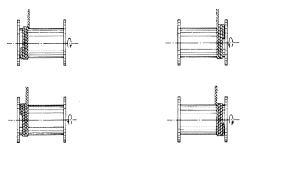
- Unreel correctly. Mount the delivery reel on a stand and let it rotate; never drop the reel on its side and pull rope off the coil, which puts twist into a rotation-sensitive rope.
- Apply back tension on the delivery reel while spooling, so the first layers land tight and even.
- Respect the fleet angle. Keep it within about 1.5 degrees so the rope does not grind against the flanges.
- Seize before cutting. Bind the rope with soft wire on both sides of the cut, or the ends will relax and disturb the lay.
- No swivels, ever. A swivel lets the rope rotate — exactly what it is designed not to do — and a birdcaged rotation-resistant rope must be scrapped on the spot.
- Break it in gently. Run a few cycles at light to moderate load so the strands settle, and expect a small constructional stretch (roughly a quarter of one percent) early on.
The full procedure, including storage and drum spooling mechanics, is in our wire rope installation and maintenance guide.
Inspection and Replacement: Decide by Criteria, Not by Calendar
A drilling rope can look acceptable on Monday and be scrap by Friday if it hit a hard band of rock. Inspect visually every shift — the drum and the first metres off it, the crown sheave, and any section that dwells in one position — and do a thorough, documented inspection weekly. The criteria below follow ISO 4309 practice for rotation-resistant ropes; the complete framework is in our ISO 4309 inspection guide.
| Condition you find | What it means | Action |
|---|---|---|
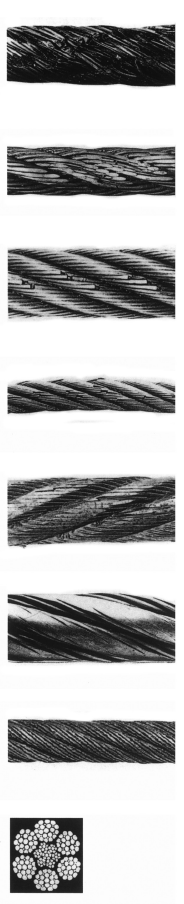
| 2 broken wires in any length of 6×d, or 4 in 30×d (ISO 4309 limits for rotation-resistant ropes) | Fatigue approaching the allowable limit | Replace the rope |
| Birdcaging, protruding inner strands or a loose outer layer | Torsional imbalance — usually a swivel or installation twist | Remove from service immediately |
| Diameter down more than about 7% of nominal, or a flat, soft section | Core failure or heavy external wear | Replace the rope |
| One complete strand broken | Local structural failure | Remove from service immediately |
| Deep corrosion pitting, or a dry, packed core | Lubrication failure and internal corrosion | Replace the rope |
How long should a rope last in drilled metres? Field reports vary enormously with formation and operator discipline. Well-handled compacted 35WXK7 lines commonly deliver on the order of 3,000–4,000 drilled metres at 28 mm, 5,000–6,000 m at 32 mm and 7,000–8,000 m at 36 mm, while a rope abused at installation or run dry of lubricant can be scrapped after a few hundred metres. Treat these numbers as orientation only: the inspection criteria, not the metre counter, make the retirement decision.
Lubrication and Daily Care
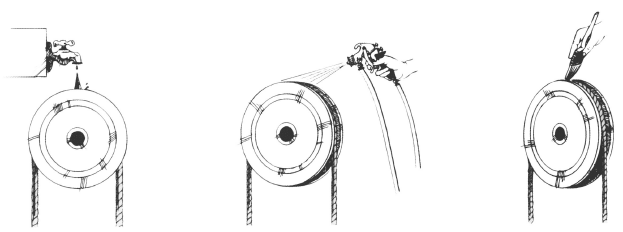
Drilling slurry is the enemy of both steel and lubricant. Hose down the rope where practical, let it dry, then re-lubricate with a product designed for wire ropes — a penetrating oil to reach the core, or a soft grease for surface protection. On heavy duty, plan on re-lubrication every 40 to 80 running hours, and always after a particularly muddy stretch. Never use engine oil or a light spray like WD-40 as a substitute: neither carries the film strength the rope needs, and WD-40 is actually a solvent that strips what remains.
What to Specify When You Order
Put these items on the purchase line and a quotation will come back comparable and correct: construction (35WXK7 or the rig maker’s specified alternative), nominal diameter, grade (1960 or 2160 N/mm²), core type (IWRC or EPIWRC), finish (bright or galvanized), lay (for example right-hand ordinary lay, sZ), total length, and the termination on each end. Then ask for the EN 12385-4 certificate for the delivered lot — not a generic datasheet — and, for critical projects, independent third-party test reports.
Aulone is a professional manufacturer and supplier of steel wire ropes, wire rope slings, synthetic ropes and rigging hardware for lifting, marine, mining, construction and industrial applications. With more than 20 years in the industry and an annual capacity exceeding 200,000 tons, EN 12385-4 and ISO 9001 certified production, and third-party verification from BV, ABS, DNV and RMRS, we keep common rig constructions in stock and supply custom assemblies — fused-and-tapered ends, swaged sockets and plastic-impregnated cores included — to drilling contractors worldwide. For help matching a rope to your rig, email info@wireropes.net.
Frequently Asked Questions
What does 35WXK7 actually mean?
It describes the construction: 35 strands arranged in concentric layers around the core, a Warrington wire pattern within the strands (W), and compacted strands (K). The counter-laid layers give the rope its rotation resistance; compaction gives it the extra breaking load and the smooth, drum-friendly surface drilling duty demands.
Can I use a standard 6×36 IWRC rope on my drilling rig?
Only if the rig manufacturer explicitly allows it. A conventional six-strand rope develops torque under single-line load; the rotating kelly swivel winds that torque up until the outer strands loosen and the rope birdcages. Compact designs such as 6×K36WS-EPIWRC are legitimate where specified, but a plain 6×36 is not a drop-in substitute for a rotation-resistant line.
How long should a rotary drilling rig wire rope last?
There is no calendar answer — retirement is decided by inspection criteria, not age. As a planning figure, well-handled compacted ropes commonly reach several thousand drilled metres, but a single installation mistake or a dry rope can cut that to hundreds of metres.
Why can’t I fit a swivel under the kelly bar to stop the rope twisting?
Because a swivel lets the rope rotate, which is precisely what a rotation-resistant rope must not do. The outer strands unlay while the core tightens, producing a birdcage that destroys the rope’s structure. Rotation resistance has to come from the rope construction itself.
How do I work out the right diameter and length?
Start with the rig manual for both. Verify the diameter against the winch’s maximum line pull at a safety factor of 4 to 5, and calculate length as maximum drilling depth plus at least three dead wraps plus allowance for future shortening. Confirm the lay direction matches the drum’s spooling direction.
Should I choose galvanized or bright rope for drilling?
Bright (ungalvanized) rope is standard for most land rigs and gives the best value where the rope is lubricated and inspected regularly. Choose galvanized for coastal sites, high water tables, slurry-heavy formations, or ropes that will sit in storage — the zinc coating adds corrosion margin at a modest premium, at the same breaking force for the same grade.
Questions about a specific rig or an unusual drilling condition? The team at Aulone — a professional manufacturer and supplier of steel wire ropes, slings, synthetic ropes and rigging hardware — will gladly review your specification. Contact info@wireropes.net.