Wire Rope Installation and Maintenance: A Field Guide to Longer Rope Life
By Andri — Technical Writer & Crane Rope Specialist, Aulone (www.wireropes.net)
The short answer: most wire ropes are not worn out by their work — they are worn out by how they were stored, unreeled, spooled and lubricated. Install a rope with a kink or a loose first drum layer and no inspection programme will save it; install it cleanly, break it in under light load, re-lubricate on a duty-based schedule and shift the wear points deliberately, and the same rope routinely lasts 30–50% longer. In this guide I’ll walk through the exact practices I recommend to customers, from the day the reel arrives on site to the inspection records that decide when the rope retires.
Receiving and Storage: The Maintenance You Do Before Installation
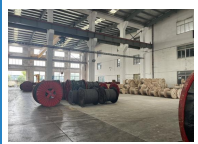
The clock on a rope’s service life starts at delivery, not at first lift. Ropes I see fail early almost always spent months badly stored first. The rules are simple but non-negotiable: never drop a reel — a collapsed flange makes the rope impossible to unwind without damage; keep reels off the ground on stands or a shaft, in a dry, covered, ventilated space; never store outdoors under plastic sheet, which traps condensation against the rope and starts corrosion you won’t see until unspooling. If outdoor storage is unavoidable, keep the rope clear of the ground and cover it so air can circulate underneath. Rotate stock so the oldest reel is used first, and check stored ropes periodically — surface rust on a stored rope is a warning that its lubricant film has failed. For a deeper look at how finish choice affects corrosion resistance, see my galvanized vs bright vs stainless steel guide.
Unreeling and Uncoiling: Never Put a Turn In
Kinking is the single most damaging thing that can happen to a rope before it works, and it almost always happens during unwinding. The rule to remember: rope must leave the reel the same way it was wound on — the reel should rotate on a shaft or jack stand while the rope is paid off under slight back tension, kept straight. Never lay a reel on its side and pull the rope off over the flange, and never pull rope off a loose coil lying flat on the ground; both put turns into the rope. A proper coil is unwound by rolling it along the floor like a hoop, exactly as it was coiled at the factory.
If a loop forms in slack rope, stop and pull it out before it closes — once a loop is pulled down into a kink, the rope is permanently deformed and that section must be cut away; a kinked rope is a discarded rope, full stop. Seize the rope on both sides of every cut before cutting, with iron wire seizing on large ropes, so the lay cannot open and the core cannot migrate. This matters doubly for rotation-resistant ropes, which I’ll come back to below.
Spooling onto the Drum: Where Rope Life Is Actually Won
A crane rope spends most of its working life on the drum, so the quality of the first few wraps decides half its fate. The basics I insist on: match the lay direction to the drum — rope should wind on top-to-top or bottom-to-bottom so the natural lay tightens rather than loosens as load comes on (the old rule of thumb: for right-lay rope overwinding on a smooth drum, anchor at the left flange; reverse it for underwinding or left-lay). Keep the fleet angle — the angle between the rope centreline and the drum centreline at the sheave — within about 1.5° for smooth drums and 2° for grooved drums. Too small and the rope piles up; too large and it cuts into the lower layers and scours the flanges.
The first layer must go on tight and under tension — about 2–5% of the rope’s breaking strength (or 5–10% of working load) while spooling — and be tapped down snug with a mallet. A loose first layer lets upper wraps wedge down into it under load, crushing and flattening the rope exactly where it lives. Wind in a straight helix with no gaps; leave at least 1.5 rope diameters of clearance between the top layer and the drum flange. If the drum is grooved, there is usually only one correct groove pattern to follow — the reeving diagram from the crane OEM exists for a reason, and improvising it costs you a rope.
| Spooling parameter | Recommended value | Why it matters |
|---|---|---|
| Fleet angle — smooth drum | ≤ 1.5° | Beyond this the rope scours flanges and cuts into lower wraps |
| Fleet angle — grooved drum | ≤ 2° | Grooves tolerate slightly more; beyond 2° the rope jumps grooves |
| Winding tension | 2–5% of rope MBL (5–10% of WLL) | Loose first layers get crushed by the wraps above them |
| Flange clearance | ≥ 1.5 × rope diameter | Hot rope and stacking tolerance need room; overrun wrecks the flange |
| Lay match to drum | Top-to-top / bottom-to-bottom | Wrong match loosens the lay and invites bird-caging at the anchor |
Special Care with Rotation-Resistant Ropes
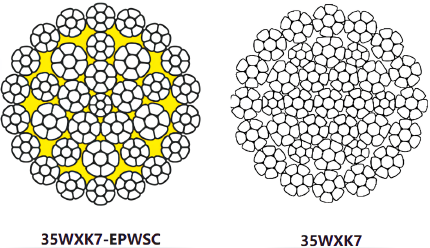
Non-rotating constructions — 35×7 class and its compacted cousins like 35WXK7, the standard for tower crane and single-fall hoist lines — are balanced assemblies of right- and left-hand layers. That balance is fragile: every turn put in or taken out during installation shifts load between the layers, and a released rope end can throw the outer strands into bird-caging instantly. Keep both ends seized at all times, unwind only with the reel rotating, never allow the rope to spin freely off the drum, and never pull it through the reeving system with the end unsecured. If you want the construction background, my 6×36 specifications guide covers how strand and lay geometry drive exactly this behaviour.
Break-In and Commissioning: Seat the Rope Before You Load It
A new rope needs to bed its strands and core together before it sees real load. Run several full working cycles at roughly 10% of working load and reduced speed, then increase gradually. During break-in the rope undergoes constructional stretch — a permanent elongation of about 0.5% for fibre-core rope, 0.25% for 6-strand IWRC rope, and close to zero for compacted rope — as the lay tightens and the diameter settles slightly. That is why I tell customers to measure and record the rope diameter after break-in at marked reference points: that baseline is what every future inspection will be measured against. And critically, never proof-test the equipment before the rope is broken in — overloading an unseated rope crushes the first layers and can inflict permanent damage before the rope has done a day of work.
Lubrication: The Cheapest Service-Life Extension You Can Buy
Factory lubricant is a preservative for shipping and the first weeks of service — it is not a lifetime supply. Every bend over a sheave makes the wires and strands slide against each other, and a dry rope fails from the inside out: fretting corrosion between wires, fatigue breaks hidden beneath an intact-looking surface. Proper field lubrication can double or triple rope life, and it costs a fraction of one early replacement. The method matters: clean the rope first with a wire brush to clear the valleys of grit and old hardened lubricant — dirty lubricant becomes a grinding paste — then apply a penetrating lubricant that reaches the core, ideally where the rope is bent over a sheave so the strands open and draw it in. Use a purpose-made rope lubricant compatible with the factory grease; never chain oil, engine oil or general spray solvents, which strip the original lubricant and accelerate internal wear.
| Application / duty | Re-lubrication interval | Inspection interval |
|---|---|---|
| Heavy-duty crane (multi-shift, abrasive or hot) | Every 40–80 operating hours | Weekly, plus operator check every shift |
| Standard overhead / workshop crane | Every 80–160 operating hours or monthly | Monthly documented inspection |
| Offshore / marine hoist (salt exposure) | Every 30–50 operating hours | Weekly, wash down salt first |
| Light / intermittent duty, static lines | Every 3–6 months | Quarterly documented inspection |
| Elevator / personnel hoist ropes | Per OEM schedule only — use friction-approved lubricants | Weekly to monthly, per code |

Inspection Routine and Records: Retire on Evidence, Not Appearance
Maintenance and inspection are the same activity seen from two angles — every lubrication round is a hands-on examination. The framework I recommend to customers matches ISO 4309 practice: a daily visual check by the operator (obvious damage, rope running correctly in sheaves, terminations secure), a documented monthly inspection (broken wire counts per lay length, diameter at fixed reference points, corrosion, wear, lubrication condition), and an annual thorough examination by a competent person, plus a special inspection after any incident, shock load or long idle period. The counting rules and discard thresholds are laid out in my ISO 4309 discard criteria guide — what I’ll stress here is the logbook: diameter readings written down at the same marked points every month turn a guess into a trend line, and the trend line is what tells you the rope has three months left rather than three days.
Two field habits extend life measurably: shift the wear points. Multi-layer drum ropes wear hardest where each new layer starts; crane ropes fatigue at the equalizer sheave and at sockets. Cutting off a short section at the dead end, or re-reeving a rope end-for-end at mid-life, moves the worn zones off the critical bending points. And treat terminations as inspection items in their own right — sockets, wedge sockets and clips are where vibration fatigue breaks wires first.

The Bottom Line From a Rope Specialist
Rope longevity is not luck; it is a short list of disciplines applied consistently: store it dry and off the ground, reel it without turns, spool it tight with the fleet angle right, break it in gently and record the diameter, lubricate on a duty-based schedule with the right product, inspect on a fixed rhythm and keep the logbook honest. Do those things and the rope will almost always reach its full designed fatigue life — and tell you clearly when it is time to retire it. Aulone is a professional manufacturer and supplier of steel wire ropes, wire rope slings, synthetic ropes and rigging hardware for lifting, marine, mining, construction and industrial applications. With more than 20 years in the industry, an annual capacity of 200,000 tons, EN 12385-4 compliant production, ISO 9001 quality management and class certifications including BV, ABS, DNV and RMRS with CE marking, we supply certified ropes from stock or as custom assemblies — pre-cut to length, re-reeled, socketed and supplied with installation guidance and third-party testing on request. If you want a rope that arrives ready to install right, send your drum dimensions, rope spec and required length to info@wireropes.net and I’ll put the assembly together for you.
FAQ: Wire Rope Installation and Maintenance
How should I store wire rope before installation?
Keep reels off the ground on stands, in a dry, covered, ventilated area — never under sealed plastic sheeting, which traps condensation. Do not drop reels: a collapsed flange makes clean unwinding impossible. Rotate stock first-in-first-out, and inspect stored ropes periodically so surface rust is caught before it becomes corrosion damage.
What is the correct way to unreel wire rope without kinking it?
Mount the reel on a shaft or jack stand so it rotates, and pay the rope off straight under light back tension. Never pull rope off a flat-lying coil or over the side of a stationary reel — both put turns into the rope. Coils are unwound by rolling them along the floor like a hoop. If a loop forms, stop and remove it before it closes; a closed loop pulled into a kink permanently damages that section, which must then be cut out.
How tight should the first layer be wound on the drum?
Under tension of roughly 2–5% of the rope’s breaking strength, tapped down snug with no gaps between wraps. A loose first layer lets the upper wraps wedge into it under load, crushing and flattening the rope where it spends most of its life. Also keep the fleet angle within about 1.5° on smooth drums and 2° on grooved drums, and leave at least 1.5 rope diameters of clearance below the flange.
How often should wire rope be lubricated?
It depends on duty, not the calendar: multi-shift heavy-duty crane ropes need re-lubrication every 40–80 operating hours, standard workshop cranes roughly monthly, light or static lines every 3–6 months. Clean the rope before every application, use a purpose-made penetrating rope lubricant that reaches the core, and never substitute engine oil or light spray solvents. The reliable rule: a visible lubricant film on the rope at all times, without buildup that traps grit.
What is constructional stretch and why does it matter?
It is the permanent elongation a new rope develops as strands and core seat under first loading: about 0.5% for fibre-core rope, 0.25% for a 6-strand IWRC rope, and near zero for compacted rope. It shows up in the first weeks of service, which is why you should run a light-load break-in (around 10% of working load) before full duty, then measure and record the rope diameter as the baseline for all future inspections — and never proof-test equipment before the rope is broken in.
Can maintenance really extend wire rope service life?
Yes — consistently. Well-lubricated, correctly spooled and properly inspected ropes commonly last 30–50% longer than neglected ones on identical equipment. The highest-value habits: keep a lubricant film intact (it prevents internal fretting corrosion you cannot see), keep the drum reeving clean, avoid shock loading, shift wear points by re-reeving end-for-end at mid-life, and keep a written inspection log so replacement is decided by trend data rather than a visual guess.