Compacted Wire Rope: What It Is, How It’s Made and When It’s Worth the Premium
By Andri — Technical Writer & Crane Rope Specialist, Aulone (www.wireropes.net)
The short answer: a compacted wire rope is a conventional rope whose strands have been run through high-pressure dies or rollers after stranding, pressing the round wires into a tighter, flatter profile. The result is roughly 10–15% more breaking force in the same nominal diameter, a smooth, dense outer surface that resists abrasion and drum crushing, noticeably better bending fatigue life, and — when combined with a plastic-impregnated core — the longest-running constructions we ship for drilling rigs, tower cranes, ports and mines. It typically costs 20–60% more than a standard round-strand rope, and in most heavy-duty applications it repays that premium several times over. In this guide I’ll explain exactly what compaction does, how to read the K in the construction code, where the gains are real, and the trade-offs nobody prints on the brochure cover.

What Exactly Is a Compacted Wire Rope?
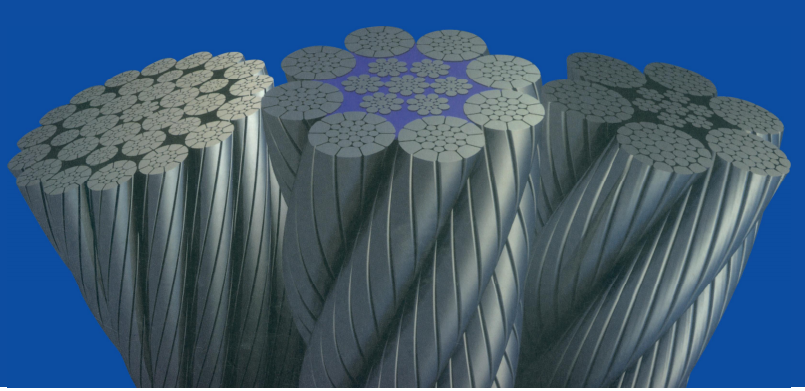
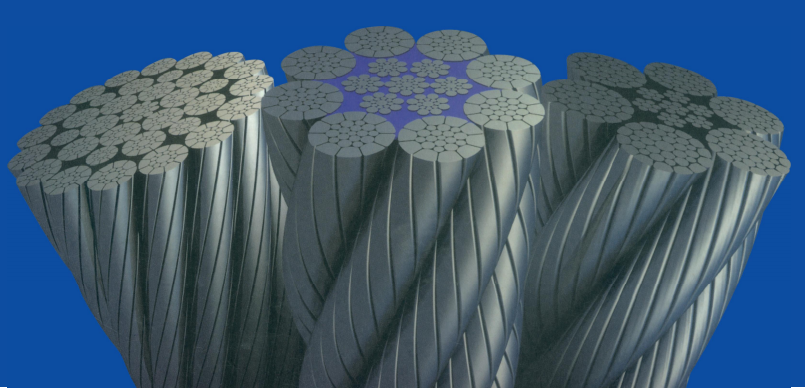
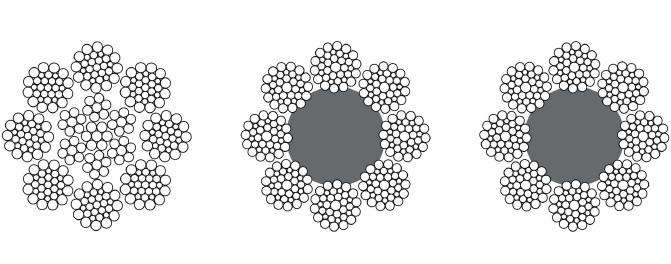
Start with an ordinary rope. Round wires are twisted into strands, the strands are closed around a core, and wherever metal meets metal there are small gaps. Those voids are wasted diameter — space that carries no load, collects water, and lets strands move and fret against each other in service. A compacted rope attacks the problem at the strand level: after stranding, each strand is drawn through a compaction die or rolled between profiled rollers. The round wires deform into a squashed, roughly hexagonal packing, the strand diameter shrinks slightly, and the metallic cross-sectional area in that strand goes up. When the rope is then closed, more steel fits into the same nominal rope diameter.
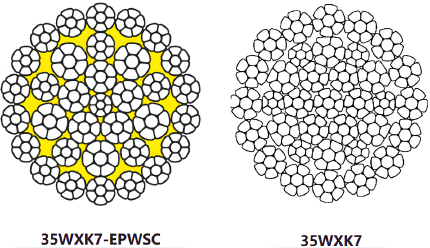
Engineers call the result a higher metallic fill factor — the share of the rope’s circular cross-section that is actually steel. A typical round-strand rope fills roughly 60–65% of its diameter with metal; a compacted rope pushes that several points higher, which is where the strength and wear gains come from. In EN 12385 designations the property is flagged with the letter K: 6×K36WS, 35WXK7, 18×K7 — if you see a K after the strand count, the strands are compacted. The code matters when you compare quotations, because two ropes can carry the same “6×36” label while one is compacted and the other is not, and their breaking forces will differ by a full class.
How the Compaction Process Works
Strand compaction
The dominant industrial method compacts each strand individually before closing. The freshly stranded strand is pulled through a tungsten-carbide die or a series of rollers sized so the wires are plastically deformed into the gaps between their neighbours. Because every strand passes the die separately, the deformation is uniform along the strand and around its circumference — critical for fatigue performance. The strand is then preformed back into its helical shape and the rope is closed exactly as a conventional rope would be.
Rope compaction and swaging
The second method compacts the finished rope: the closed rope is drawn through dies or rolled, deforming the whole assembly at once. It produces an extremely dense, smooth rope but offers less control over individual wires, so it is mainly used for smaller-diameter and swaged-type ropes. Between the two, strand compaction is what you should expect in crane, rig and port ropes — and it is the only method that delivers the consistent outer-wire geometry that multi-layer drum winding demands. Either way, compaction happens cold, with no heat treatment afterwards, so the wire’s tensile grade is preserved and the rope still terminates with standard sockets and fittings. For how the finished rope should be installed and run in, see my wire rope installation and maintenance guide.
Compacted vs Standard Wire Rope: The Numbers
Specifications tell the story better than adjectives. The figures below compare a compacted rope with the equivalent standard round-strand construction of the same diameter and tensile grade:
| Property | Standard round-strand rope | Compacted rope (K constructions) |
|---|---|---|
| Breaking force, same diameter | Baseline | Approx. +10–15% (more metallic area) |
| Metallic fill factor | Roughly 60–65% of cross-section | Several points higher — dense, low-void packing |
| Outer surface | Corrugated, point contact in the groove | Smooth, wide contact area |
| Abrasion resistance | Moderate — round outer wires wear quickly | High — flat, dense bearing surface |
| Crush resistance on multi-layer drums | Vulnerable to flattening and core damage | Significantly better; tolerates higher line pulls |
| Bending fatigue life | Baseline | Better, thanks to reduced internal wire movement |
| Constructional stretch | Baseline | Lower — tighter packing elongates less |
| Spooling on multi-layer drums | Prone to cutting-in between layers | Tighter, more stable winding |
| Flexibility over small sheaves | Better | Slightly stiffer — respect the D/d ratio |
| Indicative cost | 1.0× | 1.2–1.6× of the standard rope |
The breaking-force row deserves a worked example, because it is the number purchasing departments quote. A 20 mm standard 6×36WS+IWRC rope in 1960 N/mm² grade carries a minimum breaking force in the region of 300 kN; the compacted 6×K36WS+IWRC equivalent lands roughly 30–45 kN higher. That headroom lets you either run a higher working load on the same drum, or — more often — downsize the rope one diameter while keeping the same breaking force, which reduces drum torque, sheave loads and rope weight on the whip line. I walk through the full arithmetic of MBL, design factor and WLL in my wire rope breaking strength and safety factor guide.
Plastic-Impregnated Cores: Why EPIWRC Compounds the Advantage
Compaction answers what happens between the outer wires. The other half of the story happens deeper, between the strands and the core — and that is where plastic impregnation comes in. In an EPIWRC rope, a tough polymer layer is extruded around the steel core (and often between the strand layers) during manufacture. The plastic does three jobs at once: it locks the factory lubricant inside the rope where field re-lubrication can never reach, it cushions strand-on-core contact so the strands don’t saw into the core under shock and bending loads, and it seals out water, salt and abrasive dust that would otherwise migrate straight to the core.

Combine the two technologies — compacted strands over a plastic-impregnated core — and you have the construction I specify whenever the duty is brutal: rotary drilling rig kelly and winch lines, mining hoist and dragline ropes, ocean towing winches and high-cycle port cranes. The comparison I keep in my head looks like this:
| Property | Standard IWRC | Compacted IWRC | Compacted + plastic-impregnated (EPIWRC) |
|---|---|---|---|
| Breaking force, same diameter | Baseline | +10–15% | +10–15% |
| Abrasion resistance | Moderate | High | High |
| Internal wear / fretting | Relies on field lubrication | Reduced by tighter packing | Best — polymer cushions all steel-on-steel contact |
| Crush resistance, multi-layer drums | Moderate | High | Highest — core insulated from inter-layer pressure |
| Lubrication retention | Field re-lubrication essential | Field re-lubrication essential | Factory grease sealed in; field work only supplements |
| Corrosion protection at the core | Exposed to ingress | Exposed to ingress | Polymer barrier blocks water and contaminants |
| Indicative cost | 1.0× | 1.2–1.4× | 1.3–1.6× |
Yes, the premium rope costs up to 60% more at the invoice. On the machines it suits, it routinely delivers double the service life in tons moved, and rope price is small change next to the cost of a rope-driven shutdown. That lifecycle logic is exactly why the major drilling contractors and port operators — the buyers who count every hour of downtime — have moved their critical lines to compacted EPIWRC constructions. The core mechanics behind this table are covered in detail in my FC, IWRC and WSC core comparison.
Where Compacted Rope Earns Its Premium
Not every machine justifies the upgrade — a lightly loaded shop hoist gains little from compaction. But on the equipment below, field experience shows the compacted construction outlasts standard rope by a wide margin:
| Application | Constructions I specify | Why compacted wins here |
|---|---|---|
| Rotary drilling rigs | 35WXK7 (6×K36WS-EPIWRC); 8×K26WS-EPIWRC for heavy rigs | Shock loads, slurry, and multi-layer drum crushing — the classic compacted-EPIWRC territory |
| Tower cranes | 35WXK7 / 35×K7; 18×K7 as a secondary option | Single-fall hoisting punishes rotation and local wear; compacted ropes resist both |
| Truck & mobile cranes | 35×K7 / 35WXK7 main hoist | High breaking force in a small drum envelope, less stretch under boom dynamics |
| Port STS & RTG cranes | Compacted multi-strand rotation-resistant; 4V×39S+5FC or AL FLEX-7 type traction | High-cycle fatigue and multi-layer spooling at the trolley — see my STS rope guide |
| Mining: shovels, draglines, hoists | 8×K36WS-EPIWRC hoist and dump ropes; compacted 6×K36 class | Quartz dust, shock loads and crushing between drum layers — detailed in my mining rope guide |
| Tugs & AHTS winches | Compacted 6×K36 with plastic-impregnated IWRC, galvanized | Sealed core blocks sea water; compaction survives roller and drum abuse — see my towing rope guide |

The Trade-Offs Nobody Puts on the Brochure Cover
I sell compacted rope, and I still won’t tell you it is a universal upgrade. Four honest limitations decide whether the premium pays off on your machine. First, stiffness. Compacted strands are slightly less flexible than round ones; over small-diameter sheaves with a poor D/d ratio, a standard rope can actually outlast the compacted one. Respect the machine’s designed sheave sizes, and don’t force a compacted rope onto geometry built for something else. Second, lubrication. The same tight packing that blocks contaminants also reduces the void space that stores grease, so field re-lubrication must be more disciplined — a compacted rope starved of grease loses its fatigue advantage quickly. Third, handling discipline. Rotation-resistant compacted ropes such as 35WXK7 can bird-cage if they are kinked, back-slacked or crushed during installation; they demand clean spooling and correct running-in tension. Fourth, cost. At 1.2–1.6× the standard rope’s price, the upgrade is justified by duty cycle, environment and downtime cost — not by habit. On short-lifetime, low-cycle equipment, spend the money elsewhere.
How I Check a Compacted Rope Quotation
When a compacted offer lands on my desk, I verify four things before comparing prices. The K in the designation must be a manufactured fact, not a typographical convenience — ask for the strand cross-section photo or a compaction-process statement from the mill. The declared minimum breaking force must be EN 12385-4 tested per production lot, with actual results on the certificate, because the +10–15% advantage only counts if the number is documented. The impregnation must be specified by name and coverage — “plastic core” in an email is not a specification. And the rope must come with traceability back to the wire heats and third-party testing available where the application demands it. Those four checks separate genuine compacted production from relabelled stock — the same verification logic I apply in my 6×36 wire rope specifications guide.
FAQ: Compacted Wire Rope
What does the K mean in wire rope designations like 35WXK7 or 6×K36WS?
The K marks a compacted construction: the strands were passed through dies or rollers after stranding, so the wires are deformed from round into a tightly packed, flatter profile. Under EN 12385 naming rules, K constructions carry a higher metallic fill factor than the equivalent round-strand rope, which is why they show roughly 10–15% higher minimum breaking force at the same nominal diameter and grade.
How much stronger is compacted wire rope than standard rope?
For the same nominal diameter and wire grade, compaction raises the metallic cross-sectional area enough to add about 10–15% to the minimum breaking force. In practice that means either a heavier working load on the same drum, or the same breaking force from a smaller rope — a common route to reducing drum torque and sheave loads. The exact figures depend on construction and grade, so always compare the declared MBL values on the certificates, not marketing percentages.
Can I replace a standard wire rope with a compacted one of the same diameter?
Usually yes, and it is the single easiest performance upgrade because the drum, sheaves and reeving stay untouched. Verify three things first: the sheave grooves are not worn oversize for the (unchanged) diameter, the D/d ratio is adequate for the slightly stiffer rope, and the winch’s running-in procedure accounts for the lower constructional stretch. If the machine OEM specifies a compacted construction, matching it is always the safe route.
Is compacted rope the same thing as swaged rope?
No. Compacted rope is made by deforming the strands (or the finished rope) through dies during manufacture, over the full rope length, producing a rope that still runs over sheaves normally. Swaging usually refers to mechanically compressing a rope or fitting at a termination — or drawing small-diameter rope through dies for special static uses. A compacted rope is a working rope for bending service; a swaged assembly is typically a static or termination detail. Check the construction code: the K is what identifies genuine compacted rope.
Does compacted wire rope need special lubrication?
It needs more disciplined lubrication, not different lubricant. The tight packing leaves less internal void space to hold grease, so the factory lubricant — especially in a plastic-impregnated rope — does more of the lifetime work. Follow the manufacturer’s re-lubrication interval, clean the rope before applying a compatible penetrating lubricant so it can reach the core, and never assume a compacted rope can skip maintenance just because its surface looks dense and well-sealed.
Is a compacted rope worth the extra cost?
Judge it on cost per ton moved, not cost per metre. On high-duty machines — drilling rigs, draglines, port cranes, ocean tow winches, multi-layer drums — compacted and compacted-EPIWRC ropes commonly deliver 50–100% longer life, fewer change-outs and less downtime, which repays a 20–60% price premium several times over. On light-duty, low-cycle equipment with generous sheaves, a standard round-strand rope remains the rational choice. Match the rope to the duty, and let the duty cycle justify the premium.
The Bottom Line From a Rope Specialist
Compaction is one of the few rope technologies that improves breaking force, abrasion resistance, crush resistance and fatigue life simultaneously, without changing the diameter your machine was designed around. Read the K in the code, demand documented breaking-force results, consider a plastic-impregnated core whenever shock loads, multi-layer drums or corrosive environments are in play, and let the duty cycle — not the brochure — decide whether the premium pays. Aulone is a professional manufacturer and supplier of steel wire ropes, wire rope slings, synthetic ropes and rigging hardware for lifting, marine, mining, construction and industrial applications. With more than 20 years in the industry, an annual capacity of 200,000 tons, ropes produced to EN 12385-4 under an ISO 9001 quality management system, and class certifications including BV, ABS, DNV and RMRS with CE marking, we supply compacted and standard constructions from stock or as custom terminated assemblies, with third-party testing and full batch documentation. Send your application, drum data and required lengths to info@wireropes.net and I’ll recommend the construction I would run on my own machine.