The short answer: crane duty classification is a two-axis rating — how often the machine runs (class of utilisation T0–T9) and how close to rated capacity it usually lifts (load spectrum L1–L4) — crossed into mechanism groups M1 to M8 under ISO 4301-1, or 1Dm to 5m under the older FEM 9.511 notation. For the rope buyer it is the single most useful number on a crane datasheet: the duty class drives the rope safety factor, the minimum D/d ratio, how fast the rope accumulates bending cycles, and how often you should inspect it. Most “our ropes never last” complaints I investigate trace back to a rope that was fine for an M4 machine being asked to live an M7 life.
When a customer asks me for a quotation, the first thing I look for is not the rope diameter — I can read that off the old rope. I look for the duty class. Two cranes can carry the same 10-tonne hook, run the same rope diameter and even the same rope construction, and one will destroy ropes in four months while the other gets two years from the same specification. The difference is almost always duty. In this guide I will explain how the classification actually works, walk through the grid with the machines I meet every week, and show you exactly what the class changes about the rope you order.
What a Duty Class Actually Measures
Two questions define the class, and neither of them is “how strong is the crane?”
Question 1 — Class of utilisation (T0–T9). How much work does the mechanism do over its design life? It is counted in total running hours and in completed operating cycles — one lift-and-lower cycle. The scale runs logarithmically: each step roughly doubles the design life, from a few hundred hours for a hoist that runs occasionally to 100,000 hours and beyond for a port machine that never stops.
Question 2 — Load spectrum (L1–L4). How heavy is the work? A crane that lifts 2 tonnes on a 10-tonne hook all day wears its mechanisms completely differently from one that lifts 9 tonnes on the same hook, even at the same cycle count. The standard collapses the load history into a spectrum factor using a cube law — because fatigue damage scales with roughly the cube of load — and sorts machines into light (L1), moderate (L2), heavy (L3) and very heavy (L4).
Cross the two and you land in one of eight mechanism groups. Every rotating part of the machine — hoist, slew, travel, and by extension the rope running through the hoist — is designed and verified against that group.
The ISO 4301-1 / FEM 9.511 Grid
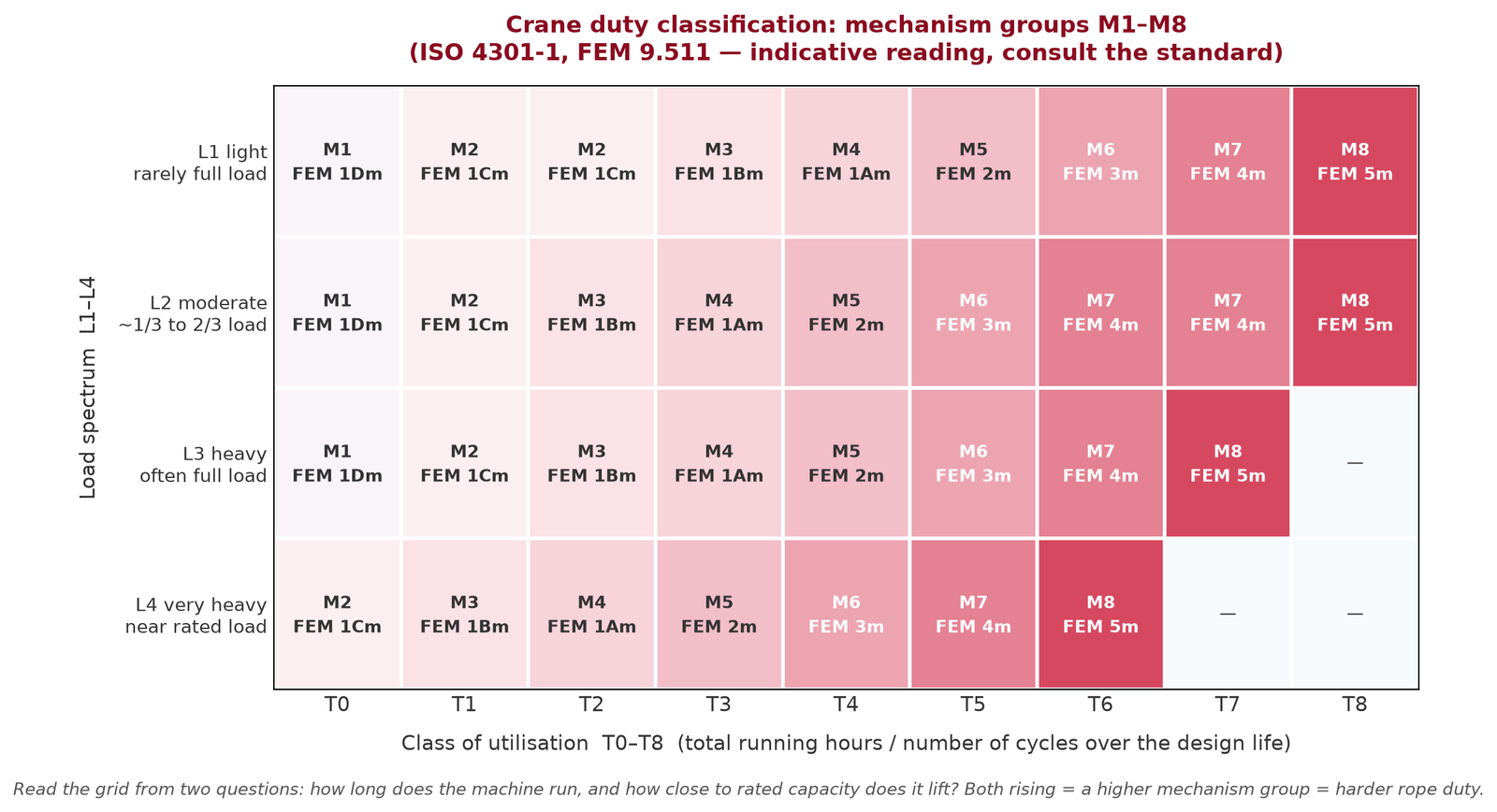
Europe used the FEM 9.511 notation (1Dm, 1Cm, 1Bm, 1Am, 2m, 3m, 4m, 5m) for decades; ISO 4301-1 replaced it with the cleaner M1–M8 scale, and modern EN crane standards inherit it. The mapping is one-to-one, which is why you still see both on datasheets and nameplates. The grid below is the way I sketch it for customers — an indicative reading that shows the trend; for contractual work, read the cells from the standard itself.
Table 1 — Mechanism group from load spectrum and utilisation (ISO 4301-1 / FEM 9.511, indicative)
| Load spectrum | T0 | T1 | T2 | T3 | T4 | T5 | T6 | T7 | T8 |
|---|---|---|---|---|---|---|---|---|---|
| L1 light (rarely near rated) | M1 (1Dm) | M2 (1Cm) | M2 (1Cm) | M3 (1Bm) | M4 (1Am) | M5 (2m) | M6 (3m) | M7 (4m) | M8 (5m) |
| L2 moderate (¼–½ of rated) | M1 (1Dm) | M2 (1Cm) | M3 (1Bm) | M4 (1Am) | M5 (2m) | M6 (3m) | M7 (4m) | M7 (4m) | M8 (5m) |
| L3 heavy (½–¾ of rated) | M1 (1Dm) | M2 (1Cm) | M3 (1Bm) | M4 (1Am) | M5 (2m) | M6 (3m) | M7 (4m) | M8 (5m) | — |
| L4 very heavy (near rated) | M2 (1Cm) | M3 (1Bm) | M4 (1Am) | M5 (2m) | M6 (3m) | M7 (4m) | M8 (5m) | — | — |
Typical Duty Classes by Machine — and the Rope That Goes With Them
After twenty years of quoting ropes, the grid has become a shortcut for me: tell me the machine and I can guess the class within one step, then confirm from the nameplate or manual. Here is how the classes distribute across the machines I supply.
Table 2 — Duty classes I see in the field, and the rope families that suit them
| Duty class | Typical machines | Work profile | Rope family I typically specify |
|---|---|---|---|
| M1–M3 | Installation and maintenance hoists, workshop jibs, light electric hoists | Occasional lifts far below rated load | Standard 6×19/6×36 class, FC or IWRC; cost wins |
| M4–M5 | General workshop and warehouse overhead cranes, small tower cranes | Daily production lifts at partial load | 6×36WS+IWRC, grade 1960; rotation-resistant 18×K7 on tower cranes |
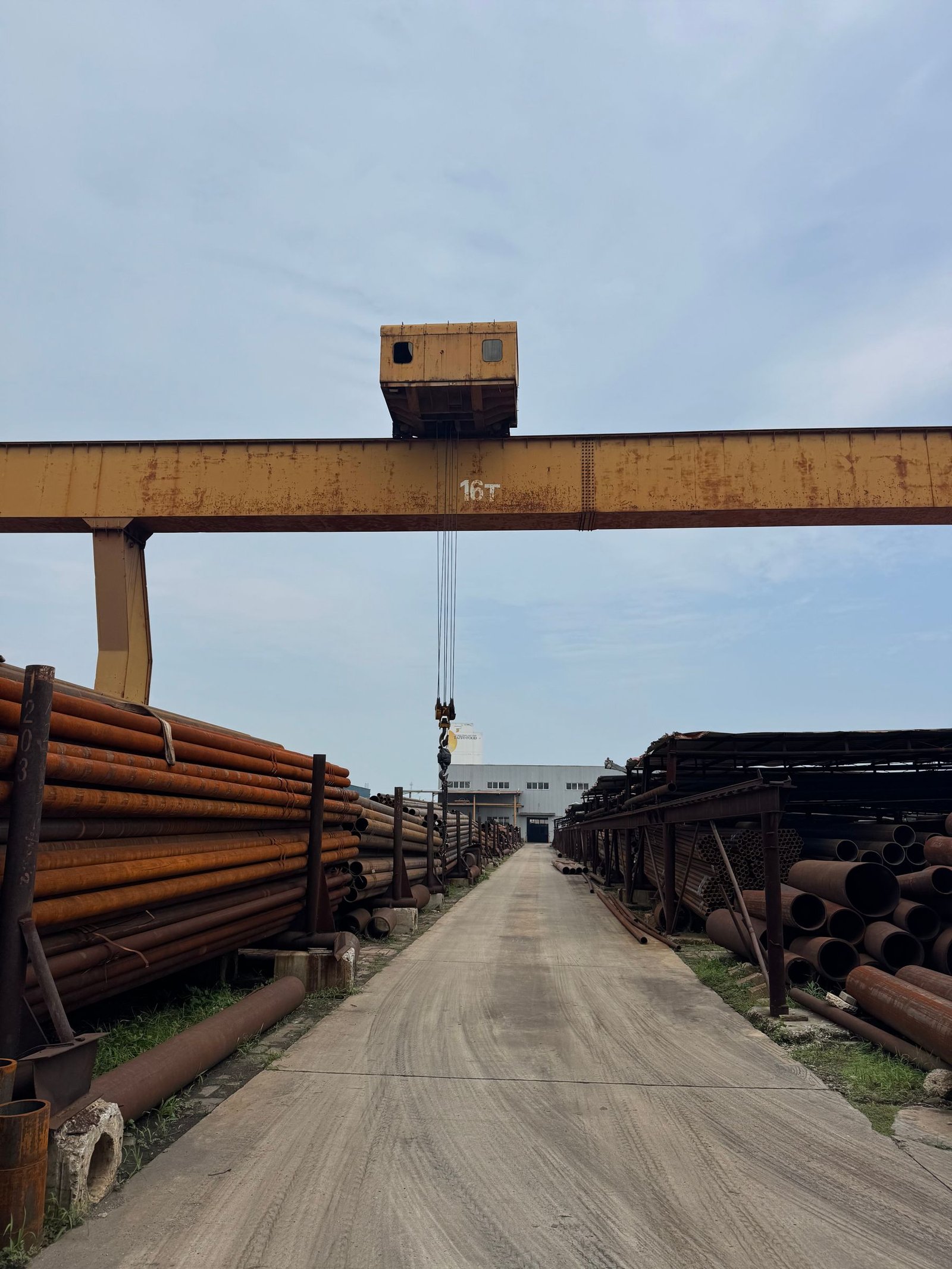
| M6–M7 | Steel mill process cranes, busy tower cranes, mobile harbour cranes, heavy gantry cranes | Near-continuous shifts, frequent heavy lifts | Compacted 6×K36WS+IWRC / 8×K26WS-EPIWRC, 1960; galvanized outdoors |
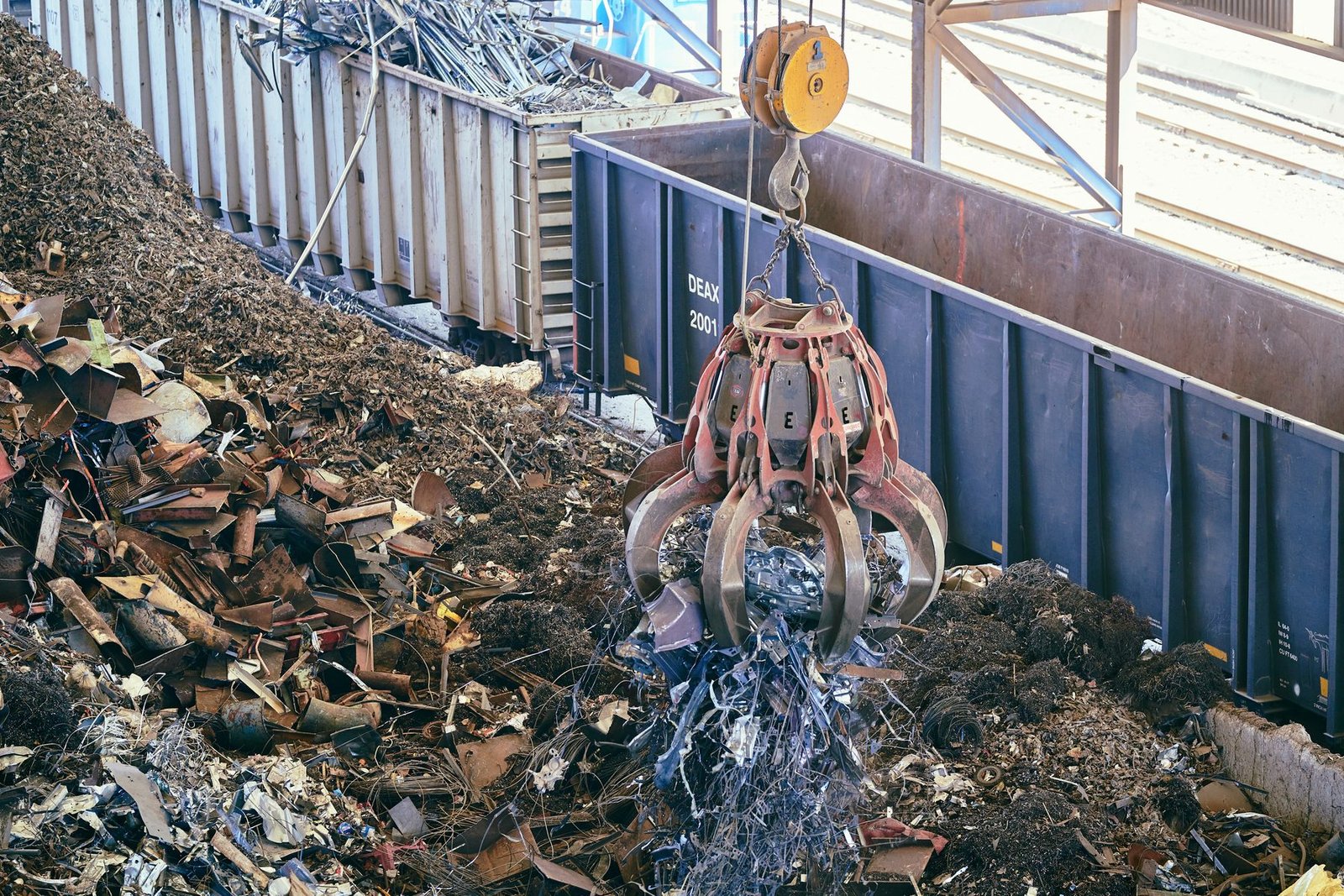
| M8 | Grab ship unloaders, ladle and casting cranes, scrap and dredging cranes, draglines | Cycle after cycle at or near rated load, shock loads | Compacted, plastic-impregnated ropes; 35WXK7 where single-fall; matched lay pairs on grabs |
The pattern to notice: capacity and duty class are not the same thing. A 500-tonne gantry crane that makes four heavy lifts a month can be a lower class than a 10-tonne grab crane running 40 cycles an hour around the clock. In my experience the low-capacity, high-cycle machine is by far the harder one on rope.
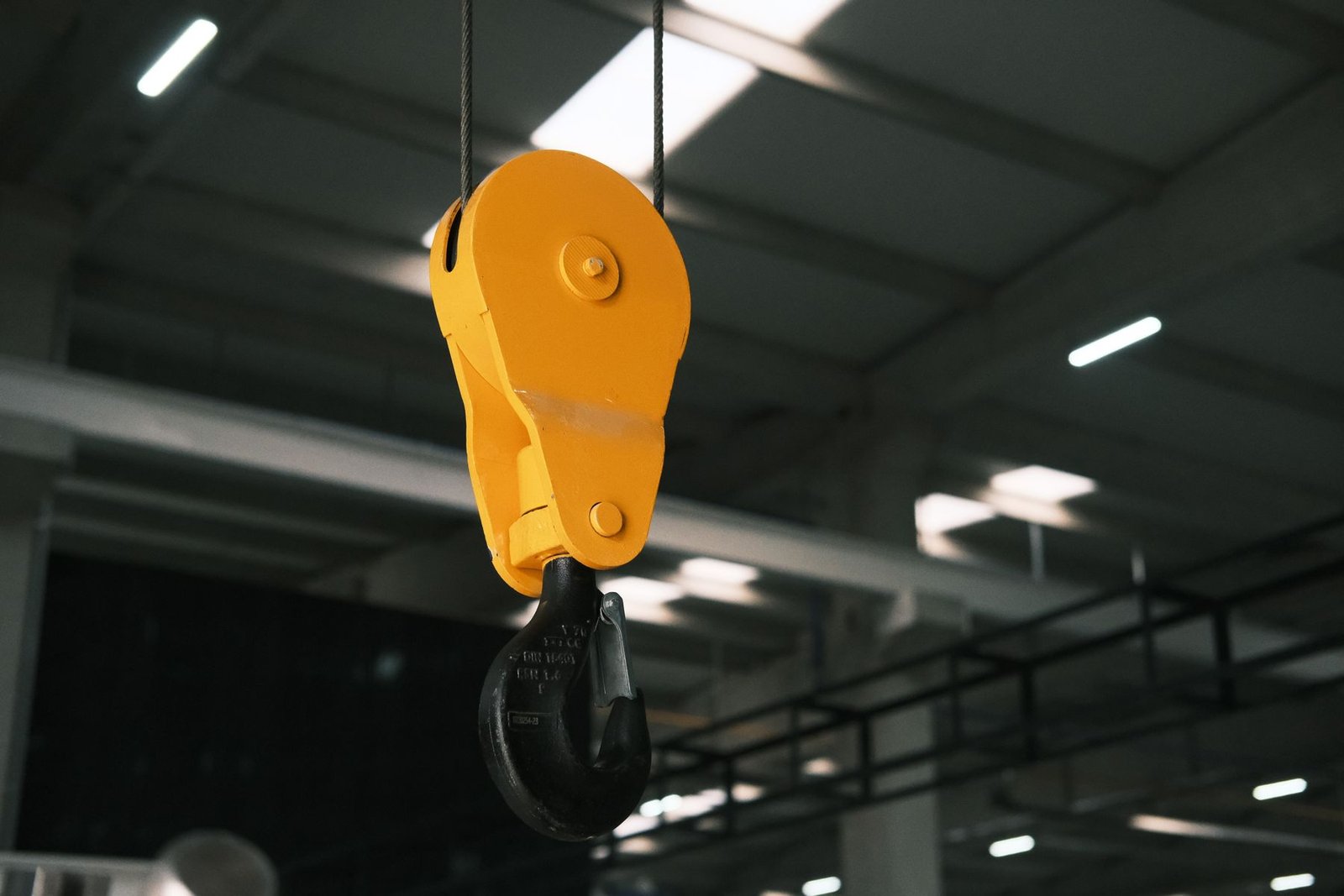
Why the Rope Cares About Duty Class More Than Almost Any Other Component
Steel structures and gearboxes are sized once and inspected for damage. A running wire rope is different: it is a fatigue-limited consumable. Every cycle bends it over sheaves and the drum, and each bend spends a share of its fatigue budget. The number of relevant bendings per cycle — every passage over every sheave, plus every drum entry — is exactly what EN 13001-3-2 counts when it verifies a reeving system. Duty class is, in effect, a statement of how fast that budget is spent.
That is why the class feeds directly into four rope decisions:
- The rope safety factor the machine standard demands for the mechanism;
- The minimum D/d ratio of sheaves and drum, which sets how much bending stress the rope sees;
- The construction — plain versus compacted, fibre versus steel core, plain versus plastic-impregnated;
- The inspection regime — how often an ISO 4309 examination is honest for the duty.
Getting any of these wrong does not usually produce a dramatic failure on day one. It produces a rope that ages at three to five times the expected rate, and then a discarded-rope event on some inconvenient Friday.
Duty Class and the Rope Safety Factor
Rope safety factors are set by the machine standard, and they scale with duty. North American practice keeps simple fixed design factors per crane type; European and international standards use load-dependent verification, but the outcome is the same trend — the harder the duty, the more rope margin the design must carry.
Table 3 — Where hoist rope design factors come from
| Standard | Applies to | Hoist rope design factor |
|---|---|---|
| ASME B30.5 | Mobile and locomotive cranes | 3.5:1 (higher for certain uses, e.g. 7:1 where a fall can go slack) |
| ASME B30.2 / B30.17 | Top-running and underhung overhead cranes | 5:1 typical for hoist ropes |
| ASME B30.9 / OSHA 1910.184 | Wire rope slings | 5:1 — see my sling safety factor guide |
| ISO 16625 | Crane reeving systems, international | Rope factor roughly 3.55–5.6 depending on mechanism group, reeving and spooling layers |
| EN 13001-3-2 | European crane design (limit states) | Load-side verification with partial factor 1.34 for regular loads plus dynamic and risk coefficients, then a fatigue check against the counted bendings |
The practical takeaway for buyers: a rope replaced like-for-like on diameter but sourced at a lower grade quietly eats design margin. If the machine was verified with a 1960 MPa rope and you fit a 1770 MPa rope of the same construction, the factor drops — on an M7 or M8 machine that is exactly the rope that ages fast and gets cut early. I cover the strength arithmetic in my guide to breaking strength, MBL and safety factors.
Duty Class and the D/d Ratio
The second lever the duty class pulls is geometry. Bending fatigue life is extremely sensitive to the D/d ratio — the sheave or drum pitch diameter divided by the rope diameter. Below about 14, a running rope’s life collapses; between 16 and 25 life climbs steeply; past about 25 the curve flattens and additional diameter buys little.
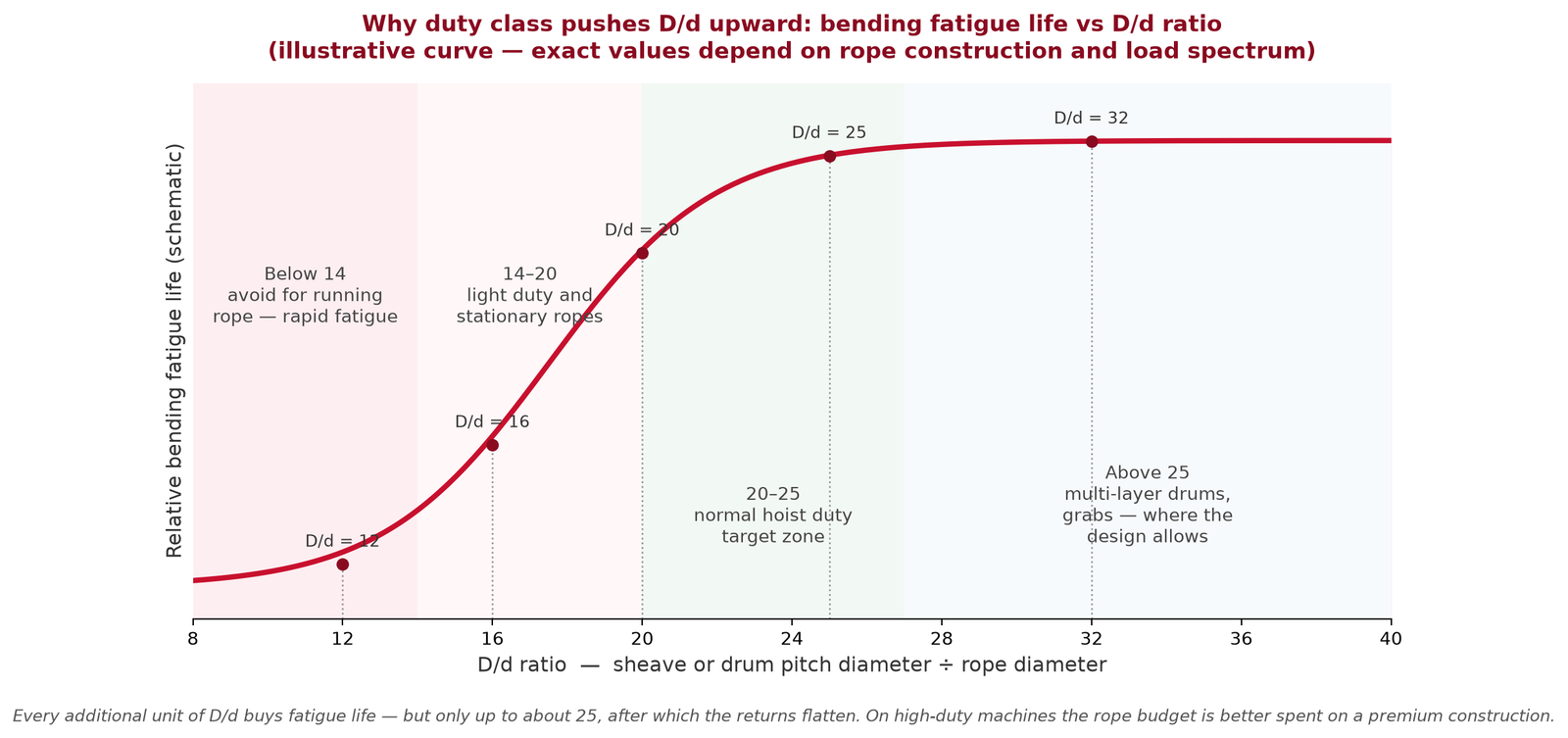
Table 4 — D/d ratios I expect to see, by duty class (indicative practice)
| Duty class | Typical minimum D/d practice | What it means for the rope |
|---|---|---|
| M1–M4 | ≥ 16 on running sheaves | Standard constructions reach full expected life |
| M5–M6 | ≥ 20 on hoist sheaves | Compaction and better wire metallurgy start paying for themselves |
| M7 | ≥ 22–25 | Premium constructions justified; drum and sheave condition matter more than rope brand |
| M8 | ≥ 25–30, or the best the mechanism allows | Plastic-impregnated steel-core ropes; on grab machines the small internal sheaves mean construction choice carries the life |
One honest caveat from the field: on grabs, the sheaves inside the grab shell are small because the shell is small, and D/d there often falls short of the table no matter how good the rope is. That is precisely why grab closing ropes are specified with many fine outer wires (the 6×36 class and finer) — the construction absorbs what the geometry cannot give. My mobile harbour crane rope guide goes into grab duty in depth.
How to Work Out Your Machine’s Class in Ten Minutes
You rarely have to calculate from scratch — the class is usually on the nameplate or in the manual, and FEM/ISO class data is a standard question in crane tenders. But when the paperwork is missing, or you suspect the machine has been doing harder work than its class assumed, here is the quick method I use:
Step 1 — Estimate the load spectrum
Walk through a normal week and bucket the lifts. The cube law does the work: a machine that habitually lifts around 60% of rated load sits in L2 (0.6³ ≈ 0.22, between the 0.125 and 0.25 spectrum boundaries); one that lifts 85% or more most cycles is L4 territory (0.85³ ≈ 0.61, well above the 0.50 boundary).
Step 2 — Estimate utilisation
Running hours per day × working days × design life in years. A crane at 4 hours a day, 250 days a year, over a 10-year design life logs 10,000 hours — roughly a T5/T6 utilisation. A grab crane at 14 hours a day reaches the same hours in three years.
Step 3 — Read the grid
Cross the two answers in Table 1. In the example above — 10,000 hours at moderate spectrum — the machine lands around M5–M6. If its nameplate says M4, either the paperwork predates a duty change or the machine is being worked one class harder than designed. Both findings matter for rope planning.
Step 4 — Compare with the rope’s actual life
Finally, check the rope log. If a machine classified M6 is discarding ropes at the life you would expect from M8 duty, the class and reality disagree — and the rope specification should follow reality, not the nameplate. Cycle counts in a simple rope register settle the argument; my drum capacity guide shows the same arithmetic applied to how much rope the machine consumes.
How Duty Class Changes the Rope You Order
Classifying the machine is only useful if it changes the purchase order. Here is how I let the class drive the specification:
- Below M4: the rope is not the bottleneck. Buy a quality standard construction at the right grade and spend your money on correct installation — most premature failures at this level are spooling and installation faults, not construction faults.
- M4–M6: step up to IWRC if the drum is multi-layer, and prefer the 6×36 class over 6×19 wherever bending cycles accumulate. Outdoor machines take galvanized.
- M7: compacted ropes earn their premium — roughly 10–15% more breaking force in the same diameter, denser surface against abrasion, better behaviour on multi-layer drums. Plastic-impregnated cores (EPIWRC) block internal wear and dirt, which is the failure mode nobody photographs. My compacted rope guide explains the trade-offs.
- M8: full premium specification — compacted, plastic-impregnated steel core, grade matched to the design verification, rotation-resistant constructions (35WXK7 for drilling rigs, 18×K7/35×K7 for tower and truck cranes) wherever the load hangs free, matched left-hand/right-hand lay pairs on double-rope grabs. Inspect against the rotation-resistance discard tables because these ropes fail from the inside.
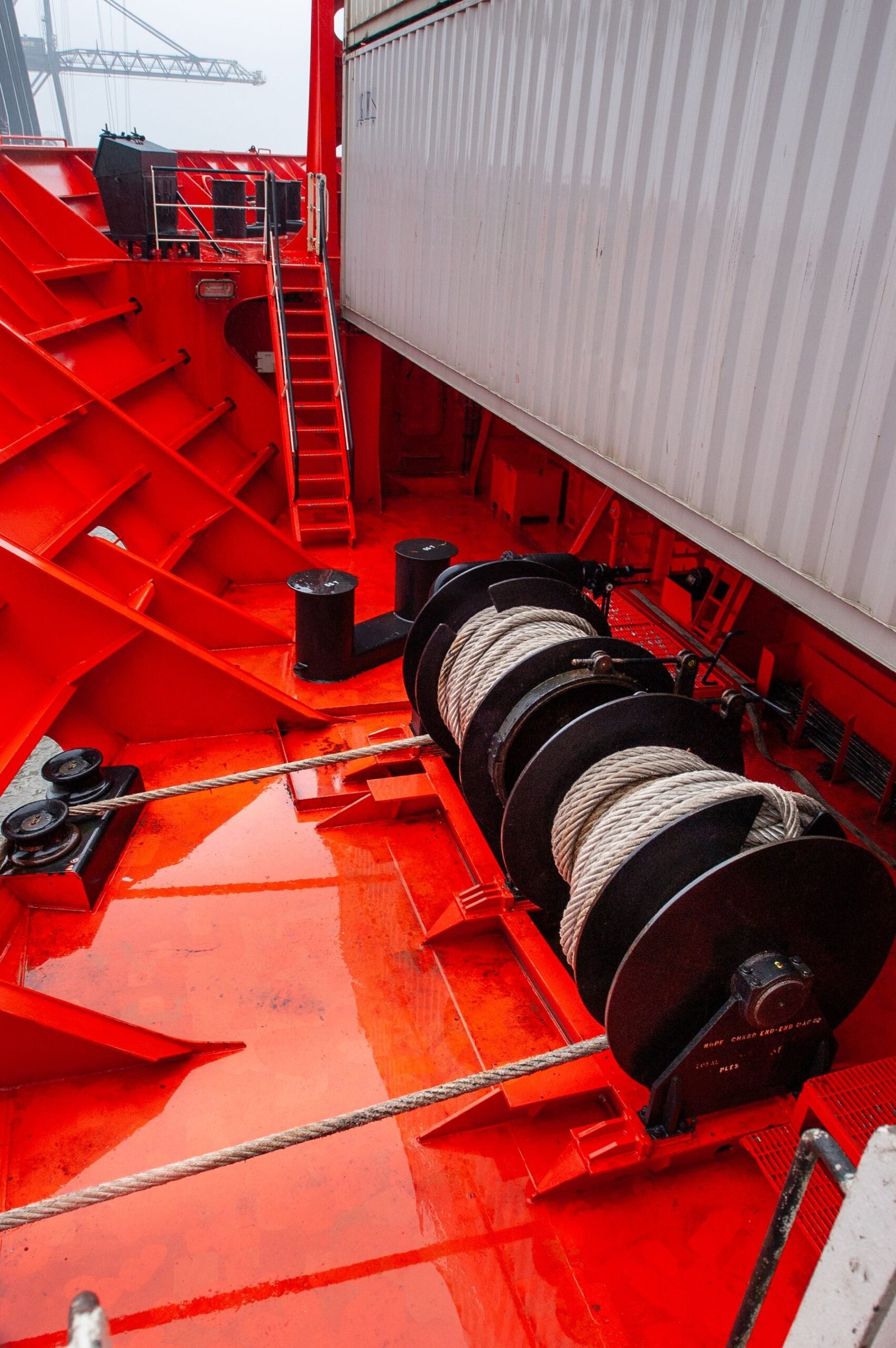
Inspection Intervals Should Scale With Duty, Not the Calendar
The most common mismatch I see is an inspection regime that follows the calendar while the rope’s wear follows cycles. ISO 4309 ties discard criteria to rope construction and duty, and the examination frequency should follow the same logic. As working practice: M4 machines may genuinely need only monthly visual checks; M6 machines want weekly close inspection with the rope slowed at its known wear points; M7–M8 machines — grabs, ladle cranes, drilling rigs — deserve a short visual every shift plus a proper examination at fixed cycle counts, because a rope there can move from healthy to discardable inside a single month of hard cycles.
One more discipline that costs nothing: log cycles, not months. A simple tally of lift cycles per rope, compared across ropes and machines, turns rope replacement from superstition into forecasting — and lets you compare rope suppliers on cost per thousand cycles instead of price per metre.
Five Mistakes Buyers Make When Duty Class Isn’t on the Enquiry
- Buying by diameter alone. Same diameter, wrong class — the rope that replaced a premium compacted rope with a plain one and lasted half as long is not a saving.
- Trading grade down. 1770 steel in a slot verified for 1960 quietly reduces the design factor.
- Copying the neighbour’s specification. Their crane may be a class below yours; machine manuals, not yard folklore, set the minimum.
- Ignoring the second rope in a matched pair. On grabs and double-fall hoists, one left-hand and one right-hand rope keep the load level; mixing constructions breaks the pairing.
- Keeping calendar-based inspections. On hard duty, a monthly-only regime can miss an entire rope life.
Final Word From the Quoting Desk
Duty classification looks like an abstract engineering grid until you see it decide rope budgets in the real world. Put the class in the enquiry line — “M6 gantry crane, 28 mm hoist rope, 400 m, multi-layer drum, outdoor” says more than any drawing — and the quotation you get back will fit the machine instead of merely fitting the drum. Aulone is a professional manufacturer and supplier of steel wire ropes, wire rope slings, synthetic ropes and rigging hardware for lifting, marine, mining, construction and industrial applications. We have produced rope for more than twenty years with 200,000 tons of annual capacity, hold stock of common crane and winch sizes, and certify to EN 12385-4, ISO 9001, BV, ABS, DNV, RMRS and CE. Custom cut lengths, matched lay pairs, sockets and swaged assemblies are routine, and third-party testing can be arranged before shipment.
Send me the duty class, the machine manual extract or just the old rope’s specification, and we will quote the rope the machine is actually working: info@wireropes.net.
Frequently Asked Questions
What is the difference between ISO M-classes and the old FEM notation?
They are the same eight groups under different labels: ISO 4301-1 calls them M1–M8, while FEM 9.511 used 1Dm, 1Cm, 1Bm, 1Am, 2m, 3m, 4m and 5m. M1 corresponds to 1Dm and M8 to 5m, so you can translate any old datasheet directly. Modern EN crane standards reference the ISO notation.
What duty class is a typical overhead workshop crane?
A general workshop or warehouse crane lifting well below rated load for a few hours a day typically classifies M4–M5. A crane running near-continuous shifts with frequent heavy lifts — steel mills, busy foundries — moves to M6–M7. Capacity alone tells you nothing; hours and average load decide it.
Does the duty class change the rope safety factor?
Indirectly, yes. Fixed-factor standards like ASME B30.5 or B30.2 set the factor by machine type, while ISO 16625 and EN 13001-3-2 let the required rope factor rise with mechanism group, reeving and spooling conditions — roughly 3.55 to 5.6 across the range. The machine design verification, done at the rated class, is what legally fixes the factor for your rope.
Can I fit a higher-grade rope to gain life on a hard-duty machine?
You can raise breaking force by grade, but the better lever is construction: compaction adds 10–15% breaking force in the same diameter, resists abrasion and drums better, and usually buys more working life than a grade bump. Also check that sheave grooves and drum capacity suit any change before ordering — diameter changes ripple through the whole reeving system.
Where do I find my crane’s duty class?
Look on the crane nameplate and in the operating manual — the mechanism group is part of the design documentation under ISO 4301-1 / EN 13001. For imported or older machines, the FEM notation in the manual converts directly. If nothing is documented, the ten-minute estimation method in this article — load spectrum by the cube law, hours over the design life, then the grid — will get you within one class.
How should inspection frequency relate to duty class?
Scale it with cycles, not the calendar. As working practice: monthly visual checks can be adequate at M4; weekly close inspection at M6; and at M7–M8 a short visual every shift plus a full ISO 4309 examination at fixed cycle intervals. Always add the known wear points — drum crossovers, grab sheaves, the last metre before terminations — to every walk-around.