The short answer: a wire rope should be lubricated with a lubricant made for wire rope — a penetrating type that reaches the core, followed by a coating type that seals the surface — on an interval set by operating hours and environment, not by the calendar, and always after the rope has been cleaned. Most ropes do not die of overload; they die of dryness. In twenty years of putting ropes onto cranes, rigs and winches, the unlubricated rope has been behind more early replacements than any other single maintenance mistake I have seen. Here is what lubrication actually does, which product to buy, how to apply it and how to build an interval you can trust.
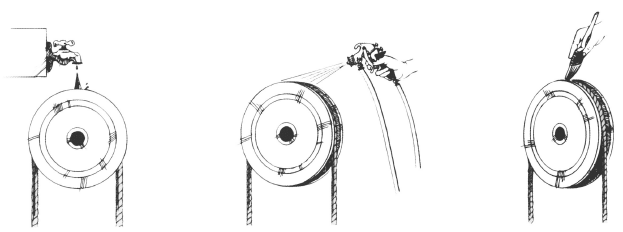
What Lubrication Actually Does Inside a Rope
A wire rope is dozens of individual wires wound into strands around a core. Every time the rope bends over a sheave or wraps onto a drum, those wires slide a fraction of a millimetre against each other. Under load, dry steel sliding on dry steel is a grinding process — and it happens inside the rope, where you cannot see it. The outer strands can look perfectly healthy while the core and inner wire layers are wearing away and corroding.
Good lubrication does two jobs at once:
- It reduces internal friction. A film of oil between wires lets them slide instead of grind, which directly slows fatigue. Bend a dry rope and a lubricated rope over the same sheave, and the difference in effort — and in heat — is obvious.
- It keeps water and contaminants out. Rope valleys and the core act like capillaries: rain, salt spray and washing water are drawn deep inside and held there against the steel. A sound lubricant film displaces moisture and leaves a corrosion-inhibiting layer behind.
Field experience and manufacturer data both point the same way: a consistently lubricated rope can last two to three times longer than the same rope run dry, and lubrication neglect is one of the most frequently cited contributors in rope failure investigations.

Factory Lubrication Gets You Started — Not Through Life
Every properly made rope leaves the factory lubricated: oil or grease is worked into the core during stranding and over the closed rope, in line with ISO 4346, the standard that defines the basic requirements for wire rope lubricants. That factory fill protects the rope on the reel, through transport and during its first weeks of work.
It will not last. Sheave pressure squeezes lubricant out of the contact zones, dust and moisture work into the valleys, and the factory fill is simply consumed by the first stretch of service. From that point on, the rope lives on whatever you give it. The common failure pattern I keep meeting is the same story: the rope was installed correctly, the maintenance crew assumed the factory grease was “for life”, and eighteen months later the rope is dry, rusty in the valleys and on the discard list years ahead of its potential.
Penetrating vs Coating Lubricants
There are two families of rope lubricant, and they are not competitors — they are a team. Most products on the shelf lean one way or the other; some quality products do both jobs reasonably well.
| Property | Penetrating lubricant | Coating lubricant |
|---|---|---|
| Form | Low-viscosity oil, often with a solvent carrier | Tacky, grease-like layer (NLGI 000–2) |
| Where it protects | Seeps between strands and wires to the core | Sits on the outer surface and in the valleys |
| Main job | Internal friction and corrosion | Moisture sealing, abrasion resistance |
| Weakness | Washes off and evaporates faster; little surface film | Cannot reach the core on its own |
| Best used for | First application after cleaning; periodic deep treatment | Regular top-ups; wet, salty or dusty environments |
When you buy, read the data sheet rather than the drum label. A serious rope lubricant will state a salt-spray corrosion result (ASTM B117, a few hundred hours is a good figure), water washout resistance (ASTM D1264), an operating temperature range, and whether it contains EP (extreme-pressure) additives. For marine and harbour work, biodegradable formulations (environmentally acceptable lubricants) are worth asking for; for food and pharmaceutical plants, use NSF H1 food-grade products. And check ISO 4346 compliance: the lubricant must be free of acids and free water, adhere strongly, stay flexible instead of drying out, resist rust and creep between the wires. Solvent-thinned products should have a flash point and solvent content you can live with on your site.
How to Apply Lubricant: Five Methods
| Method | Penetration | In-service? | Best for |
|---|---|---|---|
| Brush, rag or swab | Surface only | Yes | Small ropes, light duty, topping up between deep treatments |
| Spray (aerosol or pump) | Surface to mid-strands | Yes | Long runs, vertical ropes, quick coverage |
| Drip or trough feed | Surface to mid-strands | Yes | Slowly moving ropes on winches and conveyors |
| Pressure lubricator (sealed collar) | Core-level | Yes — rope runs through it | Heavy-duty crane, rig and mining ropes from about 10 mm up |
| Hot bath / dip tank | Core-level | No — off-line | Ropes being installed or re-lubricated in the workshop |
Two practical notes. First, a pressure lubricator is the only field method that genuinely forces lubricant to the core: a sealed collar clamps around the moving rope and pushes lubricant into the strands under pressure as the rope is worked slowly back and forth. If you run high-cycle cranes, rigs or draglines, this is the tool that pays for itself. Second, a hot bath (lubricant heated to roughly 65–80 °C so it flows) gives excellent core coverage but only for rope you can take off the machine — most often during installation or when a rope is cut back for re-termination.
Whatever the method, work the rope while lubricating where you can: running the rope slowly over a sheave or drum while applying helps draw the product into the strands.
The Two-Step Routine That Works
The best field results I have seen come from a simple sequence:
- Clean the rope (more on that below).
- Apply the penetrating lubricant and let it dwell — ideally 24 to 48 hours for the carrier to evaporate and the oil to reach the core.
- Follow with the coating lubricant to seal the surface against moisture and abrasion.
Between deep treatments, top up the coating layer as needed; re-do the full penetrating treatment every few months on hard-working ropes. On machines that are worked hard every day, many crews simply alternate: one visit coating-only, the next visit the full two-step.
How Often: Setting an Interval by Duty
There is no universal interval — a crane on three shifts in a steel mill burns lubricant far faster than a shop hoist used twice a week. Set the interval by operating hours and environment, then fine-tune it against what your rope actually looks like at inspection.
| Application | Starting interval | Notes |
|---|---|---|
| Dragline, electric shovel, mining hoist | Every 20–40 operating hours | Abrasive dust and heavy loads; pressure lubrication strongly preferred |
| Offshore and marine cranes | Every 30–50 operating hours | Salt spray; use corrosion-inhibiting, wash-resistant products |
| Heavy-duty cranes, rotary drilling rigs, grabs | Every 40–80 operating hours | Multi-layer drum crushing squeezes lubricant out of the rope |
| Standard-duty overhead / gantry cranes | Every 80–160 hours, at least monthly | Check the film weekly; indoor dust matters less than water |
| Elevator and light utility ropes | Per OEM schedule — often never re-lubricated | Elevator ropes run dry by design; do not improvise lubricants on them |
| Static ropes: guys, pendants, stays | Every 6–12 months | Inspect annually regardless; coat thoroughly after cleaning |
Three triggers override any schedule: re-lubricate after every wash-down or heavy rain exposure (washing strips the film), after any period of storage on the machine, and whenever a wiped rag comes away dry instead of darkly filmed. Track hours, not just dates — the rope log entry for lubrication is as valuable as the inspection entry.

Clean First — Lubricating Dirt Is Sandpaper
The step most crews skip, and the one that decides whether lubrication helps or harms: clean the rope before you lubricate it. Old, hardened lubricant mixed with dust and grit forms an abrasive paste. Smear fresh grease over that and you have built a grinding compound into the valleys of your rope, and blocked the new lubricant from penetrating at all.
For field cleaning, a stiff wire brush and rags with a mild solvent will shift most deposits; compressed air helps blow out the valleys. On heavy build-up, a pressure wash works — but then you must re-lubricate immediately, because washing also strips the protective film and drives water into the rope. And there is a second reason cleaning comes first: you cannot inspect a greasy rope. Broken wires, corrosion pitting and diameter loss hide under surface film, so the honest routine is clean, inspect, then lubricate.
What Never to Use
| Do not use | Why |
|---|---|
| Engine oil, used oil, hydraulic oil | Not designed to adhere or inhibit corrosion; used oil carries acids, soot and metal particles straight into the rope |
| Bearing and general-purpose grease | Far too stiff to penetrate between strands — it coats the outside while the core stays dry |
| Diesel or petrol “dressed on” as a film | Thin solvents strip remaining lubricant and leave nothing protective behind; fire risk on hot machinery |
| Acidic or aggressive degreasers left on the rope | Residue can attack steel; always neutralise or rinse and re-lubricate |
| Graphite-heavy products on cranes with brakes or electric traction | Conductive and messy; use where the construction specifically calls for it |
One more “never”: do not lubricate to fix a rope. If a rope already meets any ISO 4309 discard criterion — broken wire counts, diameter loss, corrosion, kinks — fresh grease will not reverse it, and it will hide the evidence from the next inspector. Lubrication protects a healthy rope; it does not repair a failing one.

How to Tell the Job Was Done Right
Three quick field checks, and they take minutes:
- The wipe test. Drag a clean rag along the rope. It should come away dark with lubricant film. A dry rag means the film is gone; heavy smears mean you applied too much and the excess will only collect dust.
- The bend test. Bend a short length of the rope (or watch it pass over a sheave under light load). A properly lubricated rope shows a slight sheen of oil working in the valleys between strands. A dull, dry-looking rope with a gritty feel is running dry inside — lubricate now, and shorten your interval.
- The diameter check. Measure with a caliper at several points along the working length. A rope losing diameter fast despite regular lubrication is wearing internally or losing core support — inspect it against the ISO 4309 discard criteria.

A note on modern ropes: with EPIWRC (plastic-impregnated core) ropes, the polymer fills the core and holds the factory lubricant in place, so internal lubrication loss is far slower than on a standard IWRC rope. The surface still needs regular coating in wet or abrasive service, but the interval for deep treatment can usually be stretched. The trade-offs are covered in our compacted and impregnated rope guide.
Aulone is a professional manufacturer and supplier of steel wire ropes, wire rope slings, synthetic ropes and rigging hardware for lifting, marine, mining, construction and industrial applications. We manufacture to EN 12385-4 under ISO 9001 with BV, ABS, DNV, RMRS and CE certification, with over 20 years in the industry and 200,000 tons of annual capacity. Common constructions are in stock for fast shipment, custom assemblies are lubricated and measured to your specification, and third-party testing is available on request. Write to me at info@wireropes.net with your machine and duty cycle, and I will help you match the right rope — and the right lubrication plan — to it.
Frequently Asked Questions
How often should I lubricate wire rope?
By duty, not by the calendar. As starting points: heavy-duty cranes, drilling rigs and grabs every 40–80 operating hours; mining and dragline ropes every 20–40 hours; marine cranes every 30–50 hours; light-duty ropes monthly to quarterly; static guy ropes every 6–12 months. Always re-lubricate after washing or heavy rain, and adjust the interval to what the wipe test shows.
Can I use regular grease or engine oil on wire rope?
No. Bearing grease is too stiff to penetrate to the core, so it protects only the surface. Engine and used oils do not adhere, evaporate quickly and may carry corrosive contaminants into the rope. Use a lubricant formulated for wire rope — ideally a penetrating type followed by a coating type.
Do I need to clean the rope before lubricating?
Yes — every time. Lubricating over old grease and grit builds an abrasive paste into the rope valleys and blocks penetration. Brush off deposits, wipe down, inspect, and only then apply fresh lubricant. If you pressure-wash, re-lubricate immediately afterwards.
Does lubrication hide rope damage?
It can. Fresh grease covers broken wires, corrosion and wear. That is why the correct order is clean, inspect against the discard criteria, and then lubricate — never grease a rope to pass an inspection, and never lubricate a rope that already meets a discard criterion.
How do I know if the core of the rope is still lubricated?
Use the bend test: bend a short length or run the rope over a sheave under light load and look at the valleys between strands. A slight oil sheen means the core is protected; a dry, dull, gritty appearance means internal lubrication is gone — apply a penetrating lubricant and let it dwell before re-coating.
Do new ropes need lubricating straight away?
No. A rope manufactured to ISO 4346 leaves the factory with lubricant in the core and on the surface, which covers transport, storage and the first period of service. Start your service lubrication routine within the first weeks of operation — and if a rope has been stored on the machine or outdoors for months, clean and re-lubricate before loading it heavily.