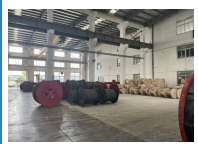
The short answer: a wire rope sling gets a quick visual check before every lift by the person using it, a documented periodic inspection by a competent person at least once every 12 months (monthly to quarterly in severe service), and it comes out of service immediately if any ASME B30.9 removal condition is present — a missing tag, too many broken wires in one lay, one-third wear on outside wires, or any permanent distortion such as a kink. In fifteen years around rigging lofts and crane decks, I have retired far more slings for missing tags and crushed eyes than for dramatic broken-wire counts. This guide walks through the whole system: what to inspect, how often, what the tag must say, exactly when a sling is condemned, and a checklist you can copy onto a clipboard tomorrow morning.

What You Are Actually Inspecting
Before the inspection rules make sense, be clear about what a wire rope sling is. Most slings in service are single-part slings made from 6×19- or 6×36-class rope with an independent wire rope core (IWRC), finished with hand-spliced or mechanically pressed Flemish eyes — often fitted with steel thimbles. Beyond those, you will meet endless (grommet) slings, cable-laid grommets used in heavy offshore work, and multi-leg bridles assembled with master links and hooks. Each family has its own broken-wire limits, which is why the removal criteria below distinguish single-part and strand-laid slings from cable-laid and braided ones.
| Sling type | Typical construction | Where you meet it | Inspection notes |
|---|---|---|---|
| Single-part eye-and-eye | 6×36WS + IWRC, spliced or pressed eyes, often thimbled | General plant lifting, hook-and-crane work | The workhorse — inspect eyes, thimbles and splice tucks hardest |
| Endless (strand-laid grommet) | One continuous strand laid into a closed loop | Vertical and basket hitches on machinery, modules | Wear migrates — rotate the bearing points between lifts |
| Cable-laid grommet | Six ropes around a rope core, closed loop | Offshore, subsea, very heavy lifts | Looser broken-wire allowance (20 per lay); check both faces |
| Multi-leg bridle | Single-part legs + master link, hooks or shackles | Irregular loads, steelwork, precast | Inspect hardware to ASME B30.26 and hooks to B30.10 as well as rope |

The Three Inspection Levels
ASME B30.9 builds inspection as a pyramid. The base is the pre-use inspection: whoever is about to rig the load looks and feels over the whole sling for obvious damage — broken wires, kinks, crushing, heat discoloration, a cracked hook. No record is required, but any deterioration that could mean real strength loss gets reported and the sling quarantined until a competent person rules on it. The middle level is the frequent inspection, by a competent person at daily-to-monthly intervals depending on service. The top level is the periodic inspection — a full documented examination of the entire sling, working every millimetre through the hands (or laid out straight on the floor), with measurements where wear is suspected.
| Level | Who | How often | Records |
|---|---|---|---|
| Pre-use | The rigger using the sling | Before every lift / every shift | None required — but report and quarantine anything doubtful |
| Frequent | Competent person | Daily to monthly, per service severity | Written record not mandated; smart shops log it anyway |
| Periodic | Competent / qualified person | Normal service: annually. Severe: monthly–quarterly. Special: per qualified person. Never more than 12 months apart | Written record required: sling ID, date, inspector, condition, disposition |
Severe service means anything that eats slings: hot work nearby, corrosive atmospheres, loads with sharp edges, high lift cycles. If your rigging loft serves a steel mill or a wharf, your annual sling is really a quarterly sling.
The Tag Is the First Inspection
Every compliant wire rope sling must carry a permanent, legible identification tag. Under OSHA 1910.184 and ASME B30.9 it must state at minimum the manufacturer’s name or trademark, the size or diameter, the rated loads (working load limits) for the hitches used — vertical, choker and basket — and the angle those capacities are based on, plus a serial or stock number for traceability. A sling without a legible tag has no known capacity, and that is why a missing tag is a removal-from-service condition by itself. The fix is not a marker pen on tape: send the sling back to the fabricator, who can verify the construction, re-rate and re-tag it.
ASME B30.9 Removal Criteria: The Full List
This is the table worth printing and taping inside the rigging container door. A wire rope sling shall be removed from service immediately if any one of these is present:
| Condition | What the inspector looks for |
|---|---|
| Missing or illegible ID tag | No tag, unreadable capacity, homemade replacement marking |
| Broken wires — single-part and strand-laid grommet slings | 10 randomly distributed broken wires in one rope lay, or 5 broken wires in one strand in one lay |
| Broken wires — cable-laid grommets / braided multi-part slings | 20 broken wires per lay (cable-laid grommet); 20 per braid for 6-part; 40 per braid for 8-part |
| Metal loss / abrasion | Outer wires worn down by one-third of their original diameter — feel for flats and sharp edges on crowns |
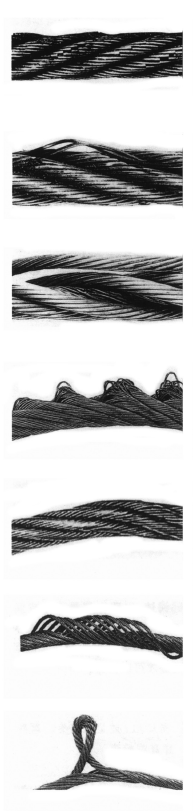
| Distortion | Kinks, crushing, birdcaging, unbalance — any wire or strand pushed out of its original position |
| Heat damage | Metallic discoloration, fused or welded wires, charred or boiled-out lubricant (welding spatter does this quietly) |
| Severe corrosion | Pitting or binding of wires; light surface rust alone is not a condemnation |
| Damaged end attachments | Cracked, bent or worn eyes, thimbles, sleeves; evidence that a splice has slipped or tucks have moved |
| Hooks (per ASME B30.10) | Throat opening increased more than 15% (some manufacturers specify 5% for their hooks — check), twist over 10°, or any crack |
| Anything else | Visible damage that causes doubt about continued use — doubt retires the sling |
Measuring Broken Wires and Diameter Loss
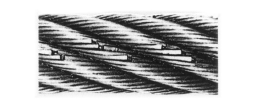
Broken-wire counting trips people up, so here is the practical method. Mark a length of rope equal to one lay (roughly 6.5 times the diameter on a 6-strand rope), then count the wire breaks within it. The B30.9 limits — 10 in one lay, or 5 in one strand — apply to that measured zone, and you should check several zones, because breaks cluster exactly where the sling works hardest: just behind the eye or thimble, at the point that rides on crane hooks, and wherever the sling has historically sat over edges. Wire breaks at a termination deserve special respect: a handful of breaks right at the splice or fitting often signals progressive pull-out, and I treat any concentration there as a retirement candidate even before it hits the numeric limit.
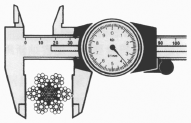
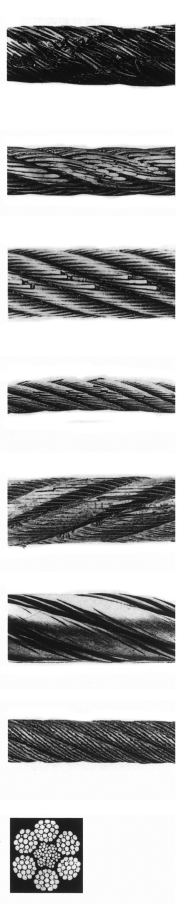
Diameter tells the other half of the story. A caliper across opposite strand crowns, compared with the nominal size on the tag, reveals both external wear and — more insidiously — a core that has collapsed or rusted away inside. If the rope reads small but shows little crown wear, suspect internal damage, cut a suspect sling out and open it up: you will usually find the reason. Abrasion that has flattened one-third of the outside wire diameter is an automatic removal condition — the close-up below is what inspectors learn to feel for with a gloved thumb.

Hitch Types and Working Load Limits
Inspection only protects the load if the sling is used within its rated capacity, and capacities change with the hitch. B30.9 tags rate the sling in a vertical hitch; a choker reduces capacity to about 80%, while a vertical basket roughly doubles it. For basket and multi-leg work the sling angle does the rest — the tension in each leg rises steeply as legs go horizontal:
| Hitch / configuration | Multiplier on vertical WLL |
|---|---|
| Vertical hitch | 1.0 |
| Choker hitch | 0.8 |
| Vertical basket (legs vertical) | 2.0 |
| Basket or 2-leg bridle at 60° from horizontal | 1.7 |
| Basket or 2-leg bridle at 45° | 1.4 |
| Basket or 2-leg bridle at 30° | 1.0 |
Worked example: an 8-tonne load on a two-leg bridle with 60° legs. Leg tension = 8 ÷ (2 × sin 60°) ≈ 4.6 t. Each leg therefore needs a vertical WLL of at least 4.6 t — and if either leg goes into a choker around a sharp corner, it needs 4.6 ÷ 0.8 ≈ 5.8 t. Notice what a 30° lift would do: the same two legs each see about 8 t. Angle discipline is free strength; nobody has to buy it, only rig for it. (If you want the deeper design-factor arithmetic behind these numbers, see our guide on wire rope sling safety factor.)
The Six Things Inspectors Miss Most
- Hidden eye damage. The eye interior against the thimble is where crushed thimbles, worn tucks and pocket corrosion live. Flex the eye open and look inside — every time.
- Crush damage that “looks fine under tension.” Flattened sections from being dragged under loads or used as a towing strop re-straighten under load and hide real strength loss.
- Heat damage from welding. Grounding a welder through a sling or spatter landing on it anneals wires with no kink to show for it. Look for blue-brown discoloration.
- One-sided wear. Slings used the same way every lift wear on the same face. Rotate the bearing point between uses, or the “good side” will be the only thing holding the tag on.
- Hardware taken on faith. Master links and hooks get inspected to B30.26 and B30.10, not skipped because the rope looks new.
- Storage abuse. Slings dropped in a heap on a wet floor kink and corrode before their first lift. Hang them on racks, indoors, dry.
A Field Checklist You Can Copy
- Confirm the tag is present, legible and matches the lift plan (WLL, hitch, angle).
- Lay the sling out straight; run gloved hands over its full length.
- Count broken wires over one lay in at least three zones; flag any concentration at eyes or hardware.
- Feel for wire flats and check diameter with a caliper against nominal size.
- Look for kinks, birdcaging, crush flats and strand displacement.
- Check for discoloration, fused wires or dry core (stiffness, crackling when bent slowly).
- Open each eye; inspect thimble seat, splice tucks and pressed sleeve for slip or cracks.
- Inspect hooks, links and shackles per B30.10 / B30.26.
- Retire anything doubtful immediately: tag it DO NOT USE, cut it up, and record the disposition.
- Log the periodic inspection: sling ID, date, inspector, condition, action.
EN 13414 vs ASME B30.9: A Note for Global Buyers
If you buy slings on both sides of the Atlantic, know that the systems rhyme but do not match. EN 13414-1 (with CE marking under the Machinery Directive) rates slings from a 5:1 minimum breaking force to working load limit, with fixed choker and basket coefficients and WLL values stated on the tag in metric units; ASME B30.9 uses rated-capacity tables in pounds and adds the US-specific inspection regime above. The physics — a 5:1 design factor, angle effects, the same damage modes — is identical. What travels badly is paperwork: a B30.9 tag does not satisfy an EN 13414 conformity declaration, and vice versa, so order slings certified to the standard your auditors expect.
Retiring a Sling Properly
An inspection program is only as good as its last step. A condemned sling must be cut into short sections — 1 metre or so — with the eyes destroyed so nothing that “looks like a sling” walks back into service. Strip the tags and put the steel in the scrap bin. I have seen a retired 30 mm sling returned to a workshop wall three months after disposal because nobody cut the eyes off. Destruction, not storage, is the disposal.
Where Your Slings Should Come From
Half of inspection problems are really procurement problems: a sling built from clean, properly lubricated, fully certified rope simply ages slower. Aulone is a professional manufacturer and supplier of steel wire ropes, wire rope slings, synthetic ropes and rigging hardware for lifting, marine, mining, construction and industrial applications. With over 20 years in the industry, 200,000 tons of annual capacity, EN 12385-4 manufacturing under ISO 9001 and BV, ABS, DNV, RMRS and CE certification, we control wire production in-house, keep common sling constructions in stock, and supply custom assemblies with third-party testing on request. If you are setting up an inspection program or re-tagging a fleet of slings, write to me at info@wireropes.net and I will help you match construction and capacity to the way your crews actually rig.
Frequently Asked Questions
How often should wire rope slings be inspected?
Before every use by the rigger, plus a documented periodic inspection by a competent person at least every 12 months. In severe service — heat, corrosion, abrasive edges, high cycle counts — shorten the periodic interval to monthly or quarterly. The 12-month figure is a ceiling, never a target.
How many broken wires condemn a wire rope sling?
For single-part and strand-laid grommet slings: 10 randomly distributed broken wires in one rope lay, or 5 broken wires in one strand in one lay. Cable-laid grommets allow 20 per lay; braided slings 20 per braid (6-part) or 40 per braid (8-part). Concentrations at a termination should be treated more conservatively than the numbers suggest.
Does light surface rust mean the sling must be scrapped?
No. Light surface rust that wipes off does not materially affect strength. Severe corrosion — pitting you can catch with a fingernail, wires bound together by rust, corrosion under the lubricant — is a removal condition. When in doubt, measure diameter and flex the rope: a crackling, stiff rope has internal corrosion.
The tag is missing but the sling looks brand new — can I keep using it?
No. A missing or illegible tag is a removal condition in its own right because the sling has no verifiable rated capacity. Return it to the fabricator or a qualified person for verification, re-rating and re-tagging before it goes back into service.
Can a damaged wire rope sling be repaired?
Only limited repairs, done by the sling manufacturer or a qualified person, and only where B30.9 permits it — typically replacing end fittings or re-forming eyes on sound rope. Kinks, birdcaging, heat damage and broken-wire conditions are not repairable; the sling is retired and destroyed.
Do I need to inspect a brand-new sling before first use?
Yes. Verify the tag against your order, confirm the certificate (and CE or third-party marks where applicable), and give the sling a pre-use check on arrival. Transport and storage damage is rare but real, and establishing a baseline makes every later inspection easier.