The short answer: most dredger wire rope circuits are best served by galvanized 6×36WS+IWRC in Lang’s lay — compacted 6×K36WS where abrasion dominates, such as cutter suction dredger side wires — while free-hanging loads like grab dredger hoist lines call for a rotation-resistant 35WXK7. Size side wires and hoist lines to a minimum 4:1 design factor, 5:1 where shock loads are routine, and never fit a bright (ungalvanized) rope on a working dredger. Dredging is arguably the most punishing environment a wire rope can work in: the rope hauls heavy loads through water loaded with sand, silt and shell, the winches stop and reverse thousands of times a day, and salt attacks the steel from every side. This guide is the checklist I walk through with owners before they order.
First, Map the Rope Circuits on Your Dredger
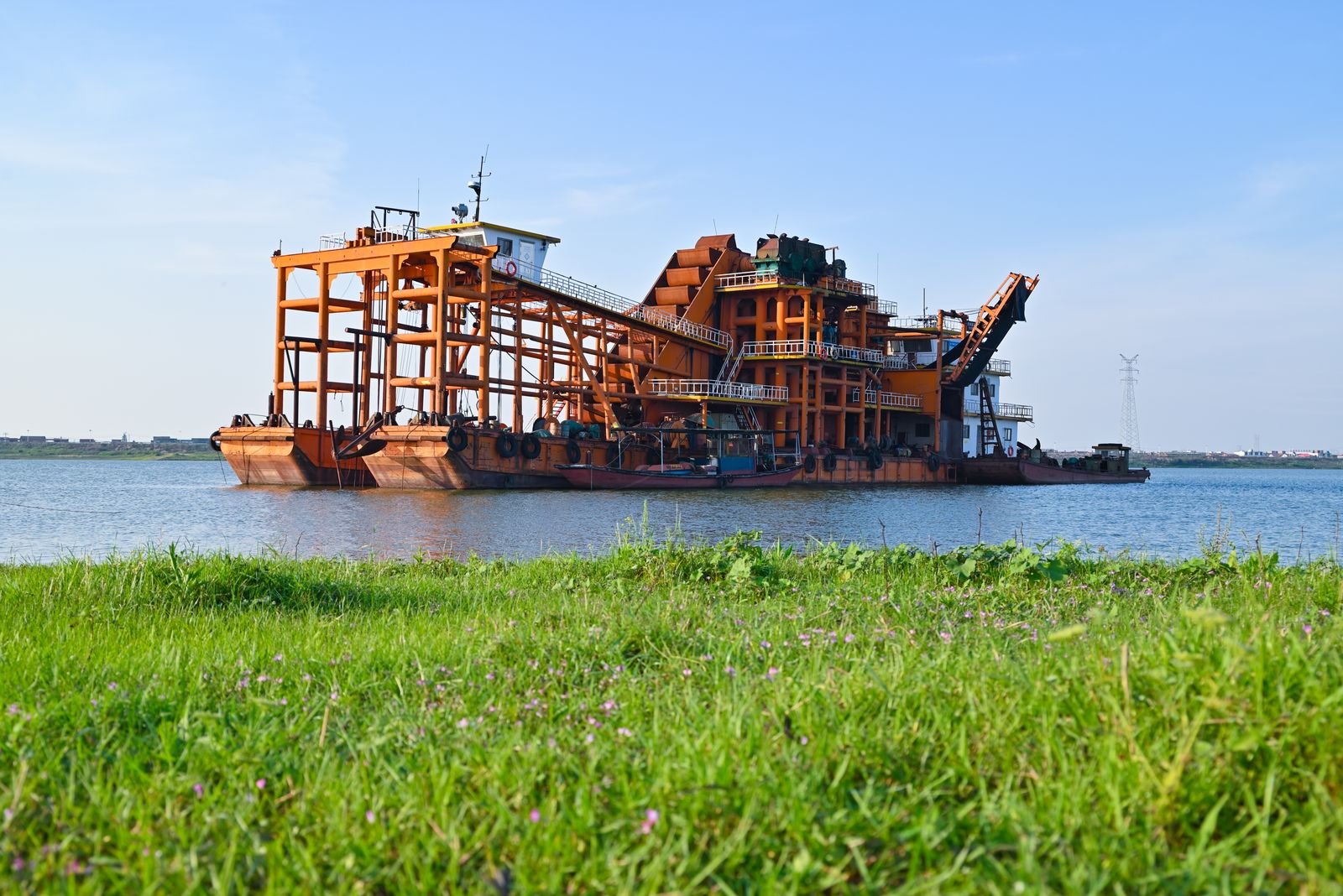
Dredgers come in several families, and each hangs its work on different ropes. Before choosing a construction, walk the deck and list every circuit — because a specification that is right for a ladder hoist is wrong for a side wire, and vice versa:
- Cutter suction dredgers (CSD) — the dredger pivots on a stern spud and swings side to side on two side wires (swing wires) running from deck winches through transverse sheaves at the cutter ladder to deadman anchors. The cutter ladder hoist ropes lower and lift the ladder and cutter head, and spud winch ropes handle the spud carrier. Side wires are the highest-abrasion, highest-cycle ropes on the vessel.
- Bucket ladder dredgers — the bucket chain digs on a fixed ladder; heavy ladder hoist ropes control ladder depth, plus mooring and head line winches position the pontoon.
- Grab (clamshell) dredgers — a grab hangs on a hoist rope and, on double-gear grabs, a separate closing rope through sheave blocks. These are free-hanging, high-cycle loads.
- Trailing suction hopper dredgers (TSHD) — gantry and suction pipe winch ropes lower, hold and raise the draghead over the side, often in swell, so the rope sees wave-induced shock on top of pipe weight.
| Dredger type | Rope circuit | What it does | Typical recommended construction |
|---|---|---|---|
| Cutter suction dredger | Side / swing wires (2) | Swing the dredger around the spud; continuous tension reversal | 6×K36WS+IWRC or 6×36WS+IWRC, Lang’s lay, galvanized |
| Cutter ladder hoist (2–4) | Lower and lift ladder + cutter head | 6×36WS+IWRC galvanized; 35WXK7 if single-part | |
| Spud / carrier winch | Step the spud forward along the cut | 6×36WS+IWRC galvanized, regular lay | |
| Bucket ladder dredger | Ladder hoist + headline / mooring | Control ladder depth; hold position | 6×36WS+IWRC galvanized, Lang’s lay on hoist |
| Grab dredger | Hoist + closing ropes | Suspend and close the grab, every cycle | 35WXK7 rotation-resistant (hoist); 6×K36WS-EPIWRC (closing) |
| Trailing suction hopper dredger | Suction pipe / gantry winches | Handle draghead and pipe in swell | 6×36WS+IWRC or 6×K36WS+IWRC, galvanized |
Why Dredging Duty Is Harder Than Most Lifting Work
Contractors who move from crane work into dredging are always surprised by rope consumption. Four factors, all working at once:
1. Abrasive water. The rope is wetted constantly — sometimes fully submerged — with water carrying sand, silt and shell fragments. This abrasive paste works into the strands, past the sheaves and onto the drum, scrubbing both the rope and every groove it touches, and washing the manufacturer’s lubricant out of the core faster than any dry-land application I know.
2. Continuous dynamic loading. A cutter dredger’s side wires swing the vessel all day: haul in, pay out, hold, reverse. Loads reverse direction thousands of times per shift, and where the wire runs over the transverse sheaves the contact pressure per cycle is enormous.
3. Corrosion around the clock. Salt water, salt spray and humid air attack bright steel without pause. Corrosion pits the wires, the pits become fatigue crack starters, and a pitted rope loses breaking force long before visible broken wires appear — which is why finish choice (below) is not optional on a dredger.
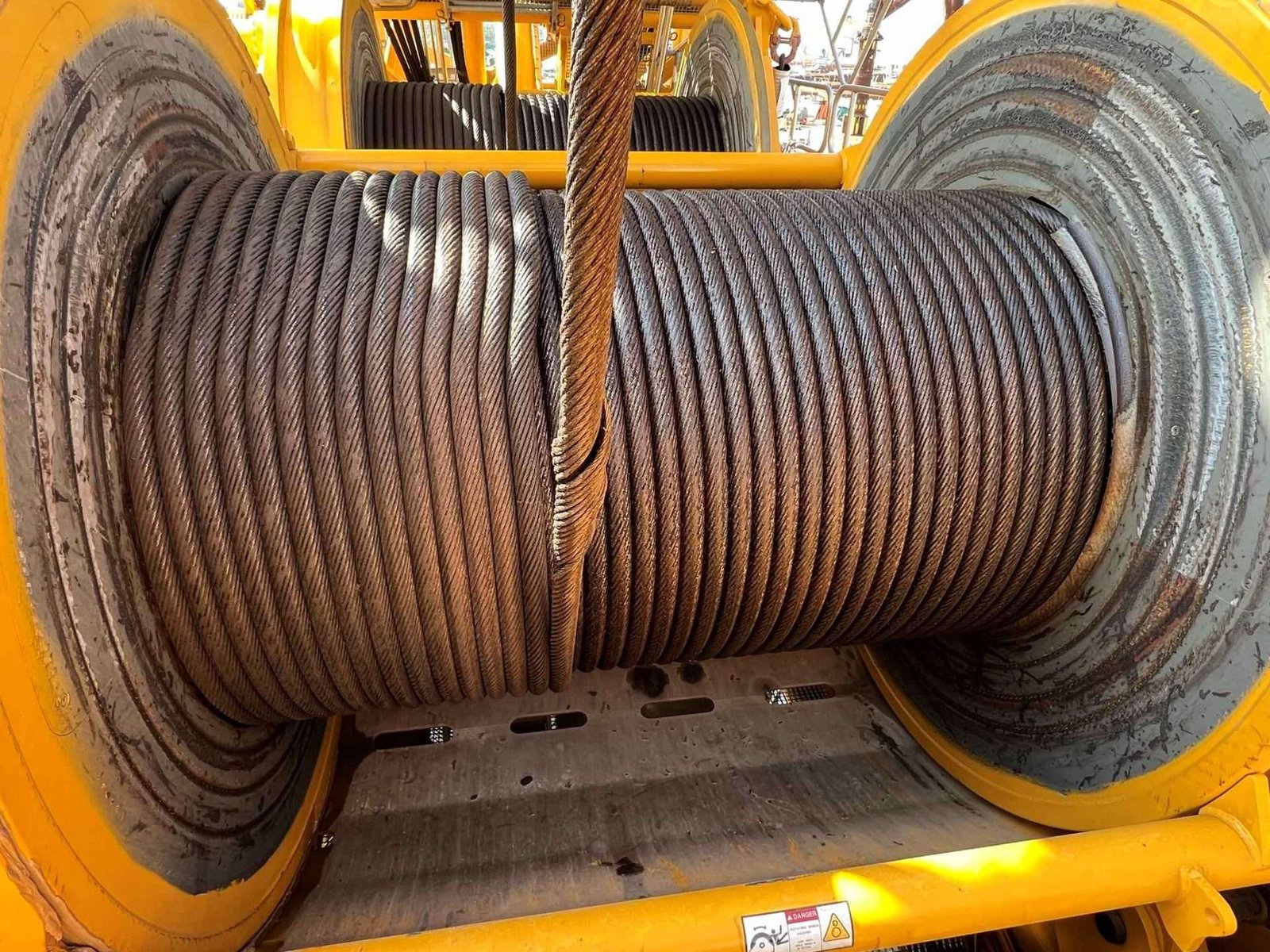
4. Multi-layer drum spooling. Long side wires and deep ladder hoists mean many layers on the drum, with cross-over crushing at each layer change — the same physics as a crawler crane hoist drum, but with a spooling window that never closes.
Choosing the Construction: Lang’s Lay, Galvanized, Steel Core
For most dredging winch circuits, my specification conversation comes down to three decisions:
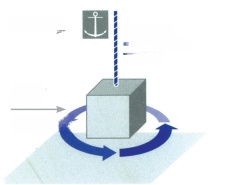
Decision 1 — Lang’s lay for dredging lines. In Lang’s lay the wires in each strand run in the same direction as the strands themselves, so the outer wires present a longer, flatter bearing surface to sheave and drum. That gives materially better abrasion resistance and bending fatigue life than ordinary lay — exactly why Lang’s lay is the traditional choice for dragline hoist and dredge lines. The condition is that both rope ends must be anchored against rotation; on a dredger winch, where one end terminates on the drum and the other on the anchor, that condition is met, so use it. Where a load hangs free — a grab hoist — rotation resistance decides instead (below).
Decision 2 — Galvanized, always. On any vessel I specify galvanized wire rope, ideally with a heavy zinc coating, over bright rope with surface grease. Zinc protects sacrificially: even where the coating is scratched or worn, the steel underneath stays protected. A bright rope on a working dredger is a corrosion experiment, not a specification.
Decision 3 — IWRC for strength and crush resistance. An independent wire rope core supports the strands under the high drum pressures of multi-layer spooling and adds roughly 7–10% breaking force over a fiber core. For the highest-abrasion circuits — side wires above all — I step up to the compacted version, 6×K36WS+IWRC: strands drawn through compacting dies raise the metallic fill factor for about 10–15% more breaking force at the same diameter and leave a smooth, dense surface that shrugs off sandy water and spools more neatly across the drum. Where the core needs sealing against water — long submerged sections, closing ropes — specify the plastic-impregnated core, EPIWRC. My guide to compacted and plastic-impregnated rope explains the mechanics.
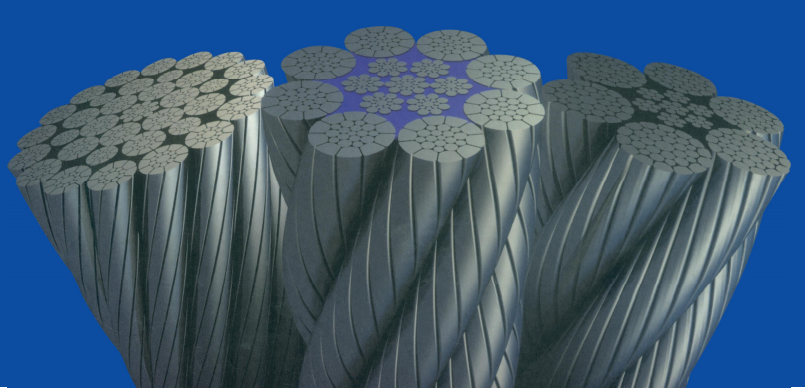
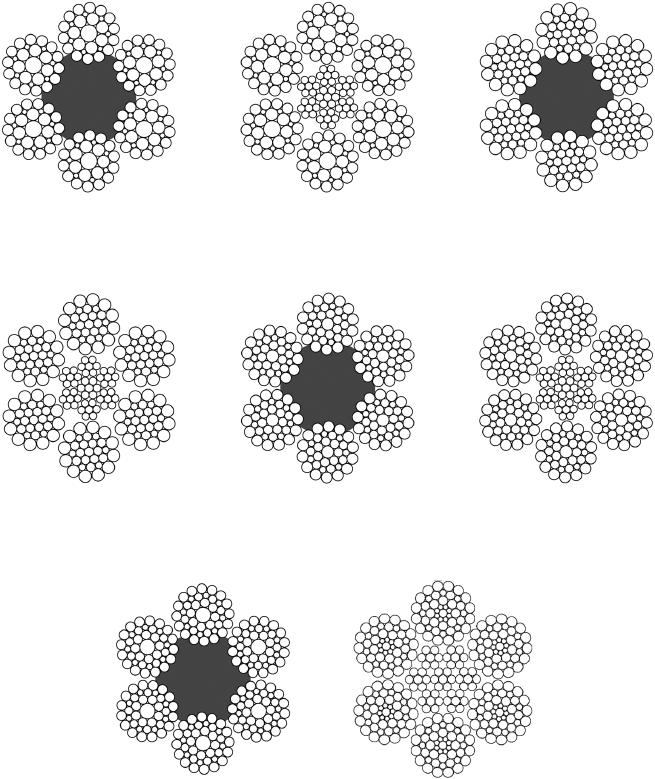
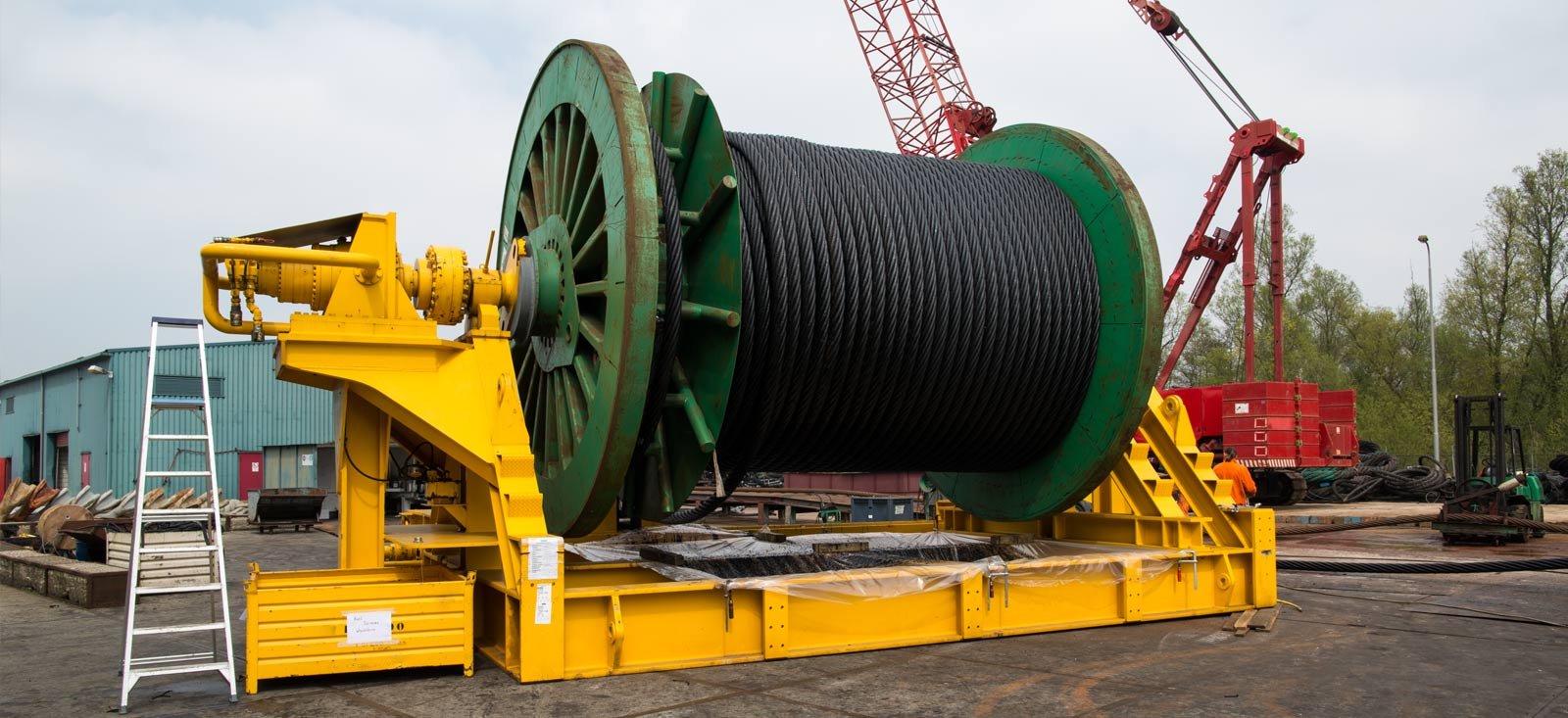
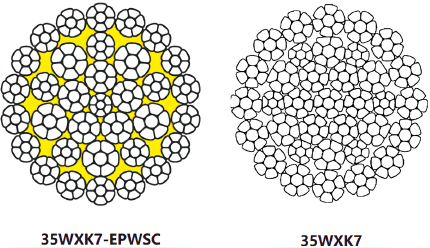
When the load hangs free: rotation-resistant rope. Grab dredger hoist lines, and any single-part ladder hoist where the ladder is free to rotate, need a rope that will not spin the load. Here I specify 35WXK7 — 35 compacted strands in counter-laid layers whose torques cancel — the same rotation-resistant family I use on rotary drilling rigs. One rule I repeat at every hand-over: never fit a swivel to a rotation-resistant rope; let the rope’s internal layers share the torque instead.
| Construction | Abrasion resistance | Rotation behaviour | Best dredging circuits |
|---|---|---|---|
| 6×36WS+IWRC, Lang’s lay, galvanized | Very good | Both ends anchored required | Side wires, ladder hoists, mooring and headline winches |
| 6×K36WS+IWRC, Lang’s lay, galvanized (compacted) | Excellent | Both ends anchored required | High-cycle side wires, TSHD pipe winches |
| 6×36WS+IWRC, regular lay, galvanized | Good | Stable | Spud winches, auxiliary and service winches |
| 6×K36WS-EPIWRC, galvanized | Excellent, sealed core | Anchored ends required | Submerged runs, grab closing ropes |
| 35WXK7 (rotation-resistant, compacted) | Excellent | Near-zero rotation | Grab hoist lines, single-part free-hung hoists |
Sizing: MBL and Design Factor for Dredger Ropes
Sizing follows the arithmetic I use everywhere else: take the maximum line pull the circuit sees, apply a design factor, and select the rope whose minimum breaking force (MBL) covers it. For dredging duty I recommend 4:1 as the minimum design factor and 5:1 where shock loading is normal — side wires that snatch the vessel around, grab closing lines and suction pipe winches working in swell belong in the 5:1 group. Chain mooring and static guylines are a different discipline; do not copy their factors onto working winch lines.
Worked example: a mid-size cutter dredger pulls a side wire at 25 tonnes (245 kN) peak. At 5:1 the rope needs an MBL of at least 1,225 kN — a 44 mm 6×K36WS+IWRC at grade 1960 (MBL about 1,350 kN) gives 5.5:1 with margin for the sand-blasted sheave system. The table shows the usual candidates:
| Rope diameter | MBL 6×36WS+IWRC, 1960 MPa | MBL 6×K36WS+IWRC, 1960 MPa (compacted) | Permissible pull at 5:1 (6×36WS) | Typical use |
|---|---|---|---|---|
| 32 mm | 715 kN | ~790 kN | 143 kN (14.6 t) | Small CSD side wires, spud winches |
| 36 mm | 904 kN | ~1,000 kN | 181 kN (18.4 t) | Ladder hoists, mid-size CSDs |
| 40 mm | 1,120 kN | ~1,230 kN | 224 kN (22.8 t) | Side wires on mid-size cutter dredgers |
| 44 mm | 1,350 kN | ~1,490 kN | 270 kN (27.5 t) | Large CSD side wires, TSHD pipe winches |
| 48 mm | 1,610 kN | ~1,770 kN | 322 kN (32.8 t) | Heavy ladder hoists, large grab dredgers |
| 52 mm | 1,890 kN | ~2,080 kN | 378 kN (38.5 t) | Big bucket ladder and hopper winches |
Three sizing mistakes I meet on survey visits. First, sizing side wires on winch stall pull instead of the snatch loads that occur when the anchor breaks out or the vessel swings into rough water — dynamic peaks, not the nameplate, set the real demand. Second, ignoring drum capacity and fleet angle when stepping up a diameter; the bigger rope must still spool within about 1.5° of fleet angle or it will bite at the flange. Third, forgetting end terminations: a spelter socket keeps roughly 100% of rope strength, but a poorly poured one or a clipped eye can halve it — my terminations guide covers the details.
Installation and Spooling: Habits That Set the Rope’s Life
A dredger re-ropes its winches a few times a year at most, so each installation should be done as if the rope’s whole life depends on it — because much of it does:
- Unreel with the reel rotating on a spindle or roller stand. Never spin rope off a fixed reel flange or drag it off a loose coil — that is how kinks are born, and Lang’s lay rope punishes kinking.
- Spool on under back tension of roughly 2–5% of the rope’s breaking force, so the first layer seats tight and each layer above nests properly. A slack first layer guarantees crushing damage below within weeks of swing cycles.
- Match lay direction to drum winding on each winch; on twin side-wire winches, order left-hand and right-hand lay ropes deliberately rather than by habit.
- Seize both sides before cutting and use fused-and-tapered ends where the winch design allows, so cut ends never unlay during handling.
- Break in gently. Run the first swing cycles at reduced speed and tension; the rope needs a few dozen cycles to seat into sheave grooves and drum layers and to settle its constructional stretch (about 0.25–0.5%).
- Re-groove or replace worn sheaves at every rope change. A groove worn undersized by the old rope will pinch and scrub the new one from the first shift — the most common reason a “better” rope dies at the same age as the cheap one.
Inspection and Maintenance in Salt Water
Inspection follows ISO 4309, but dredging duty re-weights the criteria. On a dredger, the three earliest retirement reasons are corrosion, diameter loss from abrasion, and broken wires at the high-cycle sheave points — especially the transverse sheaves on a cutter dredger and the closing-rope sheave blocks on grabs. Corrosion deserves respect: pitting reduces the metallic cross-section, and the ISO 4309 retirement threshold of roughly 10% cross-section loss arrives faster on a pitted rope than the visible broken-wire count suggests.
| Interval | Action | Why it matters on a dredger |
|---|---|---|
| Every shift | Visual check of wire at winch, sheaves and anchor points; note anything passing noisily through a sheave | Catches fresh break clusters and anchor snags before they become failures |
| Weekly | Measure diameter at 3–4 points along the working length; inspect the transverse sheaves and rollers | Diameter loss tracks both abrasion and hidden internal damage |
| Every 100–150 running hours | Clean surface, apply penetrating lubricant to the core; log it | Salt water and sand strip lubricant; a dry core corrodes from inside |
| Monthly / per ISO 4309 | Documented thorough examination: broken wires per lay length, corrosion, crush damage, terminations | Rotation-resistant ropes carry stricter limits — 2 broken wires in 6 diameters or 4 in 30 |
| After any snag or shock | Inspect the affected section before returning to service | Anchor break-out and spud impacts are exactly the events that kink or overload a rope |
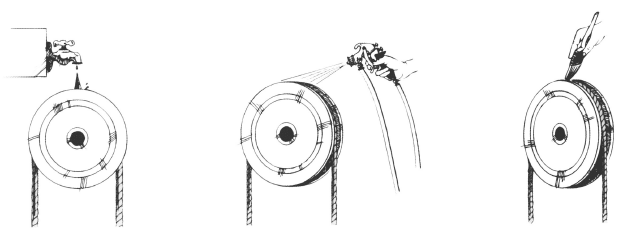
Lubrication is the highest-return maintenance habit on any dredger. Clean the rope surface first, then apply a lubricant that penetrates to the core rather than painting over the outside — the goal is to displace the water-and-sand paste the working day leaves behind. On the winch drums I also check that the dead wraps (the three or so turns permanently on the drum) are still tight and intact; they are out of sight, under permanent load, and are a classic hidden failure point. The full routine, including storage of spare reels, is in my installation and maintenance guide.
And when a rope does come off, read it before it goes to scrap: the wear pattern names its cause. External sanding on the crowns points at abrasive water and worn grooves; broken wires at regular intervals along one strand line point at a sheave problem; a birdcage tells you about a kink or a snatch. My article on wire rope failure causes gives the diagnostic signatures.
Frequently Asked Questions
What is the best wire rope for a cutter suction dredger?
For the side wires, a galvanized 6×K36WS+IWRC in Lang’s lay is my default — compacted strands for the abrasion and cycle count, IWRC for drum pressure, zinc for salt water. Ladder hoist ropes run well on galvanized 6×36WS+IWRC, and any single-part, free-hanging circuit should move to a rotation-resistant 35WXK7. Spud and auxiliary winches are fine on regular-lay 6×36WS+IWRC.
Why Lang’s lay for dredging instead of ordinary lay?
Lang’s lay exposes longer, flatter wire surfaces to the sheave and drum, giving better abrasion resistance and fatigue life — exactly what sand-laden, high-cycle dredging duty needs. The condition is that both rope ends must be anchored against rotation, which a dredger winch satisfies naturally: one end on the drum, one on the anchor or socket. Never use Lang’s lay on a free-hanging, unrestrained load.
Can I use bright (ungalvanized) rope on a dredger to save money?
I advise against it on any working vessel. The apparent saving is small next to the cost of a rope change, and corrosion pits act as fatigue crack starters that shorten rope life disproportionately — often ending the rope before its calculated cycle life. Galvanized rope with heavy zinc coating, kept lubricated, is the economic choice over the rope’s service life.
How often should dredger wire rope be lubricated?
On working dredgers I recommend a clean-and-relubricate cycle every 100–150 running hours, shortened for machines working in coarse sand or full submersion. Use a penetrating lubricant that reaches the core. The test is simple: wipe a section hard with a rag — if it comes away dry or gritty, the core is already paying for it.
When must a dredger wire rope be discarded?
Per ISO 4309: when broken wires exceed the limits for the construction (for 6-strand ropes, more than 6 broken wires in one lay length over one strand, or the totals grouped in 3d/6d zones); when diameter loss from wear and corrosion approaches about 7% on 6-strand ropes or 10% on rotation-resistant ones; and immediately on severe corrosion pitting, a kink, birdcaging or heat damage. Rotation-resistant ropes are retired much earlier — 2 broken wires in 6 rope diameters or 4 in 30.
How do I order the right dredger rope?
Send the supplier three things: the circuit (side wire, ladder hoist, grab line), the winch data (drum diameter and capacity, sheave diameters, fleet angle), and the peak line pull with how it is generated. Insist on EN 12385-4 test certificates for the actual production lot, not a generic data sheet. If the supplier cannot discuss lay direction, compaction and core type for your specific circuit, they are selling a catalogue, not an engineering product.
Final Word: Spec the Rope Like the Duty It Does
Dredgers monetise uptime — a machine stopped for a rope change is not earning its day rate. Specify each circuit deliberately: Lang’s lay galvanized 6×36WS+IWRC as the workhorse, compacted strands for the high-abrasion circuits, rotation-resistant 35WXK7 for free-hung loads, sized at 4:1 minimum with 5:1 for shock duty, installed under back tension and lubricated on a schedule the crew actually keeps. Do that, and the ropes retire on your terms instead of failing mid-cut.
Aulone is a professional manufacturer and supplier of steel wire ropes, wire rope slings, synthetic ropes and rigging hardware for lifting, marine, mining, construction and industrial applications. With over 20 years in the industry, 200,000 tons of annual capacity and manufacturing to EN 12385-4 under ISO 9001 — certified by BV, ABS, DNV, RMRS and CE — we keep galvanized, compacted and rotation-resistant constructions in stock for fast shipment, supply custom assemblies with fitted terminations, and arrange third-party testing on request. For a quotation or a review of your dredger’s rope specification, write to me at info@wireropes.net.