The short answer: wire rope has no calendar expiry date — it is replaced on condition, not on the clock. A well-chosen rope on a lightly worked overhead crane can serve 12–24 months, a grab crane rope may be done in 3–6 months, a rotary rig rope is measured in metres drilled, and an elevator rope can run a decade or more. What decides the actual life is bending fatigue, abrasion, crushing, corrosion and operating discipline — and once you understand those, you can both predict and extend the life of every rope you buy. In this article I will give you realistic service-life ranges by application, the factors that quietly cut rope life in half, the replacement rules that actually govern retirement, and a cost-per-cycle comparison that shows why the cheapest rope on the quotation is rarely the cheapest rope in service.
Why “How Long Will It Last?” Has No Calendar Answer
I get this question almost every day, and I understand why. A buyer budgets for consumables and wants a date to put in the plan. But a wire rope is not a battery. Two identical ropes, from the same production lot, on two cranes of the same model, can differ by a factor of five in service life — because one works single-shift in a dry workshop with generous sheaves, and the other works double-shift with a kinked fleet angle, a worn sheave groove and a lubrication schedule nobody keeps.
Standards reflect this reality. ISO 4309 and the inspection regimes built on it define discard criteria — broken wires, diameter loss, corrosion, deformation — not an expiry date. The rope is retired when inspection says so. The practical consequence: the only meaningful way to talk about rope life is to measure it in the rope’s own currency — bending cycles, operating hours, tonnes lifted or metres drilled — and to keep a rope log so your own numbers replace everyone else’s guesses.
Typical Wire Rope Service Life by Application
That said, you still need a starting point for budgeting. The ranges below come from field experience and match what competent inspectors see across a mixed fleet. Treat them as planning figures, never as replacement triggers:
| Application | Life best measured in | Typical range (planning figure) |
|---|---|---|
| Overhead crane, duty class A3–A5, single shift | Months in service | 12–24 months per rope set |
| Heavy-duty overhead, ladle, magnet or grab crane (A6–A8) | Months in service | 3–12 months |
| Tower crane hoist rope | Projects | Often 1–3 projects, or 2–4 years |
| Mobile / crawler crane main hoist, duty-cycle work | Operating months | 6–18 months |
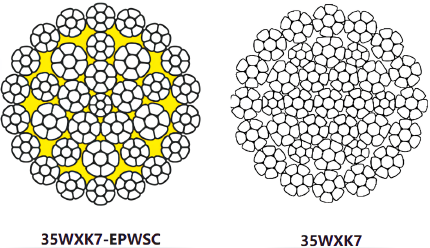
| Rotary drilling rig, 35WXK7 | Metres drilled | ~3,000–4,000 m at 28 mm; 5,000–8,000 m at 32–36 mm |
| STS container crane hoist rope | Years with scheduled care | 2–4 years |
| Marine towing winch wire | Projects / towing hours | 2–5 years, retire on condition |
| Elevator suspension rope | Years, code-driven inspection | 10+ years |
If your logbook numbers sit far below these ranges, the cause is almost never bad steel. It is one of the five factors in the next section — and every one of them is fixable.
What Actually Determines How Long a Rope Lasts
Bending fatigue and the D/d ratio — the master variable
Every pass over a sheave bends the rope around a curve, and the wires flex against each other inside the strand. The tighter the bend — the smaller the sheave relative to the rope — the faster the fatigue damage accumulates. The D/d ratio (sheave pitch diameter divided by rope diameter) is the single most powerful lever on rope life, and the industry’s bending-fatigue curves are unambiguous about it:
| D/d ratio | Approximate relative bending-fatigue life | Where you see it |
|---|---|---|
| 10 : 1 | 1× (baseline — short life) | Tight winches, old machinery |
| 16 : 1 | ~4× | Acceptable minimum for most hoists |
| 20 : 1 | ~7× | Good crane design practice |
| 25 : 1 | ~12× | Modern crane head sheaves |
| 32 : 1 | ~20× | Large gantry and port cranes |
| 40 : 1 | ~30× | Elevators, high-speed hoisting |
Read that table the practical way: a rope worked over a 10:1 sheave will commonly die of fatigue in a fraction of the life it would reach over a 20:1 sheave — nothing else about the installation has to change. When I investigate “this rope brand never lasts for us,” the D/d ratio and groove condition are the first two things I measure. A worn, oversize or undersize groove does the same damage as a small sheave, because it changes the support the rope gets at the bottom of the curve. My article on wire rope failure causes shows the fatigue signatures in detail.
Duty cycle and the tension spectrum
Fatigue life also scales with load. A rope that hoists 20% of its working load most of the time lives far longer than the same rope cycled between near-zero and 80%. The reason is the stress range, not the peak: each lift cycle works the wires through a stress band, and wider bands mean earlier cracking. This is why grab cranes, magnet cranes and duty-cycle drilling equipment — machines that load and unload continuously at high percentage — chew through ropes measured in months, while a maintenance shop hoist idles for years on the same construction.
Drum crushing and spooling discipline
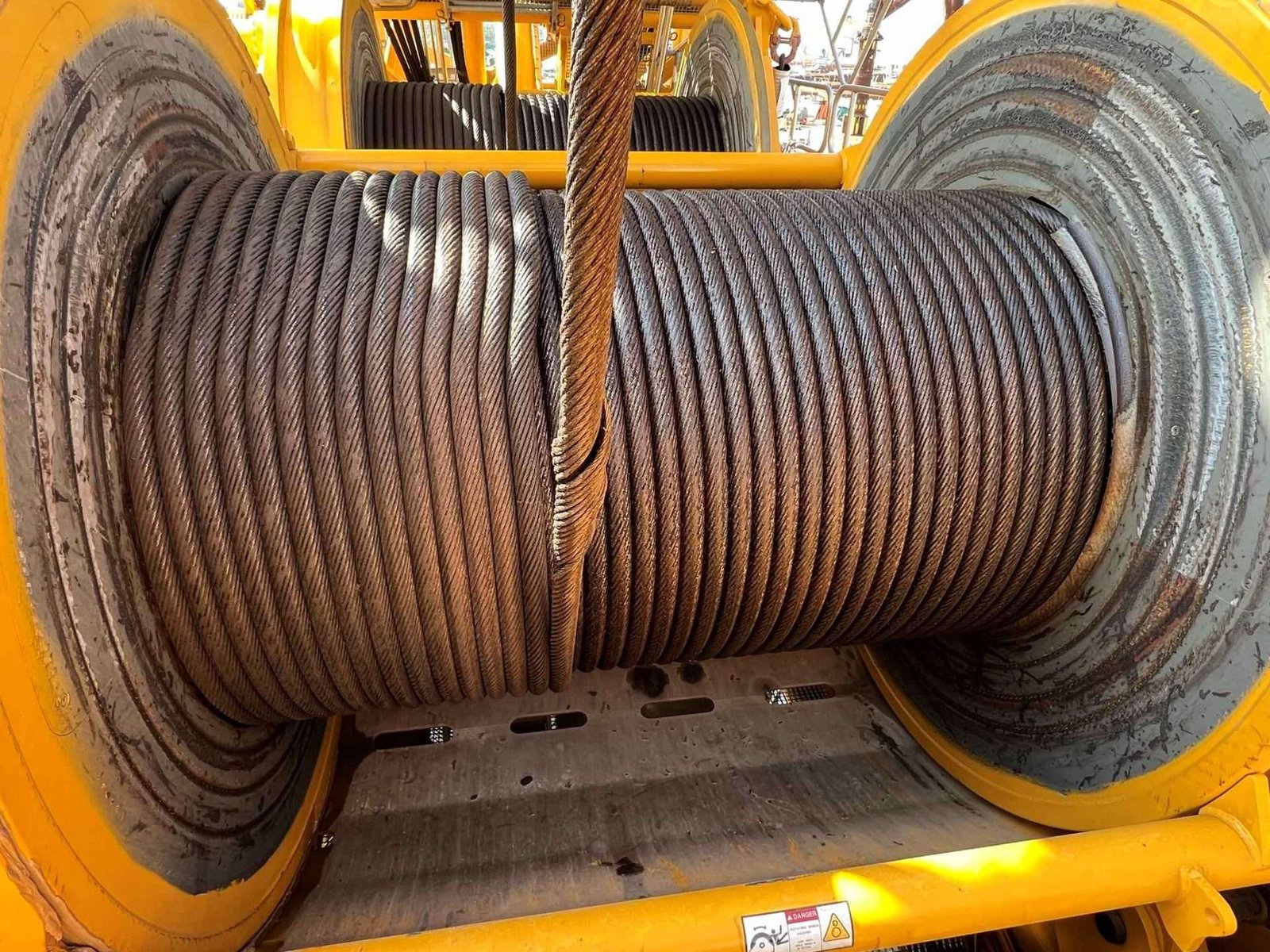
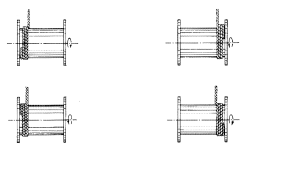
On multi-layer drums, the rope in layer three is crushed by the full tension of layers above it, and every crossover point is a pinch zone where layers cut into each other. Crushing breaks wires from the inside out — damage the eye finds late. Clean, parallel spooling with correct fleet angle (about 1.5° maximum), proper back tension at installation and 2–3 dead wraps on the drum are what separate a rope that reaches full design life from one that dies at half of it. Installation discipline matters so much that I wrote a separate installation and maintenance field guide; get the mounting wrong and no rope construction will save you.
Environment: corrosion is a life multiplier
Corrosion rarely fails a rope on its own — what it does is multiply every other mechanism. Pitting creates stress concentrations where fatigue cracks start early; corrosion products between the strands stop the wires sliding, so the bending is taken by fewer wires; and rust debris between strands is the classic sign that internal corrosion is already ahead of you. Salt spray, slurry, acidic dust and wash-down environments can cut rope life by half or worse. The defence is twofold: choose the right finish for the duty — the galvanized vs bright vs stainless decision — and keep the core greased.
Construction choice: the rope itself
The same winch fed with three different constructions will deliver three different lives. Strands with more, thinner outer wires bend more easily but wear faster; fewer, thicker outer wires do the reverse. Compacted strands carry more metallic area, resist crushing and — the field-proven part — last 30–100% longer in bending fatigue than standard round-strand rope, with the biggest gains exactly where life is shortest anyway: multi-layer spooling. A plastic-impregnated steel core (EPIWRC) locks lubricant in the core and cushions the strands against each other, which is why it has become my default recommendation for rotary drilling, diaphragm wall and duty-cycle crane work.

Replace on Condition, Not on the Calendar
Whatever the planning table says, the rope comes out when inspection says so. The framework is ISO 4309, and the headline triggers are worth knowing by heart:
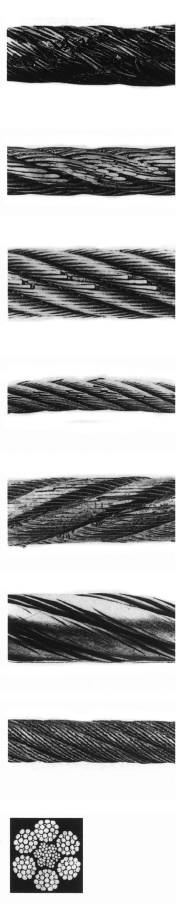
- Broken wires — exceeding the table limit for the construction, counted in one lay length and over 6d/30d reference lengths. Rotation-resistant ropes run on much stricter limits (typically 2 breaks in 6d or 4 in 30d).
- Diameter loss — approaching 7% of nominal diameter from wear, or about 10% of metallic cross-section from combined wear and corrosion.
- Corrosion — visible pitting in the valleys, or rust debris breaking out between the strands.
- Deformation — any kink, birdcage, severe waviness, flattened section or protruding core: immediate retirement.
- Heat or arc damage — any discolouration from contact with hot material or electrical current.
One habit makes this whole section work: a rope log. For every rope, record the installation date, the specification and certificate number, and at each inspection the measured diameter, broken-wire counts by zone and the operating counters (cycles, hours, metres). After two or three replacements you will know your site’s real rope life better than any manufacturer can — and you can order the next rope before the current one retires, instead of after.
The Real Cost Per Cycle: Why the Cheapest Rope Rarely Is
Here is the arithmetic buyers rarely run, and it changes purchase decisions. Suppose you run a duty-cycle winch with 300 m of 20 mm rope, and you plan over 120,000 bending cycles. Option A is a budget standard 6×36WS+IWRC at $1.80/m; option B is a compacted 6×K36WS+EPIWRC at $2.80/m. From field experience, option A in this duty gives roughly 40,000 bending cycles before discard; the compacted rope gives around 100,000. Add a changeout cost of $600 per replacement — crew, rigging time, and the machine standing still:
| Over 120,000 bending cycles | Budget 6×36WS+IWRC ($1.80/m) | Compacted 6×K36WS+EPIWRC ($2.80/m) |
|---|---|---|
| Rope life in this duty | ~40,000 cycles | ~100,000 cycles |
| Ropes purchased | 3 | 2 (one partly used) |
| Rope cost | $1,620 | $1,680 |
| Changeouts | 2 × $600 = $1,200 | 1 × $600 |
| Total cost | $2,820 | $2,280 |
| Cost per 1,000 cycles | $23.50 | $19.00 |
The “expensive” rope comes out about 20% cheaper per cycle — and that comparison is deliberately conservative, because it counts only one changeout saving. The numbers in the table are illustrative, but the pattern is not: the rope is a minority of the cost of running it. Downtime, labour and the risk carried by an ageing rope dominate. That is before you price an unplanned stoppage on a deadline job, where one avoided standby day can pay for the entire premium.
Eight Ways to Extend Wire Rope Service Life
Almost every premature rope failure I investigate traces back to a handful of causes — which is good news, because it means rope life is largely an operations decision, not a procurement one:
| Life lever | What it does | Typical effect on rope life |
|---|---|---|
| Match construction to the duty | Rotation-resistant where torque matters, Lang’s lay where wear dominates, compacted where crushing bites | Prevents the wrong-rope failures that halve life |
| Compacted strands + EPIWRC core | More metallic area, crush resistance, sealed-in core lubricant | +30–100% bending life, best on multi-layer drums |
| D/d ≥ 20 with matched, re-grooved sheaves | Keeps bending stress and cross-groove scrubbing down | Multiples, per the fatigue curve above |
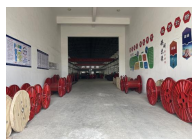
| Correct installation | Back tension, fleet angle ≤ 1.5°, seized cuts, no kinks on the reel | Removes the early-death modes |
| Lubrication on schedule | Penetrating grease to the core, every 40–80 h in heavy duty | Commonly +20–50% |
| End-for-end reeving | Shifts the worn zones on drums with uneven duty | Often +20–30% on mismatched systems |
| Gentle break-in | First lifts at ~10% of WLL to settle the construction | Prevents stretch damage and early birdcaging |
| A rope log for every rope | Turns replacement from guesswork into planning | Not a rope-life gain — a downtime gain |
If you only do three of these, do the sheave audit, the lubrication schedule and the rope log. They cost almost nothing and they attack the three biggest life-killers.
Frequently Asked Questions
How often should wire rope be replaced?
There is no time interval — replacement is condition-based under ISO 4309. The rope comes out when inspection finds broken wires over the construction-specific limit, diameter loss near 7%, significant corrosion, or any deformation. As planning figures only: 12–24 months for lightly worked overhead cranes, 3–12 months for grabs and ladle cranes, metres drilled for rotary rig ropes. Your own rope log is the only schedule that counts.
Does wire rope have an expiry date?
No. Standards define discard criteria, not shelf or service life. Two practical exceptions: some mining authorities impose maximum service periods on friction winder ropes regardless of condition, and elevator codes require periodic thorough examination that effectively fixes a maximum interval between inspections. Stored rope also ages slowly — the lubricant dries out, so inspect stock reels every couple of years and re-lubricate before use.
What shortens wire rope life the most?
In my experience, the top four are: sheaves too small or grooves worn out of tolerance (bending fatigue), multi-layer drum crushing with bad spooling geometry, missed lubrication, and corrosion in wet or chemical environments. All four are preventable, and they often act together — which is why one neglected crane can burn ropes at five times the fleet-normal rate.
How much longer does compacted wire rope last?
Compacting raises the fill factor, so more steel carries the load and the strands support each other better. In bending fatigue service, compacted ropes typically deliver 30–100% longer life than the equivalent standard construction, with the largest gains on multi-layer drums and high-cycle winches. It costs roughly 30–50% more per metre — run the cost-per-cycle arithmetic and it usually wins.
Can I extend an old rope’s life by lubricating it?
Lubrication protects what is still sound: it slows wear, blocks corrosion and keeps the core greased. What it cannot do is reverse fatigue — broken wires stay broken and cracked wires stay cracked. So yes, start or resume lubricating at any point in life, but inspect the rope properly first; lubricating an already-damaged rope just makes a retiring rope slide smoothly toward its limits.
How do I find the real service life of ropes on my site?
Keep a rope log for each rope: specification and certificate, installation date, operating counters (cycles, hours or metres), inspection findings and the reason and date of discard. After two or three replacements on the same machine you will have a site-specific life figure no catalogue can give you — and you can pre-order replacements, switch constructions deliberately and plan changeouts into maintenance windows instead of into emergencies.
Final Word: Buy Rope Life, Not Rope
How long a wire rope lasts is not written on the certificate — it is written by the sheaves, the drum, the grease gun and the logbook. Get the construction matched to the duty, install it correctly, keep it greased and measure what you actually get, and rope replacement stops being a surprise and becomes a line item you control.
Aulone is a professional manufacturer and supplier of steel wire ropes, wire rope slings, synthetic ropes and rigging hardware for lifting, marine, mining, construction and industrial applications. With more than 20 years in the industry, 200,000 tons of annual capacity and production to EN 12385-4 under ISO 9001 — certified by BV, ABS, DNV, RMRS and CE — we help customers choose constructions that last in their actual duty, keep common sizes in stock for fast shipment, build custom assemblies with proof load testing and third-party inspection on request. For help specifying a longer-lasting rope for your equipment, write to me at info@wireropes.net.