The short answer: on a mobile harbour crane or grab ship unloader, the closing and holding ropes of a four-rope grab are the hardest-worked ropes on the quay. The proven default is a compacted, galvanized, IWRC rope — 6×K36WS+IWRC or 8×K26WS-EPIWRC in grade 1960, in matched left-hand/right-hand lay pairs — sized so each rope’s MBL is at least five times its worst working tension. Reserve rotation-resistant 35WXK7 for single-fall hook work, and inspect against ISO 4309 because a grab rope ages by cycles, not by calendar. I have spent twenty years supplying ropes into bulk terminals, and the difference between a rope that lasts six weeks and one that lasts six months is almost never luck — it is construction choice, spooling quality and inspection discipline. Here is how I spec ropes for these machines.
The Machines, and Which Ropes They Actually Use
When people say “port crane rope” they usually picture the container cranes I covered in the STS rope guide. But a large share of the world’s bulk cargo — coal, iron ore, grain, clinker, bauxite, scrap — moves through grabs hung from a different family of machines:
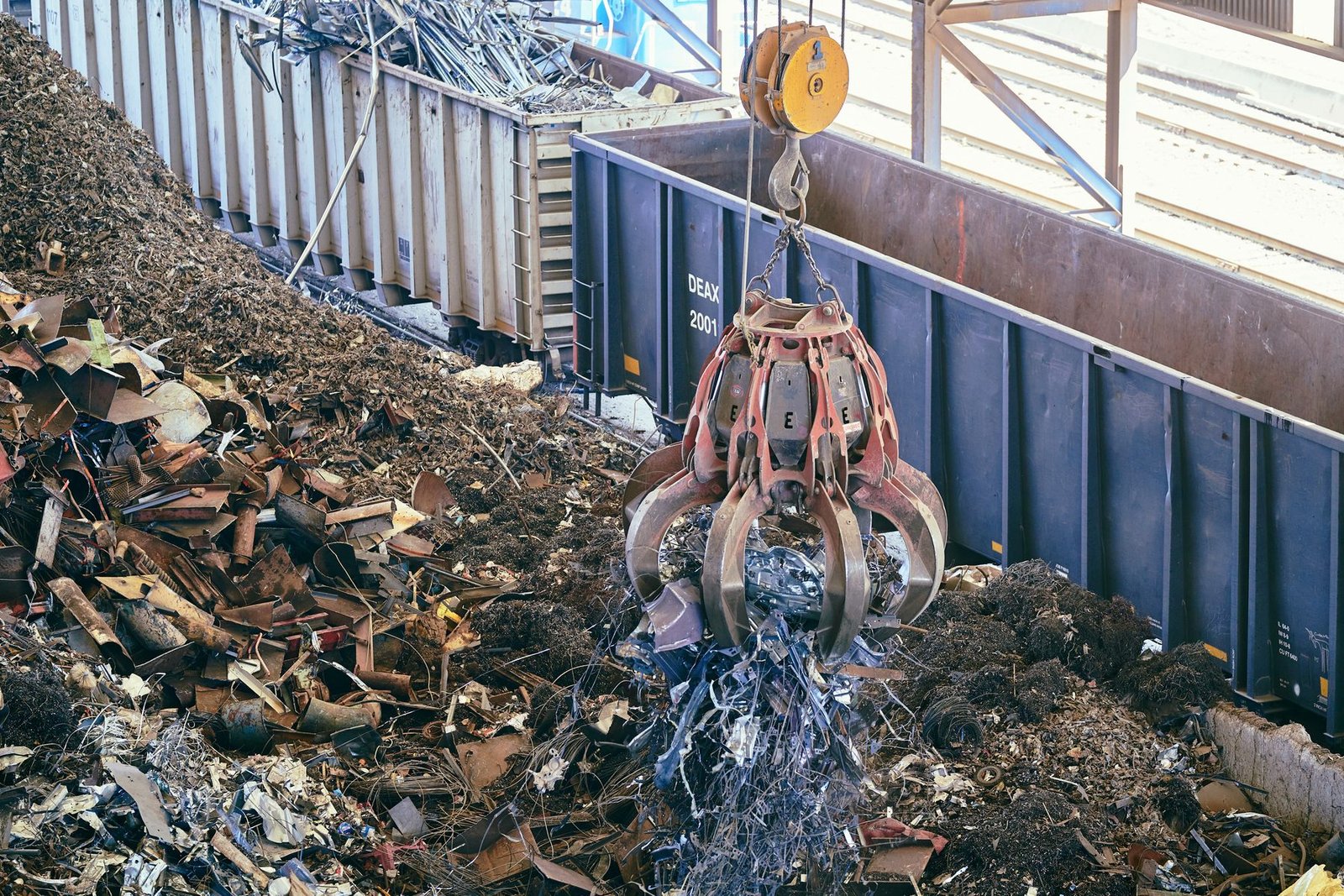
- Mobile harbour cranes (MHC) — rubber-tyred, self-propelled machines with a lattice boom and a four-drum winch house. In grab mode they run a four-rope clamshell; in hook mode they lift heavy pieces on a single fall.
- Rail-mounted portal and gantry grab unloaders — fixed quay-side machines with a rope-trolley or trolley-less grab system, running high continuous cycle rates.
- High-performance grab ship unloaders — the big rail-mounted machines rated several hundred to over a thousand tonnes per hour, with the same four-rope grab principle at a much faster rhythm.

Despite the differences in chassis, the rope circuits are almost identical. Table 1 is how I break them down when a terminal asks for a quotation.
Table 1 — Rope circuits on grab-equipped harbour cranes and unloaders
| Circuit | What it does | Duty character | Typical construction |
|---|---|---|---|
| Closing rope (2 off) | Closes the grab shells through the grab’s internal pulley purchase | Highest fatigue duty; tension spikes every cycle at the bite | Compacted 6×K36WS+IWRC or 8×K26WS-EPIWRC, 1960, galvanized |
| Holding rope (2 off) | Supports the grab and payload; pays out as the shells open | Slack-rope shock, snatch loads when the grab lands in the hold | Same as closing rope, matched lay direction |
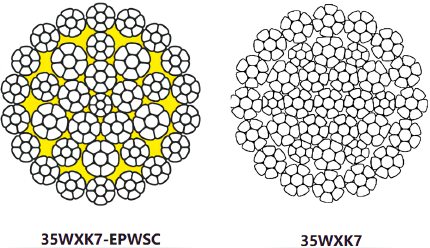
| Hoist rope, hook mode (single fall) | Lifts heavy pieces, spreaders and electro-hydraulic grabs | Free-hanging load tends to spin the rope | 35WXK7 rotation-resistant, or compacted EPIWRC |
| Luffing / boom rope | Raises and holds the boom; carries weight for long periods | Few cycles but long dwell under tension; corrosion-sensitive | 35WXK7 or 35×K7; OEM specification |
Why Grab Duty Destroys Rope Faster Than Any Crane Job
I supply ropes into mining, dredging and offshore, and grab unloaders still stand out. Three numbers explain it:
- 30–50 cycles per hour, shift after shift. Every cycle bends the closing rope over the grab sheaves several times, then over the drum. A rope on a hard-working MHC can log more bending cycles in a month than a crawler crane rope does in a year.
- Tension spikes in both directions. The closing rope snatches the full closing load when the shells bite into ore or compacted coal. The holding ropes go slack when the grab opens over the hopper — then catch the grab’s weight in a snatch when the shells dump. Slack rope is the classic cause of crushed and bird-caged sections at the drum.
- Abrasive, corrosive cargo and salt air. Ore dust works into the strands and becomes a grinding paste; coal is often wet and acidic; the whole machine lives within sight of the sea. Any rope that leaves the factory dry will be corroding from the core outward within weeks.
This is why I treat grab ropes differently from general crane ropes: the selection leans harder on compaction, core protection and surface finish, and the maintenance plan leans harder on lubrication frequency.
Closing Rope vs Holding Rope: Same Rope, Different Stress
On a four-rope grab the closing ropes do the digging. They run through the sheave purchase inside the grab head, so each cycle multiplies bending over small sheaves, and the closing stroke ends with a hard tension peak as the shells seat into the load. Closing ropes usually show fatigue first: crown and valley broken wires in the zones that run over the grab sheaves.
The holding ropes carry the weight but see the ugliest events: the snatch when a laden grab is caught out of a slack condition, and crushing where slack rope piles on the drum. Holding ropes tend to show diameter loss and crushed sections before they show fatigue.
Because both ropes of a pair must lengthen at the same rate to keep the grab level, I always supply closing and holding ropes as a matched set: same construction, same grade, same diameter, and crucially opposite lay directions — one right-hand lay, one left-hand lay — so their torque balances out and the grab does not twist. The same logic I described in the lay direction guide applies directly here.
Choosing the Construction

My default specification for four-rope grab work is a compacted, hot-dip galvanized rope with an independent wire rope core. Compaction raises the metallic cross-section by roughly 10–15%, which buys breaking load and a flatter, more wear-resistant outer surface — exactly what small grab sheaves and abrasive cargo demand. The IWRC resists the crushing that slack-rope events cause. For the harshest terminals I push the compacted + plastic-impregnated combination: EPIWRC locks factory lubricant into the core and cushions the strands against each other, which noticeably delays internal wire fretting in dusty cargo.
Table 2 — Construction choice by circuit
| Construction | Strengths | Trade-offs | Where I use it |
|---|---|---|---|
| 6×K36WS+IWRC, compacted, galvanized, 1960 | +10–15% MBL, wear-resistant surface, crush resistant | Stiffer than non-compacted; needs proper sheave condition | Default closing and holding rope on four-rope grabs |
| 8×K26WS-EPIWRC, compacted, plastic-impregnated | Sealed lubricated core, flexible, excellent fatigue in dusty cargo | Higher unit cost | Harsh terminals, ore and petcoke, high-cycle unloaders |
| 35WXK7 rotation-resistant | Low torque; safe single-fall hook work | Never use with a swivel; stricter discard limits; dislikes slack piles | Single-fall hoist, electro-hydraulic grabs, luffing |
| 6×36WS+IWRC, non-compacted | Lower cost, flexible, easy spooling | Shorter life under grab duty | Light grain duty, spare and standby machines |
One rule I hold firm: hot-dip galvanized, always, for anything that works a quay. Bright rope belongs in dry, indoor duty. The salt-air corrosion penalty at a port is severe, and the modest price difference is the cheapest life extension you can buy. The same reasoning I set out in the galvanized vs bright comparison.
Sizing the Rope: MBL and the 5:1 Rule
Sizing a grab rope starts from the worst line tension, not the crane’s rated capacity. On a four-rope grab, the closing line pull approaches the total weight of grab plus payload through the purchase, and snatch factors push real peaks well above static. I size each rope so:
MBL ≥ 5 × worst-case line pull, with the dynamic peaks of grab duty already considered — and I go higher where the terminal handles dense ore or runs fast cycles.
Table 3 — Approximate MBL for compacted 6×K36WS+IWRC, grade 1960, hot-dip galvanized (verify against the certificate)
| Diameter | Approx. MBL | Max working load at 5:1 |
|---|---|---|
| 20 mm | ~356 kN | ~71 kN |
| 24 mm | ~511 kN | ~102 kN |
| 28 mm | ~695 kN | ~139 kN |
| 32 mm | ~903 kN | ~181 kN |
| 36 mm | ~1,147 kN | ~229 kN |
Worked example
A mobile harbour crane runs a 10 t clamshell grabbing iron ore at 15 t payload. Worst-case suspended weight is 25 t ≈ 245 kN. Through the grab’s two-sheave purchase the closing line pull is roughly 245 / 2.5 ≈ 100 kN; add a snatch factor and the design tension I use is about 130 kN. At 5:1 the rope needs MBL ≥ 650 kN — a 28 mm compacted rope at ~695 kN fits with margin, and most terminals run 28–32 mm closing and holding ropes on machines of this class. If the same crane goes to hook mode, the single-fall 35WXK7 is sized separately against its own load chart and the crane’s parts-of-line rating.
Installation: Where Most Grab Rope Life Is Won or Lost

The same spooling rules I follow everywhere apply with extra force on grab machines, because slack-rope events are part of normal duty here:
- Reeve off the reel correctly — top-to-top or bottom-to-bottom — and keep 2–5% of MBL back tension while spooling. A loose first layer multiplies under slack rope into crushed, gypsy-wound piles that never recover.
- Match the lay direction to the drum and to the grooving; a wrong-match rope piles at the crossovers and gets chewed exactly where the snatch loads land.
- Seize every cut before cutting to length, and terminate with the fittings the grab and drum were designed for — typically swaged eyes or sockets on the rope ends, never rope clips on a working grab rope.
- Break in gently for the first shift or two at reduced loads, then re-check drum tension. Expect about 0.25% constructional stretch on an IWRC rope and re-tension the pair so the grab stays level.
- Check sheaves and grab pulley blocks before the new rope goes on. A grooved-out or tight grab sheave will grind a new closing rope to discard in weeks and void any conversation about rope quality.
Inspection: ISO 4309 Applied to Grab Ropes
Grab ropes age by cycles, so I anchor inspection to ISO 4309 discard criteria and to the machine’s move counter, not the calendar. The zones that matter most on grab duty are the closing rope at the grab sheave contact points, the holding rope where it piles under slack conditions, and the equalizer sheave area where damage hides from casual view.
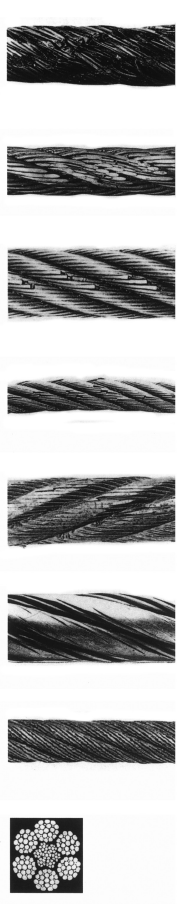
Table 4 — Discard signals and maintenance rhythm for grab-duty ropes
| Item | Threshold / interval |
|---|---|
| Broken wires, ordinary lay 6-strand | Discard at 6 in any one lay length or 10 in 30×d; valley breaks — discard immediately |
| Broken wires, rotation-resistant rope | Discard at 2 in 6×d or 4 in 30×d — far stricter, per ISO 4309 |
| Diameter loss | Discard at ~7% below nominal (measured with a caliper at the sheave contact zone) |
| Daily (operator) | Visual on visible closing/holding rope; note slack-rope events in the log |
| Weekly | Caliper diameter at marked points; check terminations, equalizer sheave, drum crossovers |
| Lubrication | Every 40–80 running hours in grab duty; fresh-water rinse of salt and ore dust first — see the lubrication guide |
Keep a rope log per machine with installation date, moves handled and inspection findings. When a terminal shows me a disciplined log, I can almost always trace a short-lived rope to its real cause — and when I cannot, the log itself usually exonerates the rope.
Aulone is a professional manufacturer and supplier of steel wire ropes, wire rope slings, synthetic ropes and rigging hardware for lifting, marine, mining, construction and industrial applications. We manufacture under EN 12385-4 with ISO 9001, BV, ABS, DNV, RMRS and CE certification, with over 20 years in the industry and 200,000 tons of annual capacity. Compacted and plastic-impregnated grab ropes in matched lay pairs are a routine order for us, common constructions are in stock for fast shipment, and custom cut lengths with swaged or socketed terminations and third-party testing are available. Write to me at info@wireropes.net with your machine type, grab weight and typical cargo, and I will come back with a construction, diameter and length proposal.
Frequently Asked Questions
What size wire rope does a mobile harbour crane grab use?
Most four-rope grabs on mobile harbour cranes and medium unloaders run 26–32 mm closing and holding ropes; large ore unloaders go to 36 mm and above. Hook-mode hoist and luffing ropes are sized separately, often 24–36 mm rotation-resistant. Always confirm against the OEM rope table — diameter changes ripple into sheave grooves, drum capacity and winch torque.
Should closing and holding ropes be the same construction?
Yes — same construction, grade and diameter, supplied as a matched left-hand/right-hand lay pair. Matching keeps the two ropes of the pair stretching and wearing at the same rate so the grab stays level, and the opposite lay directions cancel torque so the grab does not twist or rotate.
Can I use rotation-resistant rope on a grab?
Only where the rope hangs as a single free line — hook mode and electro-hydraulic grabs. A four-rope mechanical grab does not need rotation resistance because the matched lay pairs handle torque, and rotation-resistant ropes suffer under slack-rope crushing and have stricter discard limits. Never fit a swivel on rotation-resistant rope.
How long do grab ropes last?
Anywhere from weeks on abusive ore duty to six months or more on grain, expressed best in moves handled — many terminals see 50,000–150,000 cycles from a good compacted closing rope. Treat the calendar as irrelevant: replace against ISO 4309 discard criteria and your rope log, and compare ropes by cost per thousand moves rather than price per metre.
Galvanized or bright rope for port work?
Hot-dip galvanized, without exception, for anything working on a quay. Salt air corrodes a bright rope from the core outward, and wet, acidic cargoes such as coal accelerate it. Galvanizing typically multiplies corrosion life several times over for a small price premium.
Can one rope do both grab and hook mode?
Usually not optimally. Grab duty rewards compacted, abrasion-focused constructions in matched pairs, while single-fall hook work needs low torque. Some machines genuinely run one specification for both — if yours does, follow the OEM rope table and inspect more frequently, because the compromise construction is working harder in each mode than a purpose-chosen rope would.